Languages
Tuesday, November 17, 2026



News and Views from the Global South
Health

The Economic Impact of COVID-19 on Developing Countries
What is likely to be the impact of the COVID-19 pandemic on developing economies? It is difficult to make predictions, because much will depend on the spread of the disease, especially in Africa, Latin America, Asia and the Middle East, and the measures various Governments will take in the coming weeks and months.
Education Cannot Wait Interviews Henrietta H. Fore, Unicef Executive Director
Henrietta H. Fore became UNICEF’s seventh Executive Director on 1 January 2018. She has worked to champion economic development, education, health, humanitarian assistance and disaster relief in a public service, private sector and non-profit leadership career that spans more than four decades.
The Need for Empathy in the Time of Coronavirus
The experience and interpretation of the Coronavirus pandemic oscillates between the personal and the general spheres. The official discourse and measures taken by authorities have a direct impact on our lives, change our daily existence and foster worries for the future. A dark cloud of uncertainty hovers above us. What do decision makers know? What can they do? What can we do? Many of us are secluded in our own homes, others in wards or hospitals, or even alone and far away from the ones they love: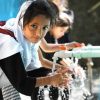
COVID-19 and Education in Emergencies
Armed conflicts, forced displacement, climate change induced disasters and protracted crises have disrupted the education of 75 million children and youth globally. And that number is growing in an unprecedented way with the spread of COVID-19. Education has been hit particularly hard by the COVID-19 pandemic with 1.53 billion learners out of school and 184 country-wide school closures, impacting 87.6% of the world’s total enrolled learners. Drop-out rates across the globe are likely to rise as a result of this massive disruption to education access.
Life in the Time of COVID-19: Quo Vadis Homo Sapiens?
The writing is on the wall for all to see from far and wide – there is nowhere to hide from this invisible enemy, a new coronavirus, maybe with the exception of self-isolation, quarantined at home and even then, we are not 100% safe.
West First Policies Expose Myths
As the epicentre of the COVID-19 pandemic shifts from China to the developed West, all too many rich countries are acting selfishly, invoking the ‘national interest’, by banning exports of vital medical supplies.
Life in the Times of Corona: Lockdown & Livelihood in the Lurch
The worldwide spread of novel coronavirus disease (COVID-19) is severely affecting the global economy and as per the recent updates almost one-third to half of the global population are now under some form of a lockdown.
Neglected Diseases Kill More People than COVID-19 – It’s Time to Address Them
As COVID-19 surges globally and leaves fear and panic in its wake, global efforts are underway to find a cure. Yet, the same level of response is lacking for several other infectious diseases that kill millions annually. These kinds of neglected tropical diseases (NTDs) are a broad group of communicable diseases which affect more than two billion people and cost developing economies billions of dollars every year.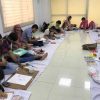
A Story of Triumphs and Tribulations: Implementing Services for Autism in Bangladesh
A few days ago, a friend said to me that my focus on autism, although rather successful, had “sucked out all energy from other critical areas of social need in Bangladesh.” My friend wanted to know if I would be interested in expanding my visibility and successful approach to autism, to other issues that have apparently been left by the wayside due to everyone’s eagerness to work on an issue popular with the Prime Minister’s daughter!
Supporting Informal Workers During the COVID-19 Crisis
Farmers, agricultural labourers, and informal sector workers are the worst hit by COVID-19 and the resulting lockdowns. Here are some steps that the government and banks can take to help them cope financially.
Saluting IPS Journalists and Supporters during Covid19 Pandemic
As the coronavirus pandemic shifts around the world, now stretching even the developed health services of richer nations to breaking point, here at IPS our dedicated journalists in developing countries are standing strong in giving a voice to the Global South.
India’s Trinity of Challenges
The exigencies of combatting the coronavirus pandemic on a war-footing -- Prime Minister Narendra Modi has announced a nationwide stay-at-home lockdown for 21 days to break the chain of transmission -- has certainly deflected attention from equally pressing challenges confronting India. The nation’s capital witnessed horrific communal violence when the US President was visiting India, triggering international outrage, including from the South. The economy also deserves attention as growth has been decelerating since 2016-17. With the virus shock, the pace of expansion will contract as the economy shuts down and slides into recession.
Coronavirus & Early Lessons from China
The impact of the coronavirus is having a profound and serious impact on the global economy and has sent policymakers looking for ways to respond. China’s experience so far shows that the right policies make a difference in fighting the disease and mitigating its impact—but some of these policies come with difficult economic tradeoffs.
Chinese vs. Western Governance: The case of COVID-19
During January the onslaught in the Western media, notably the US and the UK, against the Chinese government’s handling of the Covid-19 epidemic, was merciless. The Chinese government stood accused of an inhumane attitude towards its people, secrecy, a cover-up, and an overwhelming concern for its own survival above all other considerations.
Far From Home During a Pandemic
Nepali workers in Qatar who have been quarantined in a camp that has been closed off for two weeks say that aside from concerns about jobs and health, they are now also worried about their families back home.
TRENDS E-Symposium to Address Post-Corona Globalization Challenges
TRENDS Research & Advisory is organizing its first-ever E-Symposium to discuss the global impacts of the COVID-19 crisis and offer insights on the steps needed to mitigate its negative effects worldwide. This will be the first online symposium of its kind to be organized since the outbreak of the coronavirus in the Gulf and Middle East region.
A Positive Policy Turn for People Most Vulnerable To Drought Worldwide
The international community is developing policy measures and actions to help the people most vulnerable to drought to take early action to avoid loss of life, and the heavy and growing losses of livelihoods and damage to property and ecosystems following droughts.
East Asian Lessons for Controlling Covid-19
By the third week of March 2020, the number of Covid-19 deaths in Italy had overtaken the number of deaths in China. Authorities all over the world are restricting the movements of their populations as part of efforts to control the spread of Covid-19.
COVID-19 in the Time of Insecurity
Humankind has outlived multiple pandemics in the course of world history. The kingdoms and states of Central and Western Europe abolished the institution of serfdom once it had become clear that medieval rule in the aftermath of devastating pestilence would founder without ending the dependency and servitude that characterized the Dark Ages. The vulnerability of entire nations to the risk of total collapse in the absence of widespread access to the most basic healthcare in the Spanish Flu spurred governments to build the public health systems that have made the progress and development of the last hundred years possible. If the past is prologue, then continuity and survival command that we change.COVID-19 Global Humanitarian Response Plan
A global approach is the only way to fight COVID-19, the UN says as it launches humanitarian response plan
Is It Time to Postpone the 2020 Climate Summit?
With the coronavirus pandemic sweeping the planet and the governments of both wealthy and poorer nations overwhelmed by the demands of managing a response, the scheduling of this year’s critical UN Climate Summit is suddenly in doubt.« Previous Page — Next Page »


 Bangladesh: Sarid, born one month early, receives specialized newborn care and grows stronger every day. Credit: UNICEF/UNI944397/Mojumder
Since the onset of the 2000s, global life expectancy has seen an overall rise, attributed to significant technological and scientific innovations in healthcare. Due to an increased understanding of different conditions as well as a rise in cooperation among healthcare experts around the world, there have been major strides made in ensuring that as few people die from chronic illnesses as possible. Despite the belief that healthcare is a fundamental human right, people from low- or middle-class backgrounds, marginalized groups, and underdeveloped countries have far more limited access to basic healthcare services.
The COVID-19 pandemic showed how marginalized communities are disproportionately affected by health crises, proving that we have much work to do in ensuring that no one dies of terminal conditions. While the global response to the coronavirus saw significant strides in immunization and vaccine development, the global outbreak of mpox in 2022 and its upsurge in parts of Africa in 2024 must remind us to remain vigilant.
Other major disease outbreaks in recent years have been linked to the destruction of infrastructure during warfare. Notably, in 2024, the Gaza Strip witnessed a return of the poliovirus since its eradication in the region 25 years ago. Israel’s blockade on Gaza has resulted in the collapse of the region’s sewage plants and desalination plants, and also destroyed healthcare capacities. The UN stated that this lack of clean water and sanitation would lead to an outbreak of cholera and other deadly infectious diseases. The 2026 OCHA Humanitarian Situation Report confirmed that the over two years of conflict in Gaza has produced a catastrophic health emergency, with millions remaining dependent on relief aid amid tight restrictions and no functioning public health system.
IPS is committed to providing full and comprehensive coverage on healthcare challenges around the world. IPS seeks to address the multifaceted causes of such challenges, including unprecedented pandemics, conflict-driven disease outbreaks, as well as socioeconomic barriers to equal healthcare access. IPS is also dedicated to reporting on innovations in the healthcare industry.

The Week with IPS

NEXT STOP - SDGs
Tracking global progress towards a sustainable world
Tracking global progress towards a sustainable world
