Languages
Thursday, November 12, 2026



News and Views from the Global South
Humanitarian Emergencies

COVID-19 Recovery Requires Justice Beyond Rhetoric
Policy responses to the COVID-19 pandemic and resulting economic crisis have exacerbated rather than reduced global inequalities. On the one hand, the net wealth of billionaires has risen to record levels since the outbreak of the pandemic (increasing by more than US$ 5 trillion to US$ 13.1 trillion from 2020 to 2021), on the other hand, the number of people living in extreme poverty has also increased massively (by approx. 100 million to 732 million in 2020).
Even as IUCN Congress Closes, Conservation Debate Hots Up
One of the most hotly debated issues at the recently concluded IUCN Congress in Marseilles was about designating 30 percent of the planet's land and water surface as protected areas by 2030.
Southeast Asian Farmers Adapt, Insure against Growing Climate Risks
As incidents of drought and extreme rainfall increase, farmers in Southeast Asia are partnering with experts to develop targeted weather forecasts to work around the threats and, when adaptation becomes too costly, buy specially designed insurance to protect their livelihoods.
CommonSensing Project Builds Climate Resilience for Small Island Nations
The UK Space Agency’s International Partnership Programme (IPP) CommonSensing is led by the United Nations Institute for Training and Research (UNITAR) through the United Nations Satellite Centre (UNOSAT), which is working with selected partners including the Commonwealth Secretariat, to improve resilience to the effects of climate change in Fiji, the Solomon Islands and Vanuatu.
ECW Interviews Dubai Cares Ceo H.E. Dr. Tariq Al Gurg
H.E. Dr. Tariq Al Gurg was appointed as Chief Executive Officer of Dubai Cares in 2009 and as Vice-Chairman in July 2021. Al Gurg has been a primary driver behind the organization’s success. He has enabled Dubai Cares to contribute to the evidence-base in education, leverage funding and invest in strategic relationships and programs that support the global education agenda. His focus has been to develop Dubai Cares as a recognized best-case practitioner and a global leader in education program design and innovation that is grounded in a philosophy of continuous monitoring and evaluation and rigorous research.
Caribbean Under Threat: Report Reveals Enormous Challenges for the Region
Less than halfway into the 2021 Atlantic Hurricane Season, Jamaica and its Caribbean neighbours were already tallying the costs of infrastructural damage and crop losses from the passage of three tropical storms - Elsa, Grace and Ida. And after a record-breaking 2020 season, the region is on tenterhooks as the season peaks.
A Tale of Two Internationally Trained Medical Doctors in Canada
Wagma Saad, is an Internationally Trained Medical Doctor (ITMD) from Kabul Medical University, Afghanistan, currently living in Canada with her family. Saad graduated in 2016, an education that didn’t come easily to her. With numerous restrictions, blocks and challenges placed at every step, fighting numerous social and political battles, she chased her passion for science and medicine, and after seven years at medical school, she finally got to call herself a doctor.
Afghanistan’s Girls Need our Unwavering Support in Education
The Taliban takeover of government in Kabul is just days old, and the eyes of Afghans and the world are cautiously watching and hopeful to see them stand by their word and ensure that girls’ education be promoted and protected.
In a Watershed Year for Climate Change, the Commonwealth Secretary-General calls for Urgent, Decisive and Sustained Climate Action
This November, five years after signing the Paris Agreement and pledging to limit global warming to 2 degrees Celsius above pre-industrial levels, with a further target of below 1.5 degrees Celsius, world leaders will meet in Glasgow, UK amid COVID-19 pandemic shocks, rising hunger and an Intergovernmental Panel on Climate Change report that warns of more extreme temperature, droughts, forest fires and ice sheet loss due to human activity.
End Vaccine Apartheid
Vaccine costs have pushed many developing countries to the end of the COVID-19 vaccination queue, with most low-income ones not even lining up. Worse, less vaccinated poor nations cannot afford fiscal efforts to provide relief or stimulate recovery, let alone achieve Agenda 2030.
Belarus Crackdown Leaves Human Rights, Minorities Exposed
There will soon be no one left to defend human rights or help minorities in Belarus as the country’s third sector moves closer to “complete liquidation”, international rights groups have warned.
Journalists in Hiding to IPS: Silencing Women Journalists, is Silencing the Voice of Afghan Women
“If I fall into the hands of the Taliban, not only me but my family will be killed,” said AB, 23*, who worked as a broadcast journalist for the past seven years and is a well-known face on the television screen.
Internationally Trained Medical Doctors are Part of the Solution in Post-Covid-19 Canadian Healthcare System
Access to quality healthcare is a basic human right, but for many, especially those in vulnerable communities, the right is not fully realized.
Fiddling in Nairobi While Africa Goes Hungry
As the United Nations gears up for its Food Systems Summit September 23, the urgent need for structural changes in how we grow, harvest, distribute, and consume food has never been more apparent.
Is Canada Missing out on Leveraging ITMDs in Its Healthcare Plans?
With elections right round the corner in Canada, Prime Minister Justin Trudeau recently said that a re-elected Liberal government would spend billions in the coming years to hire family doctors. This report says, Justin Trudeau promised that the Liberals would spend $3 billion over four years starting in 2022 to hire 7500 family doctors and nurses as well as tax and student loan incentives for health professionals who set up shop in rural or remote communities and also pledges an extra $6 billion to wrestle with wait lists.
Allow Least Developed Countries to Develop
The pandemic is pushing back the world’s poorest countries with the least means to finance economic recovery and contagion containment efforts. Without international solidarity, economic gaps will grow again as COVID-19 threatens humanity for years to come.
Closed Borders and Hostile Receptions Await Afghan Refugees
Whether desperately trying to get a place on the last evacuation flights out of Kabul or trekking to the borders with neighbouring Pakistan and Iran, tens of thousands of Afghans are fleeing their country once more. Events are unfolding at speed. The Taliban are establishing a central government in the capital to fill the void of the collapsed western-backed administration, but they do not control all the country as the protracted civil war enters a new stage. The UN refugee agency UNHCR says that in its “worst case scenario” it is preparing for around 500,000 new refugees in the region by the end of this year. As with many past estimates that could prove optimistic.
Vaccine Access Negotiations to Resume as New Variants Spread
A committee that has spent almost a year negotiating the terms of a temporary intellectual property waiver for Covid-19 medicines will reconvene in September after pausing for the European Summer.
Pacific Community Warns of Threat to Education Retention in the Wake of COVID-19
Before the pandemic, many Pacific Island countries grappled with low numbers of students completing secondary education. Now experts in the region are concerned that the closure of schools to contain the spread of COVID-19, and the economic downturn, will lead to even more students dropping out of education early.
Systemic Barriers Exist in Canadian Healthcare for Immigrant Health Professionals
Albert Einstein said, “In the midst of every crisis lies great opportunity.” The year 2020 was a year of crisis across many sectors in Canada, especially the health care sector. There was a severe strain on the health care system through long waiting lists for family physicians, specialists, and vaccination clinics, and Intensive Care Units were working at a high level of capacity.
Tonga’s experience: Implementation of Domestic Violence Legislation
Fourteen Pacific Island Countries have enacted specific legislation to address domestic violence. While these laws have been developed to respond to domestic violence, implementation continues to be a challenge. It is affected by various factors that include practical social, cultural, religious, political, environmental and economic challenges.« Previous Page — Next Page »





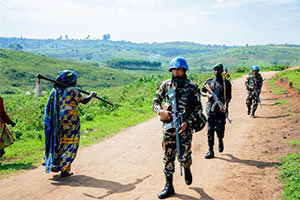 MONUSCO Peacekeepers and FARDC Soldiers Patrol Fataki Area. Credit: UN Photo/Jorkim Jotham Pituwa
Conflict, human rights violations, natural disasters, and famine have been at the forefront of concerns for humanitarian organizations. The escalation of humanitarian crises has led to over 239 million people in need of humanitarian assistance at the start of 2026, as estimated by OCHA’s Global Humanitarian Overview. The 2025 humanitarian appeal received only $12 billion, the lowest funding in over a decade, which has left 24 million fewer people reached in comparison to 2024. Conflict has remained the primary driver of crisis.
Humanitarian emergencies massively impact progress towards the Sustainable Development Goals (SDGs), adversely affecting economic development, inequality, education, planetary well-being, and poverty. Millions of people are faced with reduced access to essential services, including shelter, food, healthcare, and access to clean drinking water. UN Organizations such as UNHCR and the United Nations Children’s Fund (UNICEF) are committed to providing direct relief to affected communities when state governments cannot.
The United Nations 2024 Summit of the Future discussed measures that will be taken to reduce global inequality and promote peacekeeping efforts around the world. The recent UN Climate Change Conference (COP30) in Belém, Brazil, agreed to mobilize $1.3 trillion annually for climate action by 2035, operationalize the loss and damage fund, and triple adaptation finance. However, a fossil fuel transition commitment was not secured, despite climate change and the greenhouse effect being major contributors to humanitarian crises worldwide.
Countries across the world have also rallied to end humanitarian crises, as witnessed in conflicts such as Palestine and Ukraine. IPS is committed to providing relevant and in-depth reports of humanitarian emergencies around the world and their implications.

The Week with IPS

NEXT STOP - SDGs
Tracking global progress towards a sustainable world
Tracking global progress towards a sustainable world