
Friday, October 9, 2026



News and Views from the Global South
Indigenous Rights

Once Decimated by AIDS, Zimbabwe’s Khoisan Tribe Embraces Treatment
Sixty-seven-year-old Hloniphani Sidingo gives a broad smile while popping out through the gate of a clinic in her village, as she heads home clutching containers of anti-retroviral pills.
Alliance to the Rescue of 33 Million Latin American Rural Poor
“There are 33 million rural dwellers in Latin America who are still living in extreme poverty and can’t afford a good diet, clothes or education, and we are not going to help them move out of poverty if we use the same strategies that worked 20 years ago,” FAO regional representative Julio Berdegué told IPS.
Forced Evictions, Rights Abuses of Maasai People in Tanzania
Indigenous Maasai people in Loliondo region,Tanzania have been facing new cases of forced evictions and human rights violations, a major international organisation supporting indigenous peoples' struggle for human rights and self-determination warned.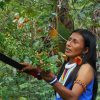
This Is How Indigenous Peoples Help Curb Gas Emissions, End Hunger
 A third of global forests, crucial for curbing gas emissions, are primarily managed by indigenous peoples, families, smallholders and local communities, according to the United Nations.

One Earth: Why the World Needs Indigenous Communities to Steward Their Lands
“Showing them a picture-book crow, I intone ‘kaak’ in Bengali, the State language. While others repeat in chorus, the tribal Santhali first-graders respond with a blank look. They know the crow only as ‘koyo’. They’ll happily roll out glass marbles to count but ask them how many they counted, they remain silent because in their mother tongue, one is mit, two is bariah - very different sounding from the Bengali ek and du.”
A Hostage to Parliament, Temer Sacrifices Indigenous Rights to Save Himself
Brazilians now have new reasons to yearn for and at the same time fear the parliamentary system of government. It facilitates quick solutions to political crises such as the one that is currently affecting the country, but it also further empowers reactionary forces and has led to backsliding on gains such as indigenous rights.
World Still Lagging on Indigenous Rights 10 Years After Historic Declaration, UN Experts Warn
The world’s indigenous peoples still face huge challenges a decade after the adoption of an historic declaration on their rights, a group of United Nations experts and specialist bodies has warned. Speaking ahead of the International Day of the World’s Indigenous Peoples on 9 August, the group says States must put words into action to end discrimination, exclusion and lack of protection illustrated by the worsening murder rate of human rights defenders.
Latin America Discusses How to Make Environmental Rights a Reality
The final declaration of the Earth Summit held in Rio de Janeiro in 1992 stated that “Environmental issues are best handled with the participation of all concerned citizens.” However, this rarely happens in Latin America and the Caribbean.
International Day of the World’s Indigenous Peoples
Over the centuries, Indigenous peoples who have in-depth and locally rooted knowledge of the natural world , have been increasingly dispossessed of their lands, territories and resources and have lost control over their own way of life. 
UN Appoints Experts to DRC’s Kasai to Probe Harrowing Rights Abuses
The UN High Commissioner for Human Rights, Zeid Ra’ad Al Hussein, appointed a team of three international experts yesterday to collect information and raise awareness about grave atrocities in the ongoing conflict in the remote Kasai region of the Democratic Republic of Congo (DRC).
How to Achieve Universal Goals, Strategically
Discussion around the 2030 Agenda for Sustainable Development, a list of 17 goals listed by the UN, was all the buzz in the conference rooms of UN headquarters this week.
Civil Society on SDG Engagement: “We Are Not Guests”
Showing up in record numbers, civil society groups are urging greater inclusion and accountability in sustainable development processes at a UN high level meeting.
Chilean President’s Apology to the Mapuche People Considered “Insufficient”
Chilean President Michelle Bachelet’s formal apology to the country’s Mapuche Indians, for the “mistakes and atrocities” committed against them by the Chilean state, is seen by indigenous and social activists in the central region of Araucanía – the heartland of the Mapuche people - as falling short.
SLIDESHOW: When Women Have Land Rights, the Tide Begins to Turn
 In Meghalaya, India’s northeastern biodiversity hotspot, all three major tribes are matrilineal. Children take the mother’s family name, while daughters inherit the family lands.
When Women Have Land Rights, the Tide Begins to Turn
In Meghalaya, India’s northeastern biodiversity hotspot, all three major tribes are matrilineal. Children take the mother’s family name, while daughters inherit the family lands.
The Relentless March of Drought – That ‘Horseman of the Apocalypse’
By 2025 –that’s in less than 8 years from today-- 1.8 billion people will experience absolute water scarcity, and two thirds of the world will be living under water-stressed conditions. Now it is feared that advancing drought and deserts, growing water scarcity and decreasing food security may provoke a huge ‘tsunami” of climate refugees and migrants.
Asia – Indigenous Women Fight for Justice, Influence and Equity
Indigenous women in Asia are setting examples in their efforts for a more peaceful, fair and equal world. But discrimination, poverty and lack of recognition still hinder indigenous women from fully participating in developing their societies.
Re-Connect with Nature Now… Before It Is Too Late!
Now that president Donald Trump has announced the withdrawal of the world’s largest polluter in history—the United States, from the Paris Accord, perhaps one of the most specific warnings is what a United Nations independent expert on rights and the environment has just said: “We should be fully aware that we cannot enjoy our basic human rights without a healthy environment.”
Large Landowners Jeopardise Indigenous Revival in Brazil
The attack with guns and machetes that left at least 10 Gamela indigenous people wounded, in the northeastern state of Maranhão, highlighted the growing threats against the resurgence and survival of native people in Brazil.
Asia: 260 Million Indigenous Peoples Marginalised, Discriminated
Asia is home to the largest number of indigenous peoples on Earth, with an estimated 260 million of a total of 370 million original inhabitants worldwide. In spite of their huge number-equaling half of the combined population of Europe-- they are often victims of discrimination and denial of their rights.
Social Forum Calls for Fight Against Corruption, to Defend the Amazon
Corruption has penetrated the Amazon rainforest like an illness that infects everything, said Ruben Siqueira, coordinator of the Pastoral Land Commission (CPT), during the VIII Panamazonic Social Forum (FOSPA), which brought together in the Peruvian Amazon jungle representatives of civil society from eight Amazon basin countries.« Previous Page — Next Page »





The planet's roughly 350 million indigenous peoples took notable steps on the international stage in the last decade. They got the world's governments to agree to create a body to represent them at the United Nations, the Permanent Forum on Indigenous Issues, and to appoint a special rapporteur responsible for their human rights. In 2007 a Universal Declaration on the Rights of Indigenous Peoples was approved by the UN. Yet the living conditions of most "tribal", "aboriginal", "native" or "first" peoples remain precarious. IPS, with its network of contributors at the UN and linked to indigenous communities worldwide, is committed to tracking the world community's efforts to do justice to the rights and aspirations of these peoples, with a special current focus on Latin America's 40 million rural indigenous peoples.

The Week with IPS

Tracking global progress towards a sustainable world
