Languages
Thursday, November 12, 2026



News and Views from the Global South
Labour
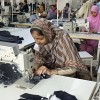
Bangladesh Draws Pakistan’s Garment Makers
Faced with serious political instability and a deteriorating industrial climate, Pakistan’s garment exporters are turning to Bangladesh, a territory which splintered away after a bloody war of independence in 1971.Women Hung Out to Dry in Global Labour Market
Amid policy battles over food production, energy resources and economic decline, one untapped natural resource that is guaranteed to boost production on a global scale has been stubbornly overlooked – the power of women in the labour force.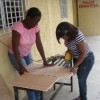
DOMINICAN REPUBLIC: Women Challenge Monopoly on “Men’s Jobs”
From a small office inside a public school on the eastern side of the Rio Ozama in the capital Santo Domingo, a programme operated by a local NGO, Ce-Mujer, has been leading a quiet revolution to empower women in the workplace for the last 13 years.
Global Gold Rush Brings Heightened Scrutiny
Bolstered by gold prices hovering above 1,800 dollars an ounce and a global economy slowly recovering, exploration activity for the precious metal in 2010 once again rebounded. Yet, with this surge comes the attendant scrutiny by activists, investors, and the media into the industry's human rights and environmental records abroad.
NEPAL: No Brakes on Sex Trafficking
While a Nepalese campaign to stop human trafficking gains recognition by the White House and Hollywood, Nepal continues to be a prime source for sex trafficking, thanks to unsettled conditions created by a protracted political crisis.
Namibia Wants to Conclude Talks and Sign EPAs
European Trade Commissioner Karel de Gucht made a pit-stop in Windhoek to appease concerns over a troublesome economic partnership agreement (EPA) ahead of the Africa-European Union summit in South Africa.
INDIA: ‘Women Make Good Business Sense’
Harish Hande believes that involving women in design, manufacture and sales pays dividends in any business, but especially in those making products that women ultimately use.U.S. Residents Poorer, Earning Less, and Less Insured in 2010
According to data released Tuesday by the U.S. Census Bureau, 2.6 million more people slipped into poverty in 2010, placing the number of U.S. residents living below the poverty line at 15.1 percent.Companies Vow to Shun Child Labour in Uzbekistan
With Fashion Week under way in New York, Milan and London, more than 60 apparel companies from the United States and Europe this week publicly pledged to not knowingly buy cotton that has been harvested by children forced to labour in the cotton fields of Uzbekistan.
COTE D’IVOIRE: Suspended Exports Dent Scrap Metal Dealers’ Prospects
Between now and 2012, the Côte d'Ivoire government plans to establish a scrap metal processing industry that will supply finished products to domestic and regional markets. It is unwelcome news for the country's existing scrap dealers.
JAMAICA: Women Coffee Farmers Seize a Plastic Lifeline
Jamaica's Blue Mountains are coffee country. Here, up among the clouds, farmers produce one of the world's most exclusive brands of boutique coffees.SRI LANKA: Catching Itself Young
When Sri Lanka extended the age of retirement for government workers from 55 to 57 years it defied criticism that the island’s public sector was overstaffed and needed serious downsizing.
Q&A: “People With Disabilities Want Work”
More than one billion people worldwide live with disabilities, some 15 percent of the world's population.Donors Fund Forced Labour in Vietnam
A leading international human rights group has accused the United States government, the World Bank and other international donors of indirectly funding forced labour in Vietnam’s drug rehabilitation centres.
CLIMATE CHANGE: Nepali Women Sow a Secure Future
Learning a lesson from crop failures attributed to climate change, Nepal’s women farmers are discarding imported hybrid seeds and husbanding hardier local varieties in cooperative seed banks.TRINIDAD: State of Emergency in More Ways Than One
Ancel Roget believes he knows why the Trinidad and Tobago government imposed a State of Emergency (SOE) on Aug. 21 and used its majority in the Parliament to extend it for another three months.
MAURITANIA: Fresh Attempt at Irrigated Agriculture
In a bid to reduce food insecurity, the Mauritanian government is turning to several new approaches to agriculture, including expanded irrigation schemes, popularising new crops and harnessing the energy of recent graduates.
COLOMBIA: Microcredit Growing Steadily at 15 Percent a Year
The more than 1.2 million microenterprises operating in Colombia are responsible for around 50 percent of all employment. And many of these small businesses owe their existence to the microfinance system, according to a report by Visión Económica, a local business research group.
IRAQ: Trafficked to Baghdad’s Green Zone
Ukrainian and Bulgarian workers are currently camped out on a construction site of half-built luxury villas in Baghdad’s elite "Green Zone" – a vast security enclave housing government offices, embassies and international NGOs - demanding their salaries before being shipped back home.
Mexican Fisherwomen Organise Against Climate Change
Every night, Adlemi Marrufo goes out to catch bait crabs used to fish for octopus in this small seaside town and others along Mexico's Yucatan Peninsula, as part of a women's cooperative that is working to adapt to and fight climate change.PORTUGAL: Young Professionals Flee Crisis – to Former Colonies
Thousands of young people from Portugal are joining an emigration flow that never trickled to a stop but is turning into an exodus now due to the severe economic crisis plaguing this southern European country. And the main destinations of those looking for a better future abroad are former colonies, especially Brazil.« Previous Page — Next Page »





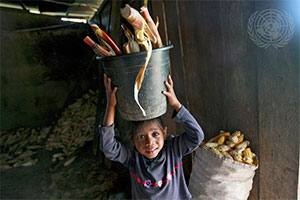 Timorese Girl with Fresh-Picked Corn. Credit: UN Photo/Martine Perret
A global common denominator is the need for a decent job. The economic realities of each country determine just how difficult it is to find one. Despite the labour movement's achievements, serious challenges persist: gender discrimination, child labour, worker migration, the digital divide and AI automation, evaporating pensions, unsafe workplaces, corporate pressure against union organising, negative impacts of trade agreements, and the precariousness of informal employment. The 2025 UN SDG Report identifies jobs and social protections as one of the six priority areas requiring urgent action, with progress either stalled or reversing in many developing nations.
In recent years, the fight to protect labour equality has taken on new dimensions with the rise of Environmental, Social and Governance standards. With the Social aspect aiming to promote equality and human rights, ESG principles have strengthened labour advocacy within corporate and governmental regulatory landscapes. In particular, ESG has become much more institutionalized in emerging economies such as Brazil and China. IPS follows the world’s workers as they confront these challenges - their setbacks and their successes.

The Week with IPS

NEXT STOP - SDGs
Tracking global progress towards a sustainable world
Tracking global progress towards a sustainable world
