Languages
Monday, October 19, 2026



News and Views from the Global South
Latin America & the Caribbean

Rural Systems Mitigate Impact of Overuse of Water in Chile
Local leaders of the Rural Sanitation Services (RSS) warn that the digging of illegal wells by large agro-export companies in Chile is aggravating the effects of drought and threatening drinking water supplies and social peace.
Journalism Under Attack by Neo-Populist Governments in Central America
Practicing journalism in Guatemala, Nicaragua and El Salvador is becoming increasingly difficult in the face of the persecution of independent media outlets by neo-populist rulers of different stripes, intolerant of criticism.
Infrastructure Growth Threatens Brazilian Amazon with Further Deforestation
The mandatory initial permit granted by Brazil's environmental authority for the repaving of the BR-319 highway, in the heart of the Amazon jungle, intensified the alarm over the possible irreversible destruction of the rainforest.
Colombia’s New President May Need U.S. Blessing to Realize his Domestic Agenda
For the first time in its contemporary history, Colombia has a left-wing government. The presidency of Gustavo Petro, who took the reins August 8, marks a significant break from the political status quo. He also represents a stiff test for U.S. influence in Latin America.
Racism Erased (and Erases) Black Intellectual Contribution to Brazilian History
The battle against racism and inequality will be a long one in Brazil, because a prejudice against the intellectual capacity of blacks is a problem rooted in the national culture, and even in the minds of Afro-Brazilians themselves, as well as highlighted in the country's official history.
The Price of Bukele’s State of Emergency in El Salvador
The body of Walter Sandoval shows a number of dark bruises on his arms and knees, as well as lacerations on his left eye and on his head - signs that he suffered some kind of violence before dying in a Salvadoran prison, accused of being a gang member.
Doubts Raised Over Conditions of Mexico’s Mangroves
Two extremes of coastal development can be found side-by-side in the small community of San Crisanto, in the municipality of Sinanché in Mexico’s southeastern Yucatán state.
Biogas Production Awaits Greater Incentives in Cuba
Standing in front of a blue flame on her stove, getting ready to brew coffee, Mayra Rojas says the biodigester built in the backyard of her home in western Cuba has become a key part of her daily life and a pillar of her family's well-being.
Salvadoran Farmers Learn Agricultural Practices to Adapt to Climate Change
With the satisfaction of knowing he was doing something good for himself and the planet, Salvadoran farmer Luis Edgardo Pérez set out to plant a fruit tree on the steepest part of his plot, applying climate change adaptation techniques to retain water.
Pandemic and Poverty Fuel Child Labor in Peru
In the afternoons he draws with chalk on the sidewalk of a downtown street in the Peruvian capital. Passersby drop coins into a small blue jar he has set out. He remains silent in response to questions from IPS, but a nearby ice cream vendor says his name is Pedro, he is 11 years old, and he draws every day on the ground for about four hours.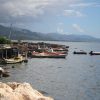
Historic WTO Deal Could Threaten Subsidies, Lifeline for Jamaican Fishers
In the 21 years it took the World Trade Organisation (WTO) to agree on a historic deal on fishing subsidies, the lives of fisherfolk in Rocky Point, Clarendon, have seen many ups and downs.
Fear Returns to Argentina, Once Again on the Brink
Darío is a locksmith in Flores, a traditional middle-class neighborhood in the Argentine capital, who will have to stop working in the next few days. "Suppliers have suspended the delivery of locks, due to a lack of merchandise or because of prices," he laments. His case is an illustration of an economy gone mad in a country that once again finds itself on the brink of the abyss.
Brazilian Metropolis Struggles for – and Against – Water: VIDEO
 Torrential water in the streets and none coming out of the taps are two disasters that plague Brazil's metropolises, especially those located along the upper stretches of rivers, such as Belo Horizonte, capital of the southeastern state of Minas Gerais.
Mexico’s Blue Carbon Pioneers Push on Despite Lack of State Support
When hurricanes Opal and Roxanne both hit the Mexican state of Yucatán in a ten-day period in 1995, they destroyed much of the mangrove forest in the small coastal community of San Crisanto. The local people responded by replanting mangroves and clearing channels among the trees to allow water to flow freely. They committed to protect the ecosystem.
Rising Sea Levels, Drought, Hurricanes and Deforestation Threaten Latin America and the Caribbean
The highest deforestation rates since 2009. The third most active hurricane season on record. Extreme rainfall, floods, and landslides displaced tens of thousands of people. Rising sea levels. Glaciers in Peru lost more than half their size. Add the devastating impacts of the COVID-19 pandemic to the mix, and 2021 was a challenging year for Latin America and the Caribbean.
U.S.-Latin America Immigration Agreement Raises more Questions than Answers
The immigration agreement reached in Los Angeles, California at the end of the Summit of the Americas, hosted by U.S. President Joe Biden, raises more questions than answers and the likelihood that once again there will be more noise than actual benefits for migrants, especially Central Americans.
Clean Energies Seek to Overcome Obstacles in Argentina
The multitude of solar panels stands out along a dirt road in an unpopulated area. Although located just an hour's drive from Buenos Aires, the new solar park in the municipality of Escobar is in a place of silence and solitude, symbolic of the difficulties faced by renewable energies in making inroads in Argentina.
“Made in Chile” Electric Buses, Another Stride Towards Electromobility
The manufacture in Chile of an electric bus christened Queltehue, a wading bird native to the country, is another step towards electromobility and in the fight against pollution that triggers frequent environmental crises and smog emergencies in Santiago and other cities.
A Future Horror and the Hope of the Present
This is an alert message: if nothing stops the wave of violence in Mexico, by the end of 2024 the country could exceed the figure of 150,000 missing persons.
Migrant Workers from Mexico, Caught Up in Trafficking, Forced Labor and Exploitation
Eduardo Reyes, originally from Puebla in central Mexico, was offered a 40-hour workweek contract by his recruiter and his employer in the United States, but ended up performing hundreds of hours of unpaid work that was not authorized because his visa had expired, unbeknownst to him.
Sanctions Are a Boomerang
Economic sanctions against countries whose behavior is reproached by the West operate as punishment although they fail in their declared political objectives, and in cases such as Venezuela the contrast is clearly on display in the windows of high-end stores that sell imported goods.« Previous Page — Next Page » *#*

The Week with IPS

NEXT STOP - SDGs
Tracking global progress towards a sustainable world
Tracking global progress towards a sustainable world

