Languages
Thursday, October 15, 2026



News and Views from the Global South
Latin America & the Caribbean

Doubts about Chile’s Green Hydrogen Boom
In Magallanes, Chile's southernmost region, doubts and questions are being raised about the environmental impact of turning this area into the world's leading producer of green hydrogen.
Biomethane from Garbage: Turning a Climate Enemy into Clean Energy – VIDEO
 Garbage that has accumulated since 1991 in the two landfills in the municipality of Caucaia has become a biomethane deposit that supplies industrial and commercial companies, thermoelectric plants and homes in Ceará, a state in northeastern Brazil.
Small Farmers in Peru Combat ‘Machismo’ to Live Better Lives
"My father was very ‘machista’, he used to beat my mother... It was a very sad life," said Dionisio Ticuña, a resident of the rural community of Canincunca, on the outskirts of the town of Huaro, in the southern Peruvian highlands region of Cuzco more than 3,000 meters above sea level.
Women in Argentine Slum Confront Violence Together
The Padre Carlos Mugica neighborhood looks like another city within the Argentine capital, which most people usually see from up above as they drive past on the freeway but have never visited. It is a shantytown in the heart of Buenos Aires, of enormous vitality and where women are organizing to confront the various forms of violence that affect them.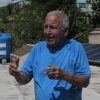
Cuban Innovator Uses Sunlight to Create a Model Sustainable Space
After making a model for a solar heater, installing solar panels and creating a device to dehydrate food with the help of the sun, Félix Morffi is turning his home into a space for the production and promotion of renewable energies in Cuba.
Inequality in Peru’s Education Sector Deepens in Post-Pandemic Era
"When the pandemic hit, I stopped studying, just when it was my last year of school…My parents couldn't afford to pay for internet at home," said Rodrigo Reyes, 18, one of the nearly 250,000 children who dropped out of school in 2020.
Guatemalans Fight Extractive Industries
The majority of the Guatemalan population continues to oppose mining and other extractive projects, in the midst of a scenario of socio-environmental conflict that pits communities defending their natural resources against the interests of multinational corporations.
Mexico’s Electric Mobility, Stuck in Fossil Fuel Traffic
The Mexico City government began testing an elevated route for electric buses with great fanfare on Sept. 11, in a bid to promote more sustainable transport. The initiative is part of an incipient promotion of electromobility in the country, amidst pro-fossil fuel energy policies.
Great Wind and Solar Potential Boosts Green Hydrogen in Northern Brazil
Brazil could become a world leader in the production of green hydrogen, and the northeastern state of Ceará has anticipated this future role by making the port of Pecém, with its export processing zone, a hub for this energy source.
Peruvian Trans Women Fight for Their Right to Identity
"Without recognition of your identity by the State and society, there is no exercise of citizenship or rights," said Leyla Huerta, director of Féminas Perú, an organization that has been working since 2015 to empower transgender women in the face of the highly vulnerable situation they find themselves in.
In the Face of Scarcity, Cubans Dream of Once Again Drinking Their Daily Cup of Coffee
While the Cuban government's plans to increase production begin to bear fruit, Mireya Barrios confesses that she seeks every possible way to enjoy a cup of coffee every day, in the face of high prices and scarcity.
Bukele’s Failed Bitcoin Experiment in El Salvador
A year after Salvadoran President Nayib Bukele decided to make El Salvador the first country where bitcoin is legal tender, the experiment has so far failed, as few of the original plan's objectives have been achieved.
Biomethane, the Energy that Cleans Garbage in Brazil
The increasing productivity with which humankind generates waste has gained at least one sustainable counterpart: the extraction of biogas from landfills, a growing activity in Brazil.
Special Economic Zones: A Nod Towards Capitalism in Venezuela
Venezuela is preparing to replicate the experience of Special Economic Zones (SEZs), a mechanism with which more than 60 countries have tried to draw investment and accelerate economic growth, while under its avowedly socialist government a "silent neoliberalism" is gaining ground.
From Worm Composting to Biofuels, the Caribbean Seeks Solutions to Seaweed Influx
In June 2022, swathes of matted, putrid seaweed took over the shores of beaches across the Caribbean. It was the worst seaweed influx reported since 2011, when ocean currents began depositing tons of the brown seaweed, known as Sargassum, across the region, leaving authorities grappling with the severe ecological and economic fallout.
Racism Hurts People and Democracy in Peru
Banning the use of the same bathroom, insults and calling people animals are just a few of the daily forms of racism experienced by people in Peru, a multicultural, multiethnic and multilingual country where various forms of discrimination are intertwined.
Argentina Seeks Elusive Investment to Fully Exploit Shale Gas
Argentina, which has one of the largest unconventional hydrocarbon deposits in the world, has been forced to import gas for 6.6 billion dollars so far this year.
There’s no Stopping Renewable Power in Chile, but Community Energy Is Not Taking Off
Renewable energies, especially solar and wind power, are growing inexorably in Chile, driven by large companies. But community generation of alternative energy is not taking off, despite a law promoting it.
Biofuels Slow Down Electric Vehicles in Brazil
Brazil celebrated 100,000 electric vehicles in circulation in late July, but this is a drop in the ocean compared to the 46 million combustion vehicles registered in the country and in contrast with the pace of the phasing out of oil in the world's automotive industry.
Chinese Fleet Threatens Latin America’s Fish Stocks
Illegal and excessive fishing, mainly attributed to Chinese fleets, remains a threat to marine resources in the eastern Pacific and southwest Atlantic, as well as to that sector of the economy in Latin American countries bathed by either ocean.
Rural Systems Mitigate Impact of Overuse of Water in Chile
Local leaders of the Rural Sanitation Services (RSS) warn that the digging of illegal wells by large agro-export companies in Chile is aggravating the effects of drought and threatening drinking water supplies and social peace.« Previous Page — Next Page » *#*

The Week with IPS

NEXT STOP - SDGs
Tracking global progress towards a sustainable world
Tracking global progress towards a sustainable world

