Languages
Wednesday, November 4, 2026



News and Views from the Global South
Latin America & the Caribbean

Electoral Revolution in Brazil Aimed at Neutralising Corporate Influence
From now on, elections in Brazil will be more democratic, without corporate interference, which had become decisive and corruptive. A Sep. 17 Supreme Court ruling declared unconstitutional articles of the elections act that allow corporate donations to election campaigns.
Mexican Government Depends More and More on Private Business Partners
The Mexican government has increasingly turned to public–private partnerships (PPPs) to build infrastructure in the energy industry and other areas. But critics say this system operates under a cloak of opacity and is plagued by the discretional use of funds.
Forced Disappearance, a Cancer Eating Away at Mexico
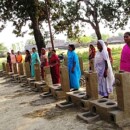
The soup kitchen of the San Gerardo parish in the southwestern Mexican state of Guerrero has become a memorial to horror. Long rows of photos have been hung on the walls of the large hall – the faces of dozens of people who were “disappeared”, abducted, extracted from their lives without a trace.
Fiscal Austerity May Jeopardize Brazil’s Poverty Alleviation Programme
Latin America’s largest economy, Brazil, has succeeded in lifting 36 million people out of extreme poverty over the past 12 years. But it has still a long way to go towards promoting inclusive and sustainable growth.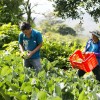
Opinion: Farming the Way Out of Poverty in Honduras
For Honduran farmer Salomón Lorenzo Vázquez, Tuesday has become the most important day of the week. As he tends his lettuce, cauliflower, and broccoli on the farm he has maintained for 20 years, he waits for his weekly visit from the USAID-ACCESO field officer, the man who has helped double his income.Brazil and Germany Take Lead in Tackling Climate Change
Brazil and Germany, the two largest national economies within their respective continents, are taking the lead in tackling climate change through outstanding policies and bilateral relations, according to experts.
Chile’s Altiplano Region Seeks Sustainable Tourism
Chile’s altiplano or high plateau region, pounded by the sun of the Atacama desert, the driest place in the world, is home to dozens of indigenous communities struggling for subsistence by means of sustainable tourism initiatives that are not always that far removed from out-of-control capitalism.
How to Fix Environmental Woes in Buenos Aires Shantytown
Children have been poisoned by lead in Villa Inflamable, a shantytown on the south side of the capital of Argentina. Resettling their families involves a socioenvironmental process as complex as the sanitation works in one of the most polluted river basins in the world.
Opinion: Brazil’s Crisis is a Blessing and a Curse
The Lula development model that lifted 35 million people out of poverty and raised living standards for another 20 million people during the governments of President Luiz Inácio Lula da Silva (2003-2011) has run its course.
Cuban Agroecological Project Foments Local Innovation
Armando Marcelino Pi divides his day between the university, where he teaches philosophy, work on his family farm, and coordinating a group of 33 agroecological farmers, in this mountainous rural municipality in western Cuba.
Costa Rica Finally Allows In Vitro Fertilisation after 15-Year Ban
After banning in vitro fertilisation for 15 years and failing to comply with an Inter-American Court of Human Rights ruling for nearly three years, Costa Rica will finally once again allow the procedure for couples and women on their own.
Antofagasta Mining Region Reflects Chile’s Inequality
The inhabitants of the northern Chilean mining region of Antofagasta have the highest per capita income in the country. But some 4,000 local families continue to live in slums - a reflection of one of the most marked situations of inequality in this country.
Young Cubans Look Forward to Greater Openness to Technology
Young people in Cuba are anxiously awaiting an acceleration of the informatisation of society, which is apparently moving ahead at the same pace as the current reform process, “without haste, but without pause,” according to the authorities.
Investigation of 43 Missing Mexican Students Back to Zero
Nearly a year after the forced disappearance of 43 students in Mexico, the government’s investigation is back to the drawing board, after a group of independent experts refuted all of the official arguments.
Women Revolutionise Waste Management on Nicaraguan Island
A group of poor women from Ometepe, a beautiful tropical island in the centre of Lake Nicaragua, decided to dedicate themselves to recycling garbage as part of an initiative that did not bring the hoped-for economic results but inspired the entire community to keep this biosphere reserve clean.
Investigators Dismiss Mexican Government’s Official Story on Missing Students
A group of independent investigators has roundly dismissed the Mexican government’s claims that the 43 students who went missing in the southwestern city of Iguala last fall were burned to ashes in a garbage dump, reigniting an international outcry against the disappearance and heaping pressure on the government to provide answers to families of the victims.
Crisis in Brazil Hampers Infrastructure under Construction
Besides suffering from macroeconomic imbalances, like a drop in GDP, a high inflation rate and a large public deficit, Brazil is experiencing heavy losses as many oil industry and logistical works grind to a halt.
Two Indigenous Solar Engineers Changed Their Village in Chile
Liliana and Luisa Terán, two indigenous women from northern Chile who travelled to India for training in installing solar panels, have not only changed their own future but that of Caspana, their remote village nestled in a stunning valley in the Atacama desert.
Latin American Scientists Call for More Human Climate Science
With the effects of global warming becoming more and more visible and the complicated socio-economic decisions indispensable to address this planetary crisis, science needs a new breed of experts: social scientists who specialise in climate change.OECD Paving Way for Costa Rica’s Membership
The Organisation for Economic Cooperation and Development (OECD), once a domain of the rich countries, is keen to extend its global membership and has set out a clear path for Costa Rica’s membership, within months of launching accession discussions with Colombia and Latvia.
Local Development, the Key to Legitimising Amazon Hydropower Dams
In the case of the Belo Monte hydroelectric dam in Brazil, the projects aimed at mitigating the social impacts have been delayed. But in other cases, infrastructure such as hospitals and water and sewage pipes could improve the image of the hydropower plants on Brazil’s Amazon rainforest rivers, turning them into a factor of effective local development.« Previous Page — Next Page » *#*

The Week with IPS

NEXT STOP - SDGs
Tracking global progress towards a sustainable world
Tracking global progress towards a sustainable world

