Languages
Tuesday, November 3, 2026



News and Views from the Global South
Latin America & the Caribbean
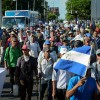
Nicaragua’s Interoceanic Canal, a Nightmare for Environmentalists
The international scientific community’s fears about the damage that will be caused by Nicaragua’s future interoceanic canal have been reinforced by the environmental impact assessment, which warns of serious environmental threats posed by the megaproject.
Central America Seeks Recognition of Its Vulnerability to Climate Change
For decades, the countries of Central America have borne the heavy impact of extreme climate phenomena like hurricanes and severe drought. Now, six of them are demanding that the entire planet recognise their climate vulnerability.
Opinion: The Broken Promises of the Peruvian Development Model
Lima was the host, in October 2015, of the International Monetary Fund (IMF) and the World Bank annual meetings. The two Bretton Woods institutions, criticized for their record of lowering social and environmental conditions, seek to showcase Peru as a success of their neoliberal policies and reforms to the rest of the world.
Cuba’s Extra-Heavy Crude Awaits Technology and Investment
Cuba's oil industry only exploits five percent of the petroleum found in onshore and offshore deposits due to a lack of foreign capital and technology to develop oilfields like Varadero 1000, the country's biggest oil operation until now.
Itaborai, a City of White Elephants and Empty Offices
Itaboraí still recalls its origins as a sprawling city that sprang up along a highway, not far from Rio de Janeiro. But a few years ago big modern buildings began to sprout all over this city in southeast Brazil, whose offices and shops are almost all empty today.
Terrace Farming – an Ancient Indigenous Model for Food Security
Terrace farming as practiced from time immemorial by native peoples in the Andes mountains contributes to food security as a strategy of adaptation in an environment where the geography and other conditions make the production of nutritional foods a complex undertaking.
Toasting to a More Sustainable Planet with Argentine Wine
The region of Cuyo in west-central Argentina is famous for its vineyards. But it is one of the areas in the country hit hardest by the effects of climate change, such as desertification and the melting of mountain top snow. And local winegrowers have come up with their own way to fight global warming.Opinion: The Unlikely Chance of a Serious Human Rights Debate in Cuba
Nearly a month since Pope Francis ended his historic visit to Cuba, any hope that authorities would loosen control on free expression in the country is fading as fast as the chants that welcomed him.
Native Women Green the Outskirts of the City, Feed Their Families
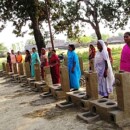
The hands of women who have migrated from rural areas carefully tend to their ecological vegetable gardens in the yards of their humble homes on the outskirts of Sucre, the official capital of Bolivia, in an effort to improve their families’ diets and incomes.
Youngster Uses Technology to Fight Teen Pregnancy in Honduran Village
Four years ago, Cinthia Padilla, who is now 16, learned how to use a computer in order to teach children, adolescents and adults in this isolated fishing village in northern Honduras how to use technology to better their lives.
Social Programmes Here to Stay in Argentina
Above and beyond the uncertainty about the direction that Argentina’s economy will take after the Oct. 25 presidential elections, the government’s main social programmes, which have helped bring down poverty levels in the last decade, are definitely here to stay, no matter who is elected.
Minorities Speak Out in Latin American Population Conference
“The countries of Latin America have not fully committed themselves to the international conventions and have not given indigenous peoples access. Nor have their contents been widely disseminated,” to help people demand compliance and enforcement, said Guatemalan activist Ángela Suc.
Healthy Oceans Key to Fighting Hunger
Seafood offers a large amount of animal protein in diets around the world, and the livelihoods of 12 percent of the global population depend directly or indirectly on fisheries and aquaculture.TPP is “Worst Trade Agreement” for Medicine Access, Says Doctors Without Borders
“The TPP [Trans-Pacific Partnership] will…go down in history as the worst trade agreement for access to medicines in developing countries,” said Doctors without Borders/Médecins Sans Frontières (MSF) in a statement following the signing of the TPP trade deal.
Analysis: Is the Miracle of Microfinance Illusory?
Mohammad Yunus, the founder of Grameen Bank in Bangladesh, transformed the lives of millions of poor women through unsecured micro loans or micro credit to self-help groups. Microcredit evolved into microfinance that also includes savings and basic forms of insurance and transfer mechanisms. Within a few years, microfinance became a global phenomenon. Although microfinance continues to grow, the enthusiasm for it shows signs of waning.
United Arab Emirates and Cuba Forge Closer Ties
Cuba and the United Arab Emirates agreed to strengthen diplomatic ties and bilateral cooperation during an official visit to this Caribbean island nation by the UAE minister of foreign affairs, Sheikh Abdullah bin Zayed Al Nahyan.
The Global South Will Make Its Contribution to Fighting Climate Change
Seen for years as passive actors in the fight against global warming, more than 100 countries of the Global South have submitted their national contributions to reducing greenhouse gas emissions and decarbonising their economies.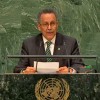
Q&A: ‘We Need to do Development Differently in the Post-2015 Era’
The Sustainable Development Goals (SDGs), adopted at a summit meeting of world leaders at the U.N. headquarters in New York on Sep. 25, reflect the five strategic domains the ACP Group is gearing to focus on, as it repositions itself as a more effective organisation in the global arena, says the 79-nation bloc’s head Dr Patrick Gomes.
Brazil’s Expanded Climate Targets Frustrate Environmentalists
Brazil’s greenhouse gas emissions reduction programme, hailed as bold, has nevertheless left environmentalists frustrated at its lack of ambition in key aspects.
Honduran Fishing Village Says Adios to Candles and Dirty Energy
A small fishing village on the Caribbean coast of Honduras has become an example to be followed in renewable energies, after replacing candles and dirty costly energy based on fossil fuels with hydropower from a mini-dam, while reforesting the river basin.
Men Start to Make Women’s Struggles Their Own in Argentina
The meeting was about gender equality, but for once there were more men than women. It marked a watershed in the struggle in Argentina to make the commitment to equality more than just “a women’s thing.”« Previous Page — Next Page » *#*

The Week with IPS

NEXT STOP - SDGs
Tracking global progress towards a sustainable world
Tracking global progress towards a sustainable world

