Languages
Wednesday, November 11, 2026



News and Views from the Global South
Human Rights

Decapitating Terrorist Organisations Won’t End Terror
Killing terrorist organisations’ leaders is no effective way of fighting terrorism — as it’s political and economic crises on which terrorism feeds.
Tension over Migration Awaits New President and New Constitution in Chile
The failure of Chile's immigration policy, with its toll of deaths, xenophobic sentiments but also shows of solidarity, will be a pressing matter for the incoming administration of Gabriel Boric, who takes office on Mar. 11, and for the drafters of the new constitution, who will include the issue in the text that is to be ready in July.
Bob Dylan and the Ukraine Crisis
Fifty-nine years ago, Bob Dylan recorded “With God on Our Side.” You probably haven’t heard it on the radio for a very long time, if ever, but right now you could listen to it as his most evergreen of topical songs:
If Security Council Fails, Violation of UN Charter Should Go Before International Court of Justice
The widening political crisis in Ukraine, which has taken a turn for the worse with the declaration of two new independent states—the Donetsk People’s Republic and the Luhansk People’s Republic -- is likely to prove once again the ineffectiveness of the 15-member UN Security Council (UNSC).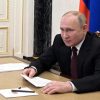
Ukraine: What’s Really Behind Putin’s Deployment of ‘Peacekeeping’ Troops? Experts Explain
Vladimir Putin’s recognition of the independence of the two breakaway republics of Donetsk and Luhansk followed a surreal live broadcast of a security council meeting in the Kremlin. Sitting facing the 13-member council, Putin cajoled and argued as, one by one, his most senior officials – including Dmitry Medvedev, a former president and prime minister, and the country’s foreign minister, Sergei Lavrov – took to the lectern to provide their boss with “reasons” for the formal recognition of the two republics in the country’s east as independent states.
Israel’s Glorious and Gloomy Reality
No people have ever risen from the ashes of near-extinction to form a country and achieve the height of development in every walk of life like Israel. These magnificent accomplishments are now tragically marred with domestically charged struggles which ominously undermine its very existence.
War Clouds in Europe: Alert and Alarm in Asia
What happens in Europe cannot be expected to remain in Europe, particularly in this interconnected world. As war clouds gather in that continent with Russo-Western relations deteriorating by the day over Ukraine, ripples, indeed waves, are expected in consequence on the waters of faraway Asia. There, despite the onslaught of the Covid pandemic, nations appeared till recently to be devoting themselves to economy-boosting efforts, regionally expanding trade (ASEAN), or domestically sharing prosperity (China). Now suddenly, as Russia and the West try to tap the reservoir of till-now vocal support from their respective camp-followers in that region, these countries feel trapped between Scylla and Charybdis. Slowly but surely, given the imperatives of geo-politics, they may be constrained to take sides, albeit in the case of some, most reluctantly.
Struggle in Guatemala Offers Hope for Latin America’s Indigenous People
A struggle for the defense of their territories waged by indigenous Maya Q'eqchi' communities in eastern Guatemala could set a historic precedent for Latin America's native peoples because it would ensure not only their right to control their lands but also their natural resources, denied for centuries.
Children with Disabilities are Not Problems to Solve, but Potential to Nurture, says Nujeen Mustafa
Struggling with stigma and discrimination in an unaccommodating environment, Nujeen Mustafa knows all too well the difficulties children with disabilities face in emergency and protracted crises.
Arc of History Bending Towards (Ab) Using Democracy & Human Rights: A Plea for Multi-Religious Civil Accountability
A “Joint Statement of the Russian Federation and the People’s Republic of China, issued on February 4, 2022 on International Relations Entering a New Era and the Global Sustainable Development”, contains laudable and strong language about commitment to democracy and human rights:
Alarm: Every Two Weeks a Mother Tongue Disappears Due to Globalisation
“Every two weeks a language disappears taking with it an entire cultural and intellectual heritage. At least 43% of the estimated 6000 languages spoken in the world are endangered. Only a few hundred languages have genuinely been given a place in education systems and the public domain, and less than a hundred are used in the digital world.”
Ukraine Crisis: The Stakes are High
If the Ukraine crisis erupts into war – even intensified limited war in Eastern Ukraine with overt Russian intervention – the consequences will be severe and far-reaching.
What are the Most Corrupt Countries in Latin America?
Latin American countries scored poorly on Transparency International’s latest corruption index, with the worst joining the ranks of war-torn nations and dictatorships.
APDA, AFPPD Celebrate Forty Years of Championing Population and Development Agenda
 The Asian Population and Development Association (APDA) has been ahead of the international community in addressing population and development issues, says the former Japanese Prime Minister and Chair of APDA Yasuo Fukuda.

The Weaponisation of Libya’s Elections
Libya was supposed to hold elections early this year. Instead, it now has two rival political administrations — a return of the divisions of the past.
Dream. Dare. Do.
Conflict, forced displacement, climate change and COVID-19 are disrupting the education of millions of crisis-affected children and adolescents around the world.
Responding to New Threats to Poverty Eradication in Asia
With consistent, robust economic growth, countries across Asia have made monumental strides in eradicating extreme poverty over the past 30 years. In Bangladesh, for example, the population living in extreme poverty dropped from 43% in 1991 to 10.5% in 2019. Similarly in Cambodia, poverty incidence fell from 53% in 2004 to below 10% by 2016.
The Global South Moves Towards Vaccine Sovereignty
In 2021, Global South countries came out on the short end of vaccine supply deals. In 2022, they are building capacity to produce vaccines themselves.
UN’s Investigative Arm Launches Survey to Probe Racism & Discrimination in World Body
The Joint Inspection Unit (JIU)-- the UN’s only independent external oversight body mandated to conduct evaluations, inspections and investigations-- is conducting a survey probing the widespread racism and discrimination in the world body.
“It Isn’t Easy Being a Journalist in Kashmir”
My name is Bisma Bhat and I am a journalist in Srinagar, Kashmir. I currently work as a features writer at Free Press Kashmir, a weekly magazine.
Three Key Questions for Understanding Shifts in Global Poverty
In 2010 and the following years, there was attention to the fact that much of global poverty had shifted to middle-income countries (for example here, here, and here).« Previous Page — Next Page »





One world, one humanity, now one court to defend its rights. Another step towards universal human rights, but not remotely a step far enough. The United Nations adopted the Universal Declaration of Human Rights more than half a century ago, but that has done little to stop violations the world over, just as the Geneva Convention has not protected prisoners of war enough. Democracy itself and the freedom it presupposes has not been protective enough. This is the century to move from politicisation of human rights towards humanising political ways. IPS keeps an eye on that difficult path.

The Week with IPS

NEXT STOP - SDGs
Tracking global progress towards a sustainable world
Tracking global progress towards a sustainable world
