Languages
Wednesday, November 18, 2026



News and Views from the Global South
Human Rights
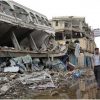
US & Western Arms in Yemen Conflict Signal Potential War Crime Charges
When US political leaders urged the Trump administration to either reduce or cut off arms supplies to Saudi Arabia – largely as a punishment for its indiscriminate bombings of civilians in the four-year old military conflict in Yemen—President Trump provided a predictable response: “If we don’t sell arms to Saudi Arabia, the Chinese and the Russians will.”
The Geneva Centre organized a panel debate-book presentation on Migration and Human Solidarity, benefitting from the presence of panellists with first-hand experience in the Mediterranean Sea
The current massive displacement of people worldwide has turned into a politicized crisis of solidarity, with closed border policies and the rise of xenophobic, populist trends. The blocking and harassment of search and rescue ships and of NGOs that legally attempt to pursue their activities compromises all efforts to save the lives of persons in distress in the Mediterranean Sea. States should respect the international legal framework in particular the maritime law and take responsibility for the lives of migrants and refugees.
A Treaty to End Corporate Immunity?
When Ecuadorean diplomat Luis Gallegos first proposed a “Binding Treaty on Business and Human Rights,” many countries and environmental activists welcomed the idea with open arms.
Women and Girls “Preyed on as the Spoils of War”
“They forcefully took us away and kept us like prisoners,” Lydia Musa, a former Boko Haram captive who was abducted at the age of 14 during an attack on her village in Gwoza, in Nigeria’s north eastern Borno State, tells IPS. Musa and two other underaged girls were captured and forced to marry Boko Haram fighters in spite of their protests that they were too young to marry.At the initiative of the Geneva Centre, a coalition of NGOs will organize on 9 May an Emergency Assembly on the rise of global racism and the implementation of the Durban Declaration and Programme of Action (DDPA)
A panel debate will be organized by the Geneva Centre for Human Rights Advancement and Global Dialogue – a think tank holding special consultative status with the UN Economic and Social Council –, in partnership with the World Against Racism Network and the Global Coalition for the International Decade for People of African Descent, on the surge of global racism, hate speech and religious intolerance around the world.
Against All Odds, Indigenous Villages Generate Their Own Energy in Guatemala
In the stifling heat, Diego Matom takes the bread trays out of the oven and carefully places them on wooden shelves, happy that his business has prospered since his village in northwest Guatemala began to generate its own electricity.
Bleak Outlook for Press Freedom in West Africa
When former footballer George Weah became president of Liberia in 2018, media practitioners felt they had in him a democrat who would champion media freedoms. “But we were mistaken,” journalist Henry Costa told IPS.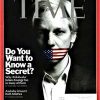
Lost in the Cyberworld? The Enigmatic Mr Assange
Trump´s electoral success was preceded by a rise of chauvinistic politics in most of Europe, paired with electoral triumphs of far-right candidates in several other countries. A development accompanied by revelations of corrupt leaders laundering and transferring illegally obtained money, aided by financial institutions finding the means to do so. The world seems to move away from a rule-based order to a state of affairs dominated by might and wealth. World leaders´ private business dealings thrive within a global environment where laws intended to protect human rights are becoming increasingly ineffective. Foreign policies appear to be adapted to private gains and personal vendettas. Global financial systems seem to be crafted to facilitate kleptocracy and money laundering, while repression and violence smite whistle-blowers and daring journalists. Endeavours supported by propaganda and smear campaigns orchestrated by political/financial consultants and private investigation firms. All this is made possible through complicated schemes using the internet.
Sri Lanka’s Easter Sunday Carnage: Quo Vadis?
I returned from attending a three-hour Easter Sunday mass at the Fordham University Church around midnight New York time on April 20, 2019, when my phone rang and a colleague asked me what’s going on in Sri Lanka? I said what is going on? He said there were a series of coordinated terrorist bombings with multiple fatalities and scores of injuries in my native country. For the next four and a half hours I was on the phone trying to piece together what happened, including reaching out to Sri Lanka’s Secretary of Defence Hemasiri Fernando.
Economic Empowerment of Women Good for All
Government staffer Souhayata Haidara enjoys talking about her life in a patriarchal society. Her career is a triumph of patience and perseverance, she tells Africa Renewal with a smile and a wink.
Media Landscape Marked by “Climate of Fear”
Journalists around the world are increasingly seeing threats of violence, detention, and even death simply for doing their job, a new press index found.
**UPDATED: Activists Spotlight Education for Development and Rights
“Communicate something to your partner in silence.” The pairs of strangers or acquaintances who received this instruction gesticulated, smiled, shook their heads, touched their hearts and otherwise tried to transmit a message.
Women in Ethiopia Still Struggle Despite Leadership in Government
Following 2018 elections in Ethiopia, a record-breaking number of women now hold leadership positions in the country's government. But women still struggle to rise up the ranks in other sectors.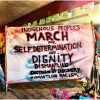
UN’s Empty Promises to World’s Indigenous Peoples
The United Nations, as in so many other areas, gives lip service in support of Indigenous issues while lacking the political will and enforcement power over individual member states to comply with the protection of fundamental human rights for the Original Nations of Indigenous Peoples of the world.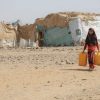
Trump’s Veto Will Trigger More US Arms to Kill Civilians in Yemen
President Donald Trump’s decision to veto a bi-partisan Congressional resolution to end US military involvement in a devastating Saudi-led four-year conflict in Yemen-- is expected to escalate the ongoing war in the trouble-plagued region.
‘You Cannot Muzzle the Media’: Nigerian Journalists on Press Freedom under Buhari
When Nigeria's incumbent president Muhammadu Buhari won re-election this year, he campaigned (as he did in 2015) on an image of good governance and anti-corruption. Billboards in the capital, Abuja, bore the smiling faces of the president--who first led Nigeria as military ruler from 1983-1985--and his vice-president Yemi Osinbajo, and called for voters to let them "continue" their work and take the country to the "Next Level."
Nicaraguans “Will Not Be Silenced”
A year since Nicaragua spiralled into a socio-political crisis, human rights leaders have called on the country to refrain from violence and uphold the human rights of its citizens.
Why the Prosecution of Julian Assange is Troubling for Press Freedom
After a seven-year standoff at the Ecuadorean embassy in London, British police last week arrested WikiLeaks founder Julian Assange--a development press freedom advocates had long feared.
Global Governance and Information
The past seventy years since the end of the second world war have been marked by profound changes in our international system. Relations between states have become more horizontally structured interactions with a rising significance of the common good articulated and pursued by newly-created international programmes and organisations.
Brunei’s Shariah Code & the New Stone Age
Over a week ago – on April 3 – Brunei, the tiny South East Asian kingdom on the island of Borneo, announced its citizens would face the full force of the Shariah law.
From Empowerment During War, Eritrean Women Must Fight Gender Discrimination in a New Peace
As the first anniversary of the swearing on Ethiopia’s Prime Minster Abiy Ahmed rolled around last week, Ethiopians – and observers worldwide – marvelled at the pace and scale of radical reform he has brought to the formerly repressed country in the past year.« Previous Page — Next Page »


One world, one humanity, now one court to defend its rights. Another step towards universal human rights, but not remotely a step far enough. The United Nations adopted the Universal Declaration of Human Rights more than half a century ago, but that has done little to stop violations the world over, just as the Geneva Convention has not protected prisoners of war enough. Democracy itself and the freedom it presupposes has not been protective enough. This is the century to move from politicisation of human rights towards humanising political ways. IPS keeps an eye on that difficult path.

The Week with IPS

NEXT STOP - SDGs
Tracking global progress towards a sustainable world
Tracking global progress towards a sustainable world
