
Wednesday, November 18, 2026



News and Views from the Global South
Human Rights

West Africa’s Fine Line Between Cultural Norms and Child Trafficking
On a bus in Cotonou, Benin’s commercial capital, four Nigerian girls aged between 15 and 16 sit closely together as they are about to embark on the last part of their journey to Mali, where they are told that their new husbands, whom they never have met, await them.
LGBTQI Rights in the Balkans: A Perpetual Struggle
Romanian Adrian Coman and his American-born partner Clai Hamilton had two major reasons to celebrate when they tied the knot last June.
Women, Peace and Security: Let’s Turn Words into Action
To be able to tackle a problem we must first recognize that it exists. When I first spoke at the United Nations Security Council in 2009, I was asked why the issue of sexual violence was even relevant to peace and security. At that time, it was not generally accepted that rape is in fact a weapon of war. Today, that statement is both widely accepted and central to the international community’s understanding of this crucial issue.
Executive Director of the Geneva Centre appeals to Ministers from 30 countries to endorse the Geneva Centre World Conference Outcome Declaration on “Moving Towards Greater Spiritual Convergence Worldwide in Support of Equal Citizenship Rights”
The Geneva Centre for Human Rights Advancement and Global Dialogue attended the first day of the Fifth World Forum on Intercultural Dialogue held in Baku under the motto “Building dialogue into action against discrimination, inequality and violent conflict.”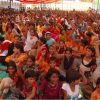
Want Social Change? Give Communities More Agency
No external force can bring about real change in society. Only the community itself can.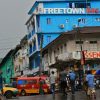
Sierra Leone’s Journalists Demand Justice for “Murdered” Colleague and Call for Law Reform
Ibrahim Samura, erstwhile editor and publisher of New Age, an independent Freetown newspaper, was beaten up with “heavy-duty metal chains and sticks” during Sierra Leone's presidential run-off election in March 2018—in front of the police and army. He died from his injuries three months later. But more than a year since the assault the perpetrators are yet to be brought to book.
4 Revolutionary Tips to Stop Aquaculture and Fisheries Ignoring, Resisting or Eroding Gender Equality
In my years in fisheries research in Australia, few researchers were women, all fishers were assumed to be men, "girly" calendars were occasionally pinned on the office, lab or tea room wall at work and the workplace rules of engagement for women were still being worked out by trial and error. I vividly remember when my colleague, “Jessie”, the only woman technician in our research agency, was assigned to go into the field for a week to support a fish tagging project run by men scientists. The men took umbrage and went to the Union to protest this affront to their work conditions. The Union warned them that they could be sacked for discriminating against a woman. So change was at hand - or so it seemed.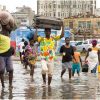
Future of Our Planet Requires Deeper Cooperation, Long-term Thinking
For most of the 7 billion people on the planet, global institutions are remote, far removed from their day to day existence. Yet, our global institutions matter.
On World Press Freedom Day, Let us Ask: #WhereIsAzory?
Speaking in parliament recently, Tanzania’s information minister, Harrison Mwakyembe, wondered why people were still concerned about the whereabouts of Azory Gwanda, a freelance journalist who went missing in November 2017 in the country’s Coast Region.

Fifth World Forum on Intercultural Dialogue: Geneva Centre announces strategic partnerships with civil society organizations and national human rights commissions in Azerbaijan
In relation to the participation of the Geneva Centre at the Fifth World Forum on Intercultural Dialogue, the Executive Director of the Geneva Centre Ambassador Idriss Jazairy participated in several high-level meetings in Azerbaijan.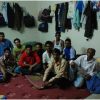
Are Migrant Workers Humans or Commodities?
The United Nations has estimated a hefty $466 billion as remittances from migrant workers worldwide in 2017—and perhaps even higher last year.
Under Abiy, Ethiopia’s media have more freedom but challenges remain
(CPJ) - During a trip to Addis Ababa in January, it was impossible to miss the signs that Ethiopian media are enjoying unprecedented freedom. A flurry of new publications were on the streets. At a public forum that CPJ attended, journalists spoke about positive reforms, but also openly criticized their lack of access to the government. At a press conference, journalists from state media and the Oromia Media Network, an outlet previously banned and accused of terrorism, sat side by side.
Trump’s Arms Control Gambit: Serious or a Poison Pill?
Smart U.S. leadership is an essential part of the nuclear risk reduction equation. Unfortunately, after more than two years into President Donald Trump’s term in office, his administration has failed to present a credible strategy to reduce the risks posed by the still enormous U.S. and Russian nuclear arsenals, which comprise more than 90 percent of the world’s nuclear weapons.
“In Venezuela, Union Organising is Illegal”
Maduro or Guaidó? Neither, according to José Bodas. He is the former General Secretary of the FUTPV, Venezuela’s main oil workers trade union, and according to him, neither the president nor the challenger from the opposition has the people’s best interests in mind.
Massacre of the Innocents: Whereto from Here?
We have been here before. This blooded precipice is familiar, this looming abyss. What is unfamiliar, what renders the Easter Sunday massacre most vile and truly nightmarish is the total absence of any knowable rationality.
VIDEO: World Press Freedom Day 2019 – Media for Democracy: Journalism and Elections in Times of Disinformation
 Journalists and media outlets worldwide have recently been subject to a subtle wave of vilification. Populist rhetoric and public indifference have begun to threaten the very foundation of our freedom.

Kenya and Ethiopia Cross-Border Initiative: A Move Towards Sustainable Peace
Many years of internecine conflict is being replaced by a new narrative of peace along the Kenya-Ethiopia border. Communities that once fought each other are now dreaming of a joint journey towards a better future.
Terror and Religion
Just before nine o´clock in the morning of April 21st, Christians in Sri Lanka were in their churches peacefully celebrating Easter Sunday, while tourists were waking up in their hotel rooms. Suddenly explosions blasted three churches and three hotels. Among the ruins lay hundreds of wounded people, as well as 253 corpses of men, women and children. They had been killed and maimed because some fellow human beings believed they acted in God´s name and out of promises of an unproven, heavenly bliss if they killed themselves after obliterating people they did not know; sowing death, lifelong suffering and sorrow.
Land Conservation: A Risky Business
In light of land degradation and climate change, the protection of the environment is crucial—but the protection of the very people working tirelessly and with much risk to preserve nature should be just as important.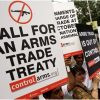
US Takes Back Signature on Arms Trade Treaty
The United States dropped a political bombshell when President Donald Trump announced his administration would withdraw from the historic Arms Trade Treaty (ATT) which the former Obama administration signed in September 2013.
Muslim Terrorists Heading Towards a Jihadist Hell Hole
The history of terrorism in Sri Lanka reveals a clear pattern. The first to take up arms in the post-Independent era were the misguided Sinhala youth. They were educated youth desperately running in search of a quick solution to establish their classless paradise. Their violence did not take them anywhere.« Previous Page — Next Page »


One world, one humanity, now one court to defend its rights. Another step towards universal human rights, but not remotely a step far enough. The United Nations adopted the Universal Declaration of Human Rights more than half a century ago, but that has done little to stop violations the world over, just as the Geneva Convention has not protected prisoners of war enough. Democracy itself and the freedom it presupposes has not been protective enough. This is the century to move from politicisation of human rights towards humanising political ways. IPS keeps an eye on that difficult path.

The Week with IPS

Tracking global progress towards a sustainable world
