Languages
Tuesday, November 24, 2026



News and Views from the Global South
Human Rights

“World Toilet Day” No Joke for Billions Without Sanitation
The United Nations has a longstanding tradition of commemorating political milestones - like the abolition of the slave trade - or sustaining day-long vigils on controversial issues such as a ban on nuclear tests.
Treating the Injured Leaves its Wounds
Ajab Gul is haunted by bloody scenes. He hears women crying and children screaming. “I can’t sleep,” says the 25-year-old health worker at a well-known Pakistani hospital in the frontier city that tends to terror victims.
Bachelet Poised for Easy Win in Fed-Up Chile
Voters fed up with the extremely unequal distribution of wealth and power in Chile are expected once again to elect a centre-left government Sunday.
Indonesia’s Forest Communities Victims of ‘Legal Land Grabs’
Indonesia’s rainforests are facing “legal land grabs”, allege NGOs. Its ancient communities are finding that their ancestral lands are slipping into the hands of foreign companies for oil palm cultivation, as demand for the product grows in Europe, India and China.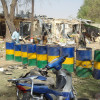
U.S. Labels Boko Haram, Ansaru as Terror Groups
The U.S. government has designated the Nigeria-based militant groups Boko Haram and Ansaru as terrorist organisations, prohibiting U.S. citizens from interacting or aiding the groups.
Las Pavas Extracts a Miracle from God
The rural community of Las Pavas in northern Colombia received this year’s National Peace Prize Wednesday in recognition of its peaceful struggle for land that is claimed by an oil palm company, in a case that became an international symbol of the conflict over land in this country.
Rwandans Face Extradition over Genocide
A French appeals court has approved the extradition of two Rwandans wanted at home for their alleged role in the 1994 genocide that claimed about 800,000 lives.
The NSA and the End of the U.S. Empire
The linchpin of an empire is the link between two elites, one in the imperial centre, the others in the peripheries. Symmetric alliances exist, but not when there is a superpower at the centre.
Cairo Women Bring Men Back on the Rails
Nihal Saad Zaghloul is an Egyptian woman in her late twenties. Like other young women, she faces the daily risk of sexual harassment on the streets of Cairo. But Egypt’s revolution made her realise that people can unite and that she can make a difference.
U.N. Peacekeeping Goes on the Offensive
As U.N. peacekeeping operations assume a more agressive role in conflict zones, the first concrete results came last week when the armed forces of the Democratic Republic of Congo (DRC) defeated the M23 rebel group after a 20-month-long insurgency.
U.N. Climate Meet: “It’s About Survival”
For the small island developing states of the Caribbean, there is nothing more important than the United Nations Climate Change Conference taking place here at the national stadium of Poland from Nov. 11-22.Seeking Asylum Can Mean Living on the Streets
Asylum seekers who travel to the United States to escape persecution in their home countries receive no assistance from the U.S. government and are not allowed to work for months, which activists say lead many to live on the streets or work illegally.
Idyllic Island Confronts Bloody Past
Anguish over the whereabouts of loved ones who went missing during a five-year civil conflict that ended a decade ago continues for countless families in the Solomon Islands. Searching for the remains of those who disappeared is vital to enduring peace in this culturally diverse south-west Pacific island nation of 550,000.OP-ED: Saudi Anger Masks Concern About Loss of Influence
Saudi Arabia’s public anger against the United States masks the kingdom’s growing concern about its diminishing influence in the Persian Gulf and the wider Arab world.Are Iran and the United States Headed Towards a “Heroic Agreement”?
Signs of rapprochement between Tehran and Washington are growing. A new era seems about to begin. It is now possible to imagine a political solution that would put an end to the 33-year confrontation between Iran and the United States.
Little Preparation for a Great Disaster
Despite the government’s early warnings and evacuation of up to 800,000 people from vulnerable areas, the category 5 - the highest level - Typhoon Haiyan (Yolanda to Filipinos) has left some communities and coastal zones in the central Philippine islands of Visayas in complete ruins.
Gaps Threaten Conflict Minerals Certification
Countries in Africa’s Great Lakes region are moving too slowly on an international plan to certify the sourcing of “conflict minerals”, researchers here are warning, a failure that could threaten the entire certification process.
Small Islands Demand U.N. Protection
Threatened by rising seas, some of the world's small island developing states (SIDS) are demanding that the U.N.'s new set of Sustainable Development Goals place a high priority on the protection of oceans and marine resources.
Visibility from High-Profile Human Rights Inquiries Trickles Down in Chile
Ongoing efforts to determine the causes of the deaths of high-profile Chileans - singer-songwriter Víctor Jara, former presidents Eduardo Frei Montalva and Salvador Allende, and Nobel Literate Prize-winner Pablo Neruda – indirectly bring visibility to thousands of other victims of Chile’s 1973-1990 dictatorship.
Mining Takes a Bite Out of Guyana’s Amazon
Guyana is engaged in a balancing act to save its rainforest, regarded as a living treasure, from the destructive activities of miners digging their way to another kind of treasure buried beneath this fragile ecosystem.
Opportunity Knocking
A sense of urgency brought on in recent years by food price volatility inspired collective action to reduce the likelihood of further price spikes and food supply shocks.« Previous Page — Next Page »


One world, one humanity, now one court to defend its rights. Another step towards universal human rights, but not remotely a step far enough. The United Nations adopted the Universal Declaration of Human Rights more than half a century ago, but that has done little to stop violations the world over, just as the Geneva Convention has not protected prisoners of war enough. Democracy itself and the freedom it presupposes has not been protective enough. This is the century to move from politicisation of human rights towards humanising political ways. IPS keeps an eye on that difficult path.

The Week with IPS

NEXT STOP - SDGs
Tracking global progress towards a sustainable world
