Languages
Tuesday, October 6, 2026



News and Views from the Global South
Water & Sanitation

Caribbean Biodiversity Overheated by Climate Change
The nearly 7,000 islands and the warm waters of the Caribbean Sea are home to thousands of endemic species and are on the migration route of many kinds of birds. Preserving this abundant fauna requires multilateral actions in today’s era of global warming.
Innovative Project to Provide Renewable Energy 24/7 to Chilean Village
A novel energy project in Chile will combine a pumped-storage hydroelectric plant operating on seawater and a solar plant, to provide a steady supply of clean energy to a fishing village in the Atacama Desert, the world’s driest.
Drought Boosts Science in Dominican Republic
The recent lengthy drought in the Dominican Republic, which began to ease in late 2015, caused serious losses in agriculture and prompted national water rationing measures and educational campaigns.
Floods Pose Challenge for South American Integration
The flooding that has affected four South American countries has underscored the need for an integrated approach to addressing the causes and effects of climate change.
Water, Water Everywhere but Too Much or Too Little
“Water is at the core of the Lima-Paris Action Agenda (LPAA), but it is true that for a long time water and oceans issues have been marginalized in climate conferences, considering that 90 per cent of natural catastrophes are linked to water and 40 per cent of global population will face water scarcity from now to 2050,” stated Marie-Ségolène Royal, French Minister of Ecology, Sustainable Development and Energy, during the press conference at the launch of the #ClimateIsWater initiative at COP21. “It is through water that it is possible to measure climate change impacts,” she said.
Caribbean Looks to Aquaculture Food Security to Combat Climate Change
Jimmi Jones and wife Sandra Lee’s fish farm in Belize City is unique. His fish tanks supply water and nutrients for his vegetable garden needs and the plants filter the water that is recycled back to the tanks.
Antigua: Surrounded by Sea but Catchments are Empty
Antiguan Veronica Yearwood no longer panics when she hears that the rainfall forecast for the tiny Caribbean island is again lower than average rainfall.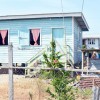
Climate Change and Floods, the Uninvited Guests of Guyana
Mrs Doodnauth is being interviewed about the fact that the effects of climate change are what led the family to abandon their home and farmlands in the Mahaica Creek and relocate to an area identified by the authorities. She was clear climate change was not the reason.- “And what’s the reason?”
Climate Change Will Increase Damage, Losses in Coastal Communities
Residents of Rocky Point, a sleepy fishing village on Jamaica’s south coast, woke up one July morning this year to flooded streets and yards. The sea had washed some 200 metres inland, flooding drains and leaving knee-deep water on the streets and inside people’s home, a result of high tides and windy conditions.
Water Shortages Have a Heavy Impact on Women in Cuba
Denia Arrascaeta suffers water shortages on a near daily basis in the neighbourhood in the Cuban capital where she lives. “Sometimes I don’t even have water to drink,” she told IPS.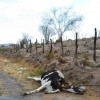
Drought Threatens Water-Truck Lifeline in Parched Northeast Brazil
For the rural community of Pacheco in northeastern Brazil, the local school has never been so important. It is now the only place in the drought-stricken area that has water on tap.
Climate Refugees and a Collapsing City
With multiplying impacts of climate change - increasing floods, cyclones, and drought - thousands of climate refugees are migrating to Dhaka. And the city, well beyond its carrying capacity, is bursting at the seams.Africa’s Climate Change Funding May Hit 100 Billion by Mid-Century
When the Climate Summit opens in Paris next week, one of the biggest issues facing world leaders is funding: how best to raise the billions of dollars needed to prevent the devastating consequences of global warming worldwide.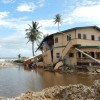
Sinking into Paradise: Climate Change Worsening Coastal Erosion in Trinidad
As unusually heavy rainfall battered Trinidad's east coast a year ago, a lagoon here was overwhelmed, flooding a major access road to the island’s south-eastern communities. As the flood waters poured over Manzanilla beach, they washed sand away, caved in sections of road and collapsed a seawall at a tourist beach facility. Further damages were also incurred with the flooding of homes and agricultural plots.
Against the Odds, Caribbean Doubles Down for 1.5 Degree Deal in Paris
Negotiators from the 15-member Caribbean Community (CARICOM) are intent on striking a deal to keep the global temperature rise at 1.5 degrees of pre-industrial levels, but many fear that a 10-year-old agreement to buy cheap petroleum from Venezuela puts their discussions in jeopardy.Open Defecation to End by 2025, Vows UN Chief, Marking World Toilet Day
The state of the world’s toilets reveals the good, the bad and the ugly – but not necessarily in that order.UN Advisory Board Seeks Powerful New Global Arena for Water and Sanitation
A 21-member UN Advisory Board on Water and Sanitation (UNSGAB), which has just completed its 11-year mandate, is calling for a complete overhaul of how the United Nations and the international community deals with two unresolved socio-economic issues on the post-2015 development agenda: scarcity of water and inadequate sanitation.
Jamaica’s Aging Water Systems Falter Under Intense Heat and Drought
This past summer Jamaicans sweltered through their third consecutive year of reduced rainfall resulting in wild fires, a crop-killing drought and daily water cuts.
Drinking Water Shortages Plague Pakistan Region
“We have to purchase water from the municipalities for our daily use. The water column has gone too deep and it is hard to pump out the commodity,” said Muhammad Shakir, a resident of Hayatabad, an upscale town in Peshawar, the capital of Khyber Pakhtunkhwa (KP).
Kenya’s Market-Based Youth Project Changing Lives
Though the Kenyan government has demonstrated a commitment to lift its youth out of poverty, particularly those in the informal settlements, projects designed for youth continue to be crippled by rampant corruption.
Climate Change Threatens Flavour of Argentine Wine
Purple garlic that is losing its color? More translucent wine? Climate change will also affect the flavours of our food in the absence of measures to mitigate the impacts of global warming, which are already being felt in crops that are basic to local economies, such as in the Argentine province of Mendoza.« Previous Page — Next Page »





The Week with IPS

NEXT STOP - SDGs
Tracking global progress towards a sustainable world
Tracking global progress towards a sustainable world
