Languages
Wednesday, October 14, 2026



News and Views from the Global South
Water & Sanitation

Humanitarian Emergencies Lend Urgency to World Population Day
On the eve of World Population Day, the United Nations is fighting a virtually losing battle against growing humanitarian emergencies triggered mostly by military conflicts that are displacing people by the millions – and rendering them either homeless or reducing them to the status of refugees.
Q&A: “Climate Change is About Much More Than Temperature”
The cost of inaction is high when it comes to climate change and, so far, countries’ commitments to reduce greenhouse gas (GHG) emissions are not enough, says Michel Jarraud, Secretary-General of the World Meteorological Organisation (WMO).
Caribbean Fights to Protect High-Value, Declining Species
Threats from climate change, declining reefs, overfishing and possible loss of several commercial species are driving the rollout of new policy measures to keep Caribbean fisheries sustainable.
Drastic CO2 Cuts Needed to Save Oceans
If global carbon dioxide emissions are not dramatically curbed, the world's oceans – and the many services they provide humanity – will suffer "massive and mostly irreversible impacts," researchers warned in Science magazine Friday.
Toilets with Piped Music for Rich, Open Defecation on Rail Tracks for Poor
As most developing nations fall short of meeting their goals on sanitation, the world’s poorest countries have been lagging far behind, according to a new U.N. report released here.
U.N. Chief Seeks Equity in Paris Climate Change Pact
When the 193-member General Assembly hosted a high level meeting on climate change Monday, Secretary-General Ban Ki-moon warned that any proposed agreement at an upcoming international conference in Paris in December must uphold the principle of equity.
Donors Pledge Over 4.4 Billion Dollars to Nepal – But With a Caveat
Blessed with more than 4.4 billion dollars in pledges at an international donor conference in Kathmandu on Thursday, the government of Nepal is expected to launch a massive reconstruction project to rebuild the earthquake-devastated South Asian nation.
Heat Wave Picking Off Pakistan’s Urban Poor
Over 950 people have perished in just five days. The morgues, already filled to capacity, are piling up with bodies, and in over-crowded hospitals the threat of further deaths hangs in the air.
Trees are the Earth’s Lungs, Says Guyana’s President, We Must Finance Their Survival
Guyana's new president, David Granger, sits down with IPS correspondent Desmond Brown to talk about how his country is preparing for climate change – and hoping to avert the worst before it happens.
The U.N. at 70: United Nations Disappoints on Its 70th Anniversary – Part Two
While member states, weakened in the neoliberal era, have pulled back from the U.N. and cut its budgets, a charity mentality has arisen at the world body. Corporations and the mega-rich have flocked to take advantage of the opportunity. They have looked for a quietly commanding role in the organisation’s political process and hoped to shape the institution to their own priorities.
An Interview with Guyanese President David Granger
 Guyana's new president, David Granger, sits down with IPS correspondent Desmond Brown to talk about how his country is preparing for climate change – and hoping to avert the worst before it happens.
Grenada Rebuilds Barrier Reefs
The Eastern Caribbean nation of Grenada is following the example of its bigger neighbours Belize and Jamaica in taking action to restore coral reefs, which serve as frontline barriers against storm waves.
Young People Lend a Hand to Trinidad’s Ailing Watersheds
Starting in 1999, the Water and Sewerage Authority (WASA) of Trinidad and Tobago began a 10-year effort to map the country’s water quality. They started to notice a worrying trend.
Opinion: Pope Francis’ Timely Call to Action on Climate Change
On June 18, Pope Francis issued Laudato Si, the first ever encyclical about ecology, which promises to be a highly influential document for years to come. The encyclical, which is the most authoritative teaching document a Pope can issue, delivered a strong message addressing the moral dimension of the severe ecological crisis we have caused with our “throwaway culture” and general disregard for our common home, the Earth.
Opinion: The Oceans Need the Spotlight Now
The international community must focus its energies immediately on addressing the grave challenges confronting the oceans. With implications for global order and peace, the oceans are also becoming another arena for national rivalry.
U.N. Takes First Step Towards Treaty to Curb Lawlessness in High Seas
The 193-member General Assembly adopted a resolution Friday aimed at drafting a legally binding international treaty for the conservation of marine biodiversity and to govern the mostly lawless high seas beyond national jurisdiction.
Farmers Find their Voice Through Radio in the Badlands of India
Eighty-year-old Chenabai Kushwaha sits on a charpoy under a neem tree in the village of Chitawar, located in the Tikamgarh district in the central Indian state of Madhya Pradesh, staring intently at a dictaphone.
Pope Could Upstage World Leaders at U.N. Summit in September
Judging by his recent public pronouncements - including on reproductive health, biodiversity, the creation of a Palestinian state, the political legitimacy of Cuba and now climate change – Pope Francis may upstage more than 150 world leaders when he addresses the United Nations, come September.
New Approaches to Managing Disaster Focus on Resilience
Natural disasters have become a fact of life for millions around the world, and the future forecast is only getting worse.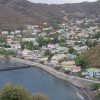
Views from the Caribbean ahead of COP21, the December 2015 Climate Change Summit in Paris – Building Resilience to Disaster: Adaptation
 From constructing barriers against rising sea levels to rehabilitating mangroves and providing agrometeorology services, the Caribbean isn’t waiting for a new international agreement on climate change to start implementing adaptation measures. But funding to roll out such projects on the necessary scale remains a key issue, and many communities remain desperately vulnerable to storms and flooding.
Cities Will Be Decisive in Fight for Sustainable Development
With cities increasingly in the spotlight on the international stage, urban planning and development has become a critical issue in the Sustainable Development Goals (SDGs).« Previous Page — Next Page »





The Week with IPS

NEXT STOP - SDGs
Tracking global progress towards a sustainable world
Tracking global progress towards a sustainable world
