Languages
Thursday, October 8, 2026



News and Views from the Global South
Women's Health

Rohingya Refugees: The Woes of Women – Part One
Afia* lines up her bucket every morning in the refugee camp for water delivery from humanitarian relief workers. On one particularly sweltering day, she kept four water pitchers in a row with gaps between them, hoping to insert another empty container in the space when the water arrived.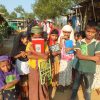
Rohingya Refugees Face Fresh Ordeal in Crowded Camps
Mariam Akhtar, 23, is desperately searching for her young daughter two weeks after arriving from Myanmar in Cox’s Bazar, a southeastern coastal district in Bangladesh.
Empowering Women Improves Communities, Ensures Success for Generations
At an event held on October 29 at the International Fund for Agricultural Development (IFAD) Gender Awards 2017, five countries were honored for impressive achievements in gender equality and women’s empowerment despite harsh conditions and numerous daunting situational and societal obstacles. The five countries are Bangladesh, Mozambique, Colombia, Morocco, and Mauritania. The IFAD supported projects in these countries have ambitious goals for a more egalitarian future. To date these projects have successfully provided women with decision-making opportunities, skill training, and increased autonomy through the development of their own livelihoods.
Clicktivism & Real Life Activism Potent Instruments Against Sexual Violence
It’s the fifth day of the 16 days campaign on violence against women but I feel like the campaign started months ago because of the powerful #MeToo campaign. While I applaud this campaign, I have some thoughts that I believe could make this a truly global watershed moment in the fight against sexual and gender-based violence.
“Every Day Is a Nightmare”
Parul Akhtar,* a Rohingya woman in her mid-twenties, may never wish to remember the homeland she and her children left about three weeks ago.
Education, Not Condemnation, Say Women Leaders Who Survived Violence
Sally Mboumien remembers the day she pressed a steaming hot stone against her chest. In Bawock, the rural community of western Cameroon where she grew up, young girls often had their young, sprouting breasts flattened with a hot iron or a hammer or spatulas that had been heated over burning coals.
The Weinstein effect: The Global Scourge of Sexual Harassment & Exploitation
When the United Nations Population Fund (UNFPA’s) Goodwill Ambassador Ashley Judd, detailed an incident involving the Hollywood mogul Harvey Weinstein for The New York Times in their eyepopping investigation into decades of alleged sexual harassment, it came as a shock to many.
Women and Malnutrition in Africa
Undernutrition is widespread and a key reason for poor child health in many developing countries. In Sub-Saharan Africa, around 40 percent of children under the age of five suffer from stunted growth, that is, severely reduced height-for-age relative to their growth potential. Stunting is a result of periods of undernutrition in early childhood, and it has been found to have a series of adverse long-term effects in those who survive childhood. It is negatively associated with mental development, human capital accumulation, adult health, and with economic productivity and income levels in adulthood.
Adolescent Health Congress Skirts Issue of Abuse, Trafficking
Twenty-year-old Gogontlejang Phaladi of Mahalapye, Botswana is grateful she was never sent to a so-called “hyena” like scores of girls in neighboring Malawi were.
Stopping Child Marriage Forever
The mother moved in like a tigress to save her cub. In 2015, when her 13-year-old daughter Shumi Akhter was about to be married off, Panna Begum pleaded with her husband, Dulal Mia, to cancel the marriage he’d arranged for their daughter.
Lack of International Action on Rohingya Crisis Called a “Disgrace”
As the crisis in Myanmar reaches unprecedented levels, frustration is at its peak as the international community remains slow to respond and act cohesively.
An Inequality Beyond Wealth: Gaps in Women’s Health
While many often focus on wealth disparities, economic inequality is often a symptom and cause of other inequalities including women’s access to sexual and reproductive health.
Up to 100 Million Girls Vulnerable to Child Marriage
Over 20,000 girls are married before the age of 18 every day around the world as countries continue to lack legal protections, according to a new study.
Searching for a Doctor at 3,000 Metres High
Good healthcare can be hard to get – particularly when one lives on top of a mountain. The road to Porcón in the Cajamarca region of Peru, therefore, is as breathtaking as it is sobering. With every step further into its isolated natural beauty, a group of volunteers sent to deliver healthcare essentials are reminded how long the trek would be in an emergency.
Cholera in North-Eastern Nigeria: An Endemic Outbreak
A recent cholera outbreak in North-Eastern Nigeria has resulted in at least 186 suspected cases and 14 deaths as of Sep. 1, according to Borno State’s Ministry of Health.
Why Breastfeeding Is One of the “Smartest Investments” for All Countries
The United Nations Children’s Fund (UNICEF) has released new findings on the economic gains—besides the obvious health benefits—of breastfeeding.
World Still Lagging on Indigenous Rights 10 Years After Historic Declaration, UN Experts Warn
The world’s indigenous peoples still face huge challenges a decade after the adoption of an historic declaration on their rights, a group of United Nations experts and specialist bodies has warned. Speaking ahead of the International Day of the World’s Indigenous Peoples on 9 August, the group says States must put words into action to end discrimination, exclusion and lack of protection illustrated by the worsening murder rate of human rights defenders.
Has Disability Risen among the Elderly?
The Rights of Persons with Disabilities Act 2016 (or RPD Act) is laudable in its intent and procedural detail, but mostly silent on disabilities among the elderly. Indeed, for this reason alone, it is arguable that its overarching goal—“The appropriate Government shall ensure that the persons with disabilities enjoy the right to equality, life with dignity and respect for his or her integrity equally with others” —is mere rhetoric, if not a pipe dream.
Last Mile Connectivity to Bangladesh’s Impoverished North
Life for Bangladesh’s rural people, particularly in its remote north, is still miserable. Seasonal flooding, river erosion, and the low quality of rural infrastructure and lack of connectivity have made things harder for poor northerners.
“The Time is Now” to Invest in Youth, Girls
The demographic dividend: though not a new concept, it is one of the major buzzwords at the UN this year. But what does it really mean? There are 1.8 billion young people between the ages of 10 and 24 around the world, the most in the history of humankind.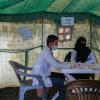
Yemen Records 400,000 Cholera Cases
The directors of the UN Children’s Fund (UNICEF), World Food Programme (WFP) and World Health Organization (WHO) released a joint statement today shedding light on a deadly cholera epidemic engulfing war-torn Yemen.« Previous Page — Next Page »





Worldwide, women’s health is a serious issue. The result of a wide diversity of factors, most notably insufficient access to education, women’s health issues must be addressed. Without access to proper schooling, many girls grow up without the necessary understanding of reproductive health. Due to this, reproductive issues and sexually transmitted infections plague women in developing countries. Women struggle to battle infections such as HIV. The lack of relevant services, coupled with the lack of women’s rights pertaining to their own health, are some of the serious issues that these stories seek to explain.

The Week with IPS

NEXT STOP - SDGs
Tracking global progress towards a sustainable world
Tracking global progress towards a sustainable world
