Languages
Thursday, October 15, 2026



News and Views from the Global South
Women's Health

U.N. Task Force Purges Stigmas on Sexual Rights
Ishita Chaudhry spent the past 36 hours listening to U.N. delegates discuss population growth and development. She noticed that on “controversial” topics, such as sexual and reproductive rights, young people’s voices often get lost.Their Missing Daughters
It is as if they have given up hope of ever seeing their girls again. They are an Adivasi family from a remote village in Assam state in India, nestled in the Himalayan foothills. The picturesque surroundings belie the hollowness they feel within.
Educating Mothers to End South Africa’s Newborn Deaths
A young mother – who only wants to be identified as Karren – beamed as she nursed her newborn baby at the University of Witwatersrand’s Reproductive Health and HIV Institute, in Hillbrow, South Africa.
Q&A: Ecuador Guarantees Right to Free Emergency Contraception
The government of Ecuador is determined to curb the growing number of teen pregnancies, and has begun to knock down barriers that stand in the way of the right to a responsible sexual and reproductive life.
U.S. Global Health Cuts Threaten Gains on Lethal Diseases
A U.S.-based civil society coalition is calling on Congress and President Barack Obama’s administration to keep spending on global health aid at current levels, warning that recent budget cuts risk a dangerous backslide in health and development gains achieved over the past three decades.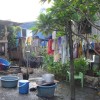
Water Shortage Hits Pacific Women
The Solomon Islands, a developing island nation in the south-west Pacific Islands, has one of the highest urbanisation rates in the region, and the basic service infrastructure is struggling to cater for the influx of people from the provinces to the capital, Honiara. Thirty-five percent of the city’s population, who live in informal settlements, are facing the health consequences of a dire shortage of clean water and sanitation.
BOOKS: The Legacy of Nafis Sadik, Champion of Choice
Once dubbed "the most powerful woman in the world" by the London Times, Nafis Sadik learned at an early age that persistence leads to opportunities for change - and backlash from the Pope.
Taliban Victims Seek Support
People disabled through bomb and suicide attacks by the Taliban in the Federally Administered Tribal Areas and the nearby Khyber Pakhtunkhwa province are seeking support for themselves, and demanding strict action against the Taliban.
Digging Deep for New Conflict
If Herod the Great was a controversial figure of his time, 2,000 years on the controversy isn’t about his legacy; it’s about who holds the rights to excavate and preserve his artefacts.
‘Every Day Is a Fukushima Memorial’
Japan prepares to mark the second anniversary of the Mar. 11 triple disaster - an earthquake, tsunami and a critical nuclear reactor accident - with much soul searching across the country.Argentina to Legalise Surrogate Motherhood
Argentina is set to become the first country in Latin America to legalise surrogate motherhood as an option for heterosexual and homosexual couples or single people who cannot conceive but want to have a child who is biologically their own.
Gaza Women Suffer on ‘Their’ Day
“In Gaza we don't lead normal lives, we just cope, and adapt to our abnormal lives under siege and occupation,” says Dr. Mona El-Farra, a physician and a long-time human rights and women's rights activist in the Gaza Strip. On International Women's Day, when many of the world's women are fighting for workplace equality and an end to domestic violence, Farra and the majority of Gaza's women fight for the most basic of rights.
U.S. Cuts to Global Health Budget “Mass-scale Malpractice”
Public health workers, activists and policymakers are stepping up a last-minute campaign to highlight the global health impact of historic, sweeping cuts to the U.S. federal budget due to go into effect Friday if Congress doesn’t act.Major Audit Urges Devolution of U.S. AIDS Programme
A major audit of the United States’ flagship global anti-HIV/AIDS programme, prepared for the U.S. Congress, notes “remarkable progress” over the past decade. However, it is also warning of insufficient monitoring and urging a stepped-up process of handing over greater control to partner countries.
Investing in Kids Isn’t Rocket Science
The Millennium Development Goals challenged the world to cut extreme poverty in half, dramatically reduce child mortality, and make primary education universal, but Jody Heymann and Kristen McNeill say the world can do more.
Q&A: FGM Is About Culture, Not Religion
The fight against female genital mutilation and cutting (FGM/C) continues to gain traction around the world.
Kenyan Men Turning the Tide Against FGM
For the Samburu community in northern Kenya it was bad enough that Julius Lekupe had not sired a son - it was even worse that his eldest daughter refused to be “cut”.
The Open and Rocky Road Post-2015
What values does a Yemeni journalist who fuelled the Arab Spring hold in common with a former principal of the U.S. National Security Council? And how in turn will they see eye to eye with a Jordanian queen, or the president of Indonesia?
No Woman Should Die Giving Life
Every single day, 452 women in sub-Saharan Africa die from pregnancy-related causes; that’s 18 women every hour.
Q&A: It’s the Beginning of the End for FGM
Journalists can play a crucial role in helping to shift traditional attitudes within societies where the cruel practice of female genital mutilation is an everyday reality.
Senegal Seeks to Curb the Baby Boom
A 25-year-old mother of five hailing from Senegal’s eastern Tambacounda province believes that contraceptives damage the womb and cause health problems in the long term, such as a rise in blood pressure and chronic headaches.« Previous Page — Next Page »





Worldwide, women’s health is a serious issue. The result of a wide diversity of factors, most notably insufficient access to education, women’s health issues must be addressed. Without access to proper schooling, many girls grow up without the necessary understanding of reproductive health. Due to this, reproductive issues and sexually transmitted infections plague women in developing countries. Women struggle to battle infections such as HIV. The lack of relevant services, coupled with the lack of women’s rights pertaining to their own health, are some of the serious issues that these stories seek to explain.

The Week with IPS

NEXT STOP - SDGs
Tracking global progress towards a sustainable world
Tracking global progress towards a sustainable world
