Languages
Monday, October 26, 2026



News and Views from the Global South

Africa Climate Wire seeks to give voice to the groups and communities most vulnerable to the impacts of climate change through stories that investigate the governance of climate change adaptation, national response strategies and finance for adaptation in Africa.

Climate Change Teaches Some Lessons
Tourism, agriculture, fishing, the water supply – climate change threatens the very foundations of society and the economy in Mauritius. As the Indian Ocean island nation develops its adaptation strategies, it is working to ground the next generation of citizens firmly in principles of sustainable development.
First Steps to Save Burkina Faso’s Forests
Burkina Faso has just received a grant of 30 million dollars from the Forest Investment Programme to help protect the country's forests and reduce greenhouse gas emissions associated with deforestation.
Insuring Ghana’s Smallholder Farmers Against the Weather
Smallholder farmer Suleman Mustapha Simbia, 40, is pleased with the introduction of an insurance initiative called the Ghana Agriculture Insurance Programme. The programme is being implemented in this West African nation to help farmers who had been suffering from loss of income as a result of the bad weather conditions that affect their yields.
In Kenya, Small Is Vulnerable
With the country's food security and farmers' livelihoods at risk from climate change, Kenya has divergent policy options. One is reliant on deploying new technologies as well as improving and expanding use of fertilisers and pesticides; while the other would turn to indigenous knowledge and the country's natural biodiversity.
REDD a ‘False Solution’ for Africa
REDD – reducing emissions from deforestation and forest degradation – would seem to be a mitigation strategy that perfectly matches Africa's needs.
Obama Unveils Plan to Circumvent Congress on Climate Change
Stymied by the U.S. Congress, President Barack Obama on Tuesday unveiled his vision to reset the United States' incoherent national plan to combat climate change, offering dozens of regulatory tweaks and targets that his administration could now implement without Congressional approval.Climate Change Promises Tough Times for Asia and Africa – Report
Extreme heat, flooding and water and food shortages will rock South Asia and Africa by 2030 and render large sections of cities inhabitable, if the world continues to burn huge amounts of coal, oil and gas, the World Bank is warning.
Small Farmers Buffeted by Climate Change
The U.N. Food and Agriculture Organisation (FAO) has long warned that a quarter of the world’s farmland is “highly degraded".
“Carbon Farming” Makes Waves at Stalled Bonn Talks
U.N. climate talks have largely stalled with the suspension of one of three negotiating tracks at a key mid-year session in Bonn, Germany.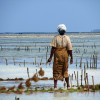
Zanzibar’s Encroaching Ocean Means Less Water
Khadija Komboani’s nearest well is filled with salt water thanks to the rising sea around Tanzania’s Indian Ocean island of Zanzibar.
Behind the Climate Finance Headlines
Developed countries report that they delivered more than 33 billion dollars in Fast Start Finance (known as FSF), beyond the pledges they made at COP 15 in Copenhagen in 2009. Recent analysis suggests that the funding delivered may have exceeded 38 billion dollars. But that is not the whole story.
Mexican Climate Fund Short of Cash, Slow Off the Mark
The Climate Change Fund set up in November in Mexico faces enormous challenges such as the enforcement of anti-corruption standards, which make it unlikely that concrete actions will begin this year, according to civil society organisations.
Rich Countries Drag Feet at Climate Talks
Another week of international climate negotiations ended in Bonn, Germany last Friday, but there was little mid-level bureaucrats could do when world leaders remain in thrall to the fossil fuel industry, say environmentalists.
Taking the Knowledge of Doha Back to Kenya’s Rural Communities
The skyscraper Qatari capital city of Doha is a far cry from Cecilia Kibe’s home in Turkana district, a remote area in Kenya inhabited by mostly nomadic communities and pastoralists hit hard by the effects of climate change.
Africa Must Earn Its Climate Change Adaptation Finance
With the United Nations Climate Change Conference less than four months away, African countries need to present convincing arguments and successful adaptation projects to attract competitive funding for adjusting to changes in global weather patterns, climate finance experts say.
Mapping out Climate Change Adaptation Plans on Kenya’s Airwaves
On a Wednesday morning in Mutitu-Andei township in Makueni County, one of Kenya’s driest areas, smallholder farmer Josephine Mutiso tunes into Radio Mang’elete 89.1 FM and listens as meteorological experts discuss the changes in rainfall patterns in the county.
Liberia Looking for a Sustainable Economic Future at Rio+20
Deep in the forest in Gbarpolu County, northwest Liberia, a group of men working a surface gold mine are asked what will happen to the land when they are finished with it.
Nothing to Show for Hard Work but Burnt Fields of Maize
Gertrude Mkoloi earns a living harvesting maize on a small piece of land in rural Zimbabwe. Or at least she used to.
KENYA: Microloans, Greenhouses Help Women Cope with Climate Change
At Gakoromone Market in Meru, in Kenya’s Eastern Province, Ruth Muriuki arrives in a pickup full of tomatoes and cabbages despite the scarcity of rainfall in the area, thanks to the greenhouse technology she uses on her farm – and microcredit.
CENTRAL AFRICA: Tentative Steps Towards Adaptation
Governments and civil society organisations in Central Africa are slowly developing strategies in response to global warming. But specialists say the steps being taken seem hesitant in the face of emerging realities.
AFRICA: Change the Donors Climate
When donor-funded horticultural projects failed in Kalacha village at the edge of the Chalbi Desert in North Eastern Province, Kenya, the local pastoralist community proposed their own idea, which turned out to be the solution to their problems.« Previous Page — Next Page »





 This publication explores African CSO engagement in the UNFCCC Conference of Parties (COPs) process.
Africa Climate Governance Factsheets
The following resources provide an overview of the climate governance, climate finance, gender and climate change and policy coherence issues as they relate to Africa in the climate negotiation processes.
The following resources provide an overview of the climate governance, climate finance, gender and climate change and policy coherence issues as they relate to Africa in the climate negotiation processes.
 Climate Change Governance for Africa
 Policy coherence in tackling climate change in Africa
 Climate Finance
 Gender and climate
 Heinrich Boll Foundation Workshop Report: ENSURING CLIMATE FINANCE EFFECTIVENESS IN AFRICA
Project supported by

This page includes independent news coverage, which is part of a project funded in partnership by the Heinrich Böll Stiftung. The contents of this news coverage are the sole responsibility of IPS and should not be taken to reflect the views of Heinrich Böll Stiftung.
