Languages
Friday, September 25, 2026



News and Views from the Global South
Arabs Rise for Rights

To Find Peace, And Then Sell It
As the month of Ramadan nears, shop owners in Sanaa’s old city souk stock up on goods. For men like Ali Al-Fakri, who sells jambiyahs, Yemen’s traditional daggers held in place with richly embroidered belts, the gift-giving holiday marking Ramadan’s end is the busiest time of the year.Confrontation Builds Up in Cairo
Islamist President Mohamed Morsi's first turbulent year in office will end with two massive rallies in Cairo, both expected to draw hundreds of thousands: one by his mostly Islamist supporters and another by secular opposition forces who demand he step down.
Egypt Split ‘Between Egyptians and Islamists’
The Muslim Brotherhood realised a long cherished dream when it came to power last year. The Muslim Brotherhood had faced continuing discrimination since former president Gamal Abdel Nasser came to power in 1956 until the end of Hosni Mubarak’s days.OP-ED: Why Bahrain’s Al-Khalifa Family Is Losing the Right to Rule
By continuing its repressive policies and refusing to engage civil society and moderate political groups in meaningful dialogue for genuine reform, the Khalifa family has squandered its legitimate right to rule Bahrain. King Hamad could still salvage his rule, but he would need to act boldly by taking the following steps.
Creating Their Own Spring
The soldiers of former Libyan strongman Muammar Gaddafi had left just a few days before, but a group of about 50 children were already singing in the Amazigh language in the village of Yefren, 110 kilometres south of Tripoli. This month will mark two years since the establishment of the first Amazigh school in Libya.
Young Yemen Multiplies Without Growth
Yemen’s population is increasing at a rapid rate, straining the country’s dwindling natural resources and setting up its youth for a grim future, with few jobs and scant means to get by.
Egypt Sees a Dam Confrontation
Ethiopia's diversion of part of the Blue Nile late last month has both rocked Cairo's relations with Addis Ababa and provided fodder for Egypt's ongoing war of attrition between its Islamist government and secular opposition.
Egypt Marks a Spring for Islamists
Egyptians are deeply divided and the majority are dissatisfied with the performance of Islamist President Mohamed Morsi, but also have little confidence in the main opposition figures or their future, a new poll has found.
Arab Americans Aim at Preserving New York’s Little Syria
A brick red, six-story tenement house, St. George Melkite Church and a community house in desperate need of repair are nearly all that remain of a once thriving Arab-American community in downtown New York City.
U.S., EU Urged to Press Harder for Reform in Bahrain
Human rights groups here are calling for the United States and the European Union (EU) to exert more pressure on Bahrain, home to the U.S. Navy's Fifth Fleet, to seriously engage its opposition and end its repression of its majority Shi'a population.
Border Weakens Between Bombs and Cherries
It all happened within ten days – Syria’s civil war fought metres away from Israeli orchards abutting the ceasefire line; Austrian peacekeepers hastily evacuating the Demilitarised Zone (DMZ) that separates Israel from Syria; fears of a total collapse of the UN Disengagement Observer Force (UNDOF). All while the cherry-picking season is at its peak.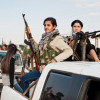
Kurds Advance, Into the Unknown
A ban on political and even social gatherings, a bar on Kurdish language and culture; uprooting people, forced disappearances and a ‘caste’ of hundreds of thousands of local Kurds deprived of citizenship... life for Kurds in pre-war Syria was probably as dire as it is today for their kin in Iran.
Fatwas Heighten Sectarian Tensions in Syria Conflict
Saudi Arabian religious scholars are leading an increasingly vocal chorus of Islamic preachers who are urging Muslims and Arabs to support Syrian rebels against what they say are atrocities at the hands of Iran-backed Shiite forces of Syrian President Bashar al-Assad.
Despite Arms Announcement, U.S. Syria Strategy Remains Unclear
Despite Thursday's announcement that President Barack Obama has decided to provide direct military assistance to Syrian rebels, what precisely the administration has in mind remains unclear.
Obama to Increase “Scope and Scale” of Aid to Syrian Rebels
With U.S. intelligence agencies' concluding that the Syrian government has used chemical weapons against rebel forces, the White House announced Thursday that it will increase "the scope and scale" of assistance it has been providing to the opposition, including direct support to its military arm.U.N. Says 93,000 People Killed in Syria
At least 93,000 people were killed in Syria's conflict by the end of April this year, but the true number could be "potentially much higher", the United Nations human rights office says.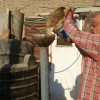
Cairo’s Poor Convert Kitchen Waste Into Fuel Savings
The bio-gas digester on the roof of Hussein Farag's apartment in one of Cairo's poorest districts provides a daily supply of cooking gas produced from the kitchen waste his family would otherwise discard in plastic bags or empty into the clogged sewer below his building.
Egypt’s Presidency, Judiciary Brace for Showdown Over Draft Law
The post-revolution struggle between Egypt's judiciary and President Mohammed Morsi, the country's first Islamist head of state, finally seems to be coming to a head over controversial draft legislation regulating judicial authority.
As Erdogan Remains Firm, No End in Sight for Turkey’s Protests
Now approaching its third week, the "Occupy Taksim" movement, a peaceful sit-in to save Istanbul's Gezi Park from redevelopment, has taken on a festival-like atmosphere, with protesters organising to stand guard around the clock, provide uninterrupted food and water supplies, and carry out a self-initiated cleaning of the grounds.
Q&A: Turkish Opposition Leader Expects Unrest to Continue
As protests in Turkey stretch into their second week, the precise terms and conditions that could bring the social unrest to an end are unclear, though many speculate about what would end the deadlock between the government and protesters.
U.S. Syria Hawks Can’t Get No Traction
With Syrian government forces and their allies scoring a major victory over Western- and Gulf Arab-backed rebel forces this week, neo-conservatives and other anti-Damascus hawks are trying hard to turn up the pressure on President Barack Obama to sharply escalate U.S. support for the opposition.« Previous Page — Next Page »


The Arab Spring has changed the Arab seasons that have followed; it had to. The struggle continues in Syria; in Tunisia, Egypt, Libya and in countries that did not change that dramatically, such as Bahrain and Yemen, the political world, and the tone of society itself has changed. IPS has not left these countries with the headlines that accompanied cataclysmic changes. We continue to track changes closely, always keeping in our sights first the rights of peoples, and then reporting changes from fresh, newsy and human perspective.

Middle East & North Africa


