
Sunday, September 20, 2026



News and Views from the Global South
Food Security and Nutrition

International Women’s Day, 2022
Women are the Answer to Sustainable Development
When countries improve their Global ranking, there is rejoicing within the community that progress has been made at last.. but has it and why does it matter ?

Egypt Rushes to Find Alternative Wheat Suppliers Following Ukraine Crisis
Egypt is scrambling to find alternate sources of wheat after the Russian invasion of Ukraine has put supply to the country in jeopardy. This is especially urgent because the price of bread in Egypt has in the past sparked protests in the country.
The Very Hungry Dragon: Meat-ing China’s Self-sufficiency Targets for Dairy and Protein
Food security has long been a high priority for the Chinese central government and has been linked to China’s national security in recent years. The Ministry of Agriculture and Rural Affairs recently released a national five-year plan under which China will seek to maintain a target to produce 95 percent of the protein domestically until 2025: China aims to become self-sufficient in poultry and eggs, 85 percent self-sufficient for beef and mutton, 70 percent for dairy, and 95 percent self-sufficient in pork. These targets intersect with many of the Chinese central government’s current aims to meet the growing demand for protein and dairy, safeguard food security, and other major policies.
ONE OCEAN SUMMIT – An Opportunity For Blue Transformation
The ocean covers more than 70 percent of our planet. There is no question it is critical for our health and well-being. It provides half the earth’s oxygen supply and every organism in existence depends on it to survive.
Responding to New Threats to Poverty Eradication in Asia
With consistent, robust economic growth, countries across Asia have made monumental strides in eradicating extreme poverty over the past 30 years. In Bangladesh, for example, the population living in extreme poverty dropped from 43% in 1991 to 10.5% in 2019. Similarly in Cambodia, poverty incidence fell from 53% in 2004 to below 10% by 2016.
From Zero Yield to Bumper Harvest
In the past, the people of Sande Village in Chikwawa district, Malawi, would go to bed with empty stomachs even when the rest of the country harvested bumper yields.
Looking to the Future: China’s Priorities for Food Security in 2022 and Beyond
Safeguarding food security has long been a critical priority for the Chinese central government. President Xi’s latest comments and meetings demonstrate continued concerns at the top about China’s food security. Ahead of the 20th National Congress this year and the release of the No 1 policy document, there are already several hints regarding what the Chinese central authorities could prioritise in terms of food security for this year and beyond. Other factors, including the potential influences of gene-edited plants, commercialisation of genetically modified (GM) crops, and of a Russia-Ukraine conflict should also be considered.
The Dilemma of Zimbabwe’s Food Security Efforts
On January 10, the Zimbabwe Republic Police (ZRP) arrested three men found with fertilizer worth about 130,000 US dollars.
Why Does Yangtze River Have its Own Protection Law?
The new Yangtze River Protection Law (YRPL), which came into effect on March 1, 2021, is China’s first legislation on a specific river basin. The Yangtze River is China’s longest and largest river system, stretching over 6,300 kilometres and has over 700 tributaries. With a drainage basin covering more than 1.8 million square kilometres, approximately one-fifth of China’s total land area, the river basin is home to over 40% of the country’s population.
Covid-19 Has Accelerated New Agtech Development and Adoption in Asia-Pacific!
While the COVID-19 impact has been predominantly negative, the pandemic appears to have sparked increased interest in developing agricultural technology (agtech) to improve the efficiency of food systems, from input supplies through farming and processing to delivery and retail.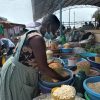
High Yield Seeds Could Address Food Shortages and Place Africa on Track to Zero Hunger – Experts
Rahab Munene’s shoe selling business crumbled at the height of COVID-19 in 2020. She traded the enterprise for a mobile grocery along the Thika Superhighway, Kiambu County.
Cool Scheme to Reduce Food Waste in Nigeria
Food spoilage forced smallholder farmers out of pocket and out of business – until an entrepreneur came up with a cool idea.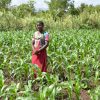
High Global Fertiliser Prices Overshadow Malawi’s Farm Subsidy Programme
Ellena Joseph, a small-scale maize farmer in Chiradzulu District in Southern Malawi, finished preparing her field early in October.
School Meals Coalition Hopes to Provide a Meal to Every Child
Meals at schools not only give each child a nutritious meal but increase enrolments, among other benefits.
Time Honoured Food Traditions, Pleasing for Palate and Planet
Balance is the absolute key, says Alia Chughtai, a journalist who started a catering service with filmmaker Akhlaque Mahesar, by the name of Aur Chaawal (And Rice), two years ago.
Double Solution to Ongoing Food and Climate Crises
For the last ten years, Angeline Wanjira’s food stall at Kirigiti Market in Kiambu County has featured the same foods, cabbages, potatoes and carrots, keeping with the community’s most preferred food types.
Rich Food from Poor Fish, Making Food and Health Sustainable
During the COVID-19 lockdown in Uganda, a breastfeeding mother struggled to improve the health of her malnourished child. With the closure of her local health centre, she worried the child could die without urgent medical treatment.
COP26: Climate Action in Agribusiness Could Reduce Emissions by up to 7 per Cent
Targeted action in agriculture could have a massive impact on climate change, according to a joint brief by the European Bank for Reconstruction and Development (EBRD) and the Investment Centre of the Food and Agriculture Organization of the United Nations (FAO), published at the COP26 climate conference in Glasgow scheduled to end November 12.
COP26 – Adapting to the Climate Crisis
Look up any map showing today’s global humanitarian crises and you’ll find it awash in red alerts more than ever before. Climate emergencies are fast emerging in new areas that have never previously witnessed them, and they are accelerating humanity’s march towards the precipice in regions long battered by conflict, hunger and displacement.
‘West of The Nile and Around The Sudd’
Tensions and hostilities persisted until early 2019, when the regime of Omar al-Bashir - to a large extent symbolized by oppressing minority groups in the Darfurs, Blue Nile state and South Kordofan - finally ended. Meanwhile, many inhabitants of the Nuba Mountains and other parts of South Kordofan, had escaped to South Sudan, which had become independent in 2011. There, they found, however, a country with even more interethnic strains and assaults, resulting, in addition to the innumerable internally displaced persons, the flight of 2.3 million citizens to six countries in the region. An area characterized by perpetual political and ethnic tensions which often resulted in border crossings in opposite ways. The present case of refugees from Ethiopia to the Republic of Sudan is an example of this phenomenon in the IGAD-region. (The Intergovernmental Authority on Development (IGAD) is an eight-country trade bloc in Africa that includes governments from the Horn of Africa, the Nile Valley and the African Great Lakes. Its headquaters is in Djibouti City)
Magical Thinking on Fertilizer and Climate Change
As world leaders wrap up the UN Climate Summit in Glasgow, new scientific research shows that there is still a great deal of magical thinking about the contribution of fertilizer to global warming.« Previous Page — Next Page »


More than 820 million people in the world are still hungry today, underscoring the immense challenge of achieving the Zero Hunger target by 2030. Hunger is rising in almost all subregions of Africa and, to a lesser extent, in Latin America and Western Asia. There is great progress seen in Southern Asia in the last five years, but the prevalence of undernourishment in this subregion is still the highest in Asia. A disturbing fact is that about 2 billion people in the world experience moderate or severe food insecurity. The lack of regular access to nutritious and sufficient food that these people experience puts them at greater risk of malnutrition and poor health. Although primarily concentrated in low- and middle-income countries, moderate or severe food insecurity also affects 8 percent of the population in Northern America and Europe.
In every continent, the prevalence rate is slightly higher among women than men.
With regard to nutrition indicators, if current trends continue, the 2030 SDG Target to halve the number of stunted children will not be met nor the 2025 World Health Assembly target to reduce the prevalence of low birthweight by 30 percent. The trends of overweight and obesity are additional reason for concern, as they continue to rise in all regions, particularly among school-age children and adults. The most recent data show that obesity is contributing to 4 million deaths globally and is increasing the risk of morbidity for people in all age groups.
The State of Food Security and Nutrition in the World, a joint report by the United Nations agencies, FAO, IFAD, WFP, UNICEF and WHO reaffirms their commitment to working together to overcome emerging challenges and free the world from hunger, food insecurity and malnutrition. The report shows that the global level of the prevalence of undernourishment has stabilised; however, the absolute number of undernourished people continues to increase, albeit slowly.


The Week with IPS

Tracking global progress towards a sustainable world
