Thursday, October 1, 2026



News and Views from the Global South
Integration and Development Brazilian-style

Making Seawater Potable in Mexico Has High Costs and Environmental Impacts
Mexico is seeking to mitigate water shortages in part of its extensive territory by resorting to seawater, through the expansion of desalination plants. But this solution has exorbitant costs and significant environmental impacts.
Cuban Farm Explores Sustainability by Hand
Most beginnings are rocky and sometimes the obstacles seem insurmountable, before they are finally overcome. This was certainly the case for the Finca Marta, a farm in Cuba that had to begin by digging a well in search of water and with the hard-scrabble work of clearing an arid, stony and overgrown plot of land.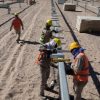
Advisors Propose New System To Regulate China’s Overseas Investments
A government-backed coalition of international advisors to the Belt and Road Initiative (BRI) has recommended that China apply more stringent environmental controls over its overseas investments. If adopted, this would be a major departure from China’s usual approach of deferring to host country rules, many of them inadequate, for regulating its overseas investments.
Renewable Energy Transition Key to Addressing Climate Change Challenge
2021 is going to be critical, not only for curbing the rapidly spreading COVID-19 pandemic, but also for meeting the climate challenge. But as Dr Fatih Birol, Executive Director of the International Energy Agency (IEA) was clear to point out, the climate challenge is essentially an energy challenge. And as large polluters continue to commit to targets of net zero emissions by 2050, the world could -- in theory -- potentially address the climate challenge.
San Salvador Becomes a Sponge to Reduce Damage from Landslides
 Throughout its history, San Salvador has faced the danger of landslides - mud and rocks that slide down the slopes of the volcano at whose feet the city was founded in 1525.
Belo Monte Dam: Electricity or Life in Brazil’s Amazon Rainforest
"We are no longer familiar with the Xingú River," whose waters govern "our way of life, our income, our food and our navigation," lamented Bel Juruna, a young indigenous leader from Brazil´s Amazon rainforest.
San Salvador Steps Up Battle against Landslides and Floods
The San Salvador volcano is a gift of nature for the inhabitants of the capital who live at its foot, a gigantic green lung that gives them oxygen and fresh air. But it is also a curse.
Latin American Electric Utilities COVID-accelerated Evolution
The COVID-19 pandemic has accelerated an evolution across Latin American electric utilities. The need for utilities to manage structural issues derived from increased deployment of Renewable Sources of Energy (RSE) such as wind and solar and Distributed Energy Resources (DER) has rapidly increased. Technology is unleashing major disruptions and challenges. In many ways, Latin America’s traditional electric utilities are in crisis.
Energy Efficiency for Developing Countries: Pivoting from Fewer Inputs to More Outputs
Energy efficiency (EE) is often marketed as a tool to save energy and money. The oft-repeated mantra is doing “more with less”, namely producing more goods with less energy. But, as set out in a recent World Bank report (which I co-authored), EE can do something that is often much more important for developing countries: it can produce the additional goods and services needed to raise standards of living.
Solar Power from Argentina’s Puna Highlands Reaches Entire Country
The unprecedented growth of renewable energies in Argentina over the last three years has borne its greatest fruit: the Cauchari solar park, with nearly one million photovoltaic panels and 300 MW of installed power, which was connected to the national power grid on Sept. 26.
Mexico Sticks to Natural Gas, Despite Socioenvironmental Impacts
In his community of small farmers and ranchers in northern Mexico, Aristeo Benavides has witnessed the damage caused by the natural gas industry, which has penetrated collectively owned landholdings, altering local communities' way of life and forms of production.
G20 Puts More into Fossil Than Green Energy in Covid-19 Recovery Packages
As the world’s leading economies direct trillions of dollars towards Covid-19 recovery packages, a significant proportion is going to fossil fuel industries without climate stipulations, according to the 2020 edition of the Climate Transparency Report – which has assessed the climate performance of G20 countries.
Green Recovery in Mexico – A Citizen’s Plea
The alarms warning against climate inaction have sounded for years. Almost a year into the hardest pandemic and maybe the worst economic recession my generation has seen, expert voices everywhere are claiming this to be the golden opportunity to do something to right our course and even find a silver lining in this unfortunate situation, by funding the economic recovery of COVID-19 with a green stimulus package.
Bringing Clean Water On Tap To Rural Villages In Polynesian Island Nation Of Tuvalu
Rural communities on one of the nine islands that make up the Polynesian nation of Tuvalu are anticipating how life will change when they are connected to piped clean water for the first time.

Chile’s Energy Revolution Has an Achilles’ Heel
The Atacama Desert, a giant reservoir of solar power, is the battering ram of the transformation undertaken by Chile to decarbonise its energy mix, in a country with enormous potential in non-conventional renewable sources.
Distributed Generation Provides Hope of Energy for the Poor in Brazil
"Showing solidarity is consuming the energy generated in your own municipality" - this is the motto of a project of distributed electricity generation in one of Brazil's many poor neighbourhoods.
Capture of CO2 and Hydrogen as Part of Latin America’s Energy Future
While struggling to increase the generation and consumption of renewable energy, Latin America is beginning to see the rise of new technologies, such as the capture and storage of carbon and hydrogen from fossil fuels or wind and solar energy.
Energy Transition and Post-Covid Recovery, a Challenge for Latin America
The way forward for energy transition and its link to an economic recovery after the depression caused by the covid-19 pandemic is focusing attention in Latin America and Europe, according to the 2nd Madrid Energy Conference (MEC), which concluded this Friday 2.
Community Hydropower Dam Illuminates Life in Salvadoran Villages
Ermelinda Lobos's life has improved substantially since she and the rest of the people in her small village, hidden in the mountains of northeastern El Salvador, worked hard to build a mini hydroelectric plant and become self-sufficient in energy.
Looking for Jobs in Latin America – Can the Energy Transition Help?
Can the “energy transition” in Latin America help address the risks caused by greenhouse gases (GHG) on the climate, and the economic depression caused by the pandemic?
Energy Cooperatives Swim Against the Tide in Mexico
A Mexican solar energy cooperative, Onergia, seeks to promote decent employment, apply technological knowledge and promote alternatives that are less polluting than fossil fuels, in one of the alternative initiatives with which Mexico is seeking to move towards an energy transition.« Previous Page — Next Page »


South American imperialist power, or integrationist power? The role currently played by Brazil is perhaps located midway between these two extremes. On the other hand, there is no doubt about the dynamic nature of its economy or the influence of its corporations in Latin America. Wherever infrastructure, energy or the extraction of natural resources transcend borders in the region, Brazil tends to be a key player. What are the risks? What is the potential? What kind of development do dams and other major projects underway foment? What effect will they have on the population, and on nature? What will the new geopolitical order that is taking shape look like? With the support of the Mott Foundation, IPS is launching a series of investigative reports by Brazilian correspondent Mario Osava and a team of outstanding journalists in other key parts of the region, to produce a picture of the new course Brazil is taking in Latin America.

The Week with IPS

Tracking global progress towards a sustainable world