Languages
Monday, November 2, 2026



News and Views from the Global South
Projects
US Nuclear Security Summit Shadowed by Rising Terrorism
When some of the world’s major nuclear powers meet in Washington DC next Friday, they will be shadowed by the rising terrorist attacks-- largely in Europe, the Middle East and Africa.
Tree Regeneration Restoring Hope
Maurice Kaduka Lukaro, 54, is a farmer in Oljorai, an area with short grasses and small-scattered bushes in Nakuru county in Kenya’s Great Rift Valley. Crop production has declined tremendously in this region. Like the rest of the arid and semi-arid lands (ASAL) in the Sub Saharan region, Maurice Kaduka Lukaro, 54, is a farmer in Oljorai, an area with short grasses and small-scattered bushes in Nakuru county in Kenya’s Great Rift Valley. Crop production has declined tremendously in this region. Like like the rest of the arid and semi-arid lands (ASAL) in the Sub Saharan region, Kenya hosts a population worst hit by the reality of climate change. Kenya hosts a population worst hit by the reality of climate change.
Soy Fuels Industrialisation in Paraguay
A soybean processing plant, Angostura Agroindustrial Complex SA (CAIASA), that does not use fossil fuels and generates practically no waste products from soy reflects Paraguay’s growing industrialization.
Water Crisis in Zimbabwe
A narrow dirty trail snakes through what used to be a small dam in Mpudzi Resettlement Scheme south of the eastern border city of Mutare. And what remains of this once perennial dam is just a small puddle of mudded water; the dirty water is completely covered with thick green algae.
Reaping the Gender Dividend
For the first time, an all-female flight crew recently operated a Royal Brunei Airlines jet from Brunei to Jeddah in Saudi Arabia. Such a feat certainly appears noteworthy in a country where gender segregation is pervasive. When women are still not permitted to drive a car; where there are separate entrances for men and women in banks, is there a possibility of an all-female crew operating a Saudi Airlines plane from Jeddah to Brunei? Not immediately, as there are disturbing signs that the limited gains on the gender front might face reversals.
Argentina’s ‘Shale Capital’ Suffers from Slowdown
The dizzying growth of Añelo, a town in southwest Argentina, driven by the production of shale oil and gas in the Vaca Muerta geological reserve, has slowed down due to the plunge in global oil prices, which has put a curb on local development and is threatening investment and employment.
Food Insecurity in the Far North
“They have reduced the quantity of food they used to give us and we still do not know why. But we are managing. We are refugees and we have no choice. All they give us is rice and some soya beans” John Guige, a Nigerian resident and primary school teacher in the Minawao refugee camp in Cameroon’s Far North region, told IPS.
Myanmar’s Rohingya Humanitarian Crisis
The persisting humanitarian crisis of the Rohingya minority in Myanmar has been a global concern after two bouts of organised mass violence against them in 2012. While the Rohingya persecution has been going on for nearly four decades, Myanmar’s reforms launched in 2011 facilitated the international media’s coverage of the mass violence.
Improving Rural Livelihoods Boost Agrarian Economies
For two decades, Dickson Kamau only grew maize on his 0.5 hectare (ha) of land earning himself the nickname Kamau wa mbembe or Kamau who owns maize in his native Kikuyu language.
Rural Costa Rican Families Flourish in the Shade
Before they got involved in farming, Luis Diego Murillo and Xinia Solano paid their bills and put food on their table with Luis’s salary as a foreman on construction sites, an unstable job that kept him on the move.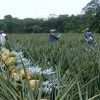
Post COP21: Costa Rica’s Innovation Must Become the Global Norm
The Paris agreement means countries and corporations will be compelled to act much more quickly on making agricultural commodity production more sustainable. Companies must look beyond their supply chains. Farmers need support to overcome barriers such as: struggle with ineffective farming practices, lack of investment and fluctuating commodity prices.
Turkey’s Crackdown on the Press
On the evening of March 4, heavily armed police forced their way into the headquarters of the Turkish daily Zaman. The hundreds of protesters that had gathered in front of the building in an Istanbul suburb in solidarity with their newspaper were violently dispersed.
Palestinian Refugees from Syria
In the safety of his sister's bare flat in Beit Hanoun, Gaza, 42 year-old Iyad Yusef still shakes his head in disbelief when he recounts the journey that from war-torn Syria, brought him and his family to the relative safety of the blockaded strip.
Rural Community Fights a Second Dam and a New Expropriation of Land
In 1976, the construction of a hydroelectric dam destroyed farmland in the rural municipality of Chicoasén in southern Mexico. Forty years later, part of the local population is fighting a second dam, which would deprive them of more land.
CTBTO to Install Two Nuclear Monitoring Stations in Ecuador
The Comprehensive Test Ban Treaty Organisation (CTBTO), based in Vienna, will soon install two new monitoring stations in Ecuador. CTBTOs Executive Secretary Dr Lassina Zerbo told IPS the two stations in Ecuador, RN 24 and IS 20, “will brings us an important step closer to the completion of the International Monitoring System – the network that monitors the globe 24/7 for signs of nuclear explosive testing.”
African Staple Plantains at Risk of Same Diseases as Bananas
Anna Gamusi, has been growing ‘matooke’ - plantains - for over 20 years. She originally learnt how to grow them in her home village of Busolwe in Eastern Uganda, but says that they are no longer grown there.
Public Primary Boarding Schools in Pastoral Communities
Jonathan Tipapa is a nine year-old boy whose daily journey to and from school exposes him to many dangers that have seen him come close to dropping out of school -- like many of his friends who can be seen running after cows even on school days. He attends Enkutoto primary school in the expansive Narok South Constituency in the Rift Valley region, approximately 70 miles from the capital Nairobi.
Panama’s Expanded Canal Faces a Challenging Scenario
When the new locks of the expanded Panama Canal begin operations, they will do so amidst numerous challenges, because of the storm clouds hanging over the global economy, especially China. But local authorities and experts are not worried about the possible impact on the expanded canal.
The Empowerment of Women Will Be Central to Realising Sustainable Global Development
“Planet 50-50 by 2030: Step It Up for Gender Equality” – the theme of this year’s International Women’s Day serves as a timely reminder that, despite incremental progress of recent years and the ambition of the new global development agenda, we must redouble efforts to achieve a world underpinned by gender equality. All women must be empowered to realise their full and equal rights. But what does it actually mean to step it up for gender equality?
Anti-Mining Protests in Turkey Book Temporary Victory
Over the past weeks, thousands of people across Turkey have protested against the planned construction of a gold mine in Cerattepe, close to the town of Artvin in the northeast of the country. Protesters fear that the mine will cause irreparable damage to the unique natural environment of the region.
Schools are in for Summer
“We are extremely jubilant over the rebuilding of our school that the Taliban destroyed it in 2013, due to which we used to sit without a roof,” Mujahida Bibi, a student of 8th grade in Government Girls Middle School North Waziristan Agency, told IPS.« Previous Page — Next Page »





The Week with IPS

NEXT STOP - SDGs
Tracking global progress towards a sustainable world
Tracking global progress towards a sustainable world
