Languages
Friday, November 6, 2026



News and Views from the Global South
Projects

Haina, a Dominican City Famous Only for Its Pollution
Rubbish covers the beaches and clutters the rivers, the garbage dump is not properly managed, and more than 100 factories spew toxic fumes into the air in the city of Bajos de Haina, a major industrial hub and port city in the Dominican Republic.
Africa Closer to a Cure for Banana Disease
In one Ugandan dialect, 'kiwotoka', describes the steamed look of banana plants affected by the Banana Xanthomonas Wilt (BXW) - a virulent disease that is pushing African farmers out of business and into poverty.
Paris Delivers Historic Climate Treaty, but Leaves Gender Untouched
After 2 weeks of intense negotiations, on Saturday evening, the 21st UN climate conference (COP21) in Paris finally delivered a historic agreement that, for the first time, promises to keep the global warming under 2 degrees Celsius. The treaty, consisting 31 pages and signed by by 196 countries, include the big five steps of climate action:
Paris Delivers the Promised Climate Deal to Resounding Cheer and Applause
The impossible was made possible. Governments from 195 countries around the world emerged here with the first universal agreement to cut greenhouse gases emissions and reduce the negative impacts of climate change.Climate Change and Women Across Three Continents
The link between women in climate change is a cross-cutting issue that deserves greater recognition at climate negotiations. It is pervasive, touching everything; from health and agriculture to sanitation and education.
Brazil’s Amazon River Ports Give Rise to Dreams and Nightmares
River port terminals in the northern Brazilian city of Santarém are considered strategic by the government. But what some see as an opportunity for development is for others an irreversible change in what was previously a well-preserved part of the Amazon rainforest.Tackling Climate Change in Africa: Europe’s Solution to the Migrant Crisis?
As thousands of Africans arrive in Europe every month, often risking their lives aboard shaky boats to get to a better life, lack of access to energy could be one of the reasons for their exodus.
Immigration – Still a Pending Issue in Cuban-U.S. Relations
The crisis that has broken out at several border crossings in Latin America as a result of thousands of Cubans attempting to reach the United States has revived a problem that remains unresolved between the two countries in spite of agreements, negotiations and the diplomatic thaw that started a year ago.Development Aid on the Decline, Warns New Study
UN Secretary-General Ban Ki-moon expressed fears last month that increases in humanitarian aid to thousands of refugees invading Europe could result in sharp cuts on development aid by Western donors.
Farmers to COP 21: Don’t Bite the Hand That Feeds You!
When Dr. Evelyn Nguleka says that the world’s people shouldn’t bite the hand that feeds them, she explains that she’s not only referring to protecting farmers, but also to safeguarding the environment.
Cities Emerge as Urgent Climate Solution at COP21
As the climate conference advances into its final stages amid the colossal challenge of having 195 countries agree on a single and unified global policy on climate change, urban areas appear a a different issue but complementary solution for all.
Caribbean Looks to Aquaculture Food Security to Combat Climate Change
Jimmi Jones and wife Sandra Lee’s fish farm in Belize City is unique. His fish tanks supply water and nutrients for his vegetable garden needs and the plants filter the water that is recycled back to the tanks.
Permeable Dams Prevent Land Loss and Save Mangroves in Suriname
Suriname’s coastline is eroding so quickly scientists predict the country’s maze of mangroves could disappear in just 30 years unless there is urgent action on climate change.
Women Leaders agree COP21 Must Have “Gender-Responsive” Deal.
53-year old Aleta Baun of Indonesia’s West Timor province is a proud climate warrior. From 1995 to 2005 she successfully led a citizens’ movement to shut down 4 large marble mining companies that polluted and damaged the ecosystem of a mountain her community considered sacred. After their closure in 2006, she became a conservationist and restored 15 hectares of degraded mountain land, reviving dozens of dried springs and resettling 6,000 people who were displaced by the mining.
Solar Power Fuels Hope on Neglected Lagos island
For the first time in his 30 years on Sagbo Kodji Island, near Lagos, Friday Onos has electricity at home, thanks to a solar power project that could transform the lives of the island’s 80,000 inhabitants.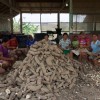
Soy, an Exotic Fruit in Brazil’s Amazon Jungle
In the northern Brazilian state of Pará, the construction of a port terminal for shipping soy out of the Amazon region has displaced thousands of small farmers from their land, which is now dedicated to monoculture.
Draft in Hand, Ministers in Paris Enter Last Week of Climate Talks
Whatever effort there was made during the past four years to create a global legal architecture to combat climate change, its legacy will be defined in the forthcoming days.Africa Hangs its Agricultural Transformation Agenda on COP 21’s Outcome
A famous saying goes: To whom much is given, much is expected. This is the message that the African Development Bank (AfDB) is carrying and delivering for, and on behalf of Africa at the global conference on climate change, COP21, which opened Monday, 30th November.
Solar Kiosks Help Light up Rural Kenya
This market centre in the arid Lake Magadi region, Kajiado of Southern Kenya is with no grid electricity. The area is inhabited by the pastoralist Maasai community. With climate change affecting their pastoral way of life, the community is increasingly adopting a more sedentary life but without amenities.
Making the Case for Caribbean Fishers at Paris Climate Conference
Horace Walters has made the 6,903km journey from his native St. Lucia to Paris to deliver a simple, yet urgent message to the international community.
Antigua: Surrounded by Sea but Catchments are Empty
Antiguan Veronica Yearwood no longer panics when she hears that the rainfall forecast for the tiny Caribbean island is again lower than average rainfall.« Previous Page — Next Page »





The Week with IPS

NEXT STOP - SDGs
Tracking global progress towards a sustainable world
Tracking global progress towards a sustainable world
