Languages
Tuesday, September 15, 2026



News and Views from the Global South
Projects

Children are Bearing the Bitter Brunt of Counter-Terrorism Efforts: Report
Counter-terrorism efforts adopted by governments around the world in response to threats of terrorism are affecting children negatively in numerous ways, a report by Watchlist on Children and Armed Conflict (Watchlist) claimed last week.
‘Organic is the Future’
Vandana Shiva, a pioneer of organic farming in India, is incensed by the 2019 draft law to compulsorily register all seeds used by farmers. On a wintry afternoon, at her farm Navdanya in the Himalayan foothills, the noted ecologist spoke on the future of the organic farming movement in India. Excerpts:
Oil-rich Gulf Turns to Renewable Energy
The increased frequency of climate-induced weather extremes and public opinion pressure are forcing even major fossil fuel exporting countries in West Asia to make a big push towards renewable energy.
Biofortified Crops Improve Farmers’ Livelihoods in Zimbabwe
Steven Seremwe, who is 57 years old, was retrenched from his job as an administrator at Lake Shore Missions in 2012. He decided to focus on farming, and he started growing various crops—white maize, sugar beans, and sweet potatoes, among others—for consumption and sale.
Education Cannot Wait Interview with Rt. Hon. Gordon Brown
As the world marks the second International Day of Education on 24 January 2020, Education Cannot Wait’s Director, Yasmine Sherif, interviewed one of today’s most prominent and passionate advocates for the global movement to ensure education for all. In his role as UN Special Envoy for Global Education and as Chair of the ECW High-Level Steering Group, Rt. Hon. Gordon Brown has successfully galvanized financial and political support globally with the hope and opportunity of quality education for every child in this world.
GGGI inks Declaration of Intent and MoU with the French Ministry of Europe and Foreign Affairs and the Agence Française de Développement to strengthen cooperation
The Global Green Growth Institute (GGGI) signed a Declaration of Intent and a Memorandum of Understanding (MoU) with the French Ministry of Europe and Foreign Affairs (MEAE) and the Agence Française de Développement (AFD), a French development bank today to promote sustainable development and climate action. The signing was witnessed by Mr. Ban Ki-moon, President and Chair of GGGI.
Climate Change: A Tale of Weather Extremes with Mixed Fortunes for Zambia
It is early Saturday morning and Planeta Hatuleke, a small scale farmer of Pemba District in Southern Zambia, awakens to the comforting sound of rainfall. As the locals say, the “heavens have opened” and it is raining heavily after a prolonged dry spell.
Iran Announces New Nuclear Deal Breach
Iran announced its fifth breach of the 2015 nuclear deal Jan. 5, stating that it “discards the last key component of its operational limitations” put in place by agreement.
Does Africa’s Food Future Really Lie with Young Farmers?
Africa will starve or survive on expensive food imports because it is not growing new farmers, research shows. And the challenge remains among researchers, policy makers, public and private sector actors to get African youth interested in agriculture on a continent where a growing number of people go to bed hungry every night.
India’s Citizenship Law Triggered by Rising Right-Wing Ideology
“Fire bullets at the traitors of the country,” chanted mobs of Bharatiya Janata Party, or BJP, supporters wrapped in Indian flags in Delhi last week.
Food Security Is Priority of Russian Sustainable Development Assistance
Food security holds a special place among Russia’s priorities in its efforts to achieve sustainable development globally. We believe that this task, which is reflected in Sustainable Development Goal 1, requires a comprehensive and multidimensional approach.
Lithium and Clean Energy in Argentina: Development or Mirage?
The intense white brightness of the salt flats interrupts the arid monotony of the Puna in northwest Argentina, resembling postcards from the moon. Beneath its surface are concealed the world's largest reserves of lithium, the key mineral in the transition to clean energy, the mining of which has triggered controversy.
Solar and Biogas, the Perfect Agroenergy Duo in Brazil
 "They're the ideal duo," because the combination of solar and biogas sources makes it possible to provide electricity around the clock, one during the day and the other at night, says Anelio Thomazzoni, a pig farmer who has become a producer of clean energy in southwestern Brazil.
India’s Electric Mobility Needs Enabling Infrastructure to Pick up Speed
Dogged by intractable air pollution debilitating large northern swathes from mainly urban vehicle emissions, India earlier this year announced targets for a 40 percent non-fossil component in its fuel-mix by 2030 as part of its Nationally Determined Commitments (NDC) to the Paris accord on climate change. It aims for full electrification of public transit systems and of one-third private vehicles by 2030.
Sustainable Fisheries are Key in Addressing Food Security — and Women can Play an Important Role
Experts gathered in November to discuss the importance of sustainable fisheries and its role in eradicating world hunger at a fisheries symposium in Rome.
Indigenous Knowledge, a Lesson for a Sustainable Food Future
Local knowledge systems rooted in traditional practices and culture passed down generations provide sustainable solutions to food and nutritional insecurity on the back of climate change, a conference heard this week.
Fixing the Business of Food
Milan is the city where Leonardo da Vinci painted his iconic Last Supper. Frozen in time is the moment Christ told his disciples there was a traitor among them. Visitors to the painting can examine the expressions on the faces of the disciples and look the food they might have eaten – the bread and wine, and of course the spilt salt. As one delegate to the 10th International Forum on Food and Nutrition noted, the diet did not seem varied or healthy.
Swedish Energy Agency and Global Green Growth Institute partner to establish Article 6 Activities
MADRID – 4th December 2019 – Today, the Swedish Energy Agency (SEA) and the Global Green Growth Institute (GGGI) signed a cooperation agreement on the sidelines of COP25 to launch the Mobilizing Article 6 Trading Structures (MATS) Program, a pilot project aimed at establishing Article 6 Activities under the Paris Agreement. The objective of this joint collaboration is to catalyze international trading of mitigation outcomes in support of the increased climate ambitions needed under the Paris Agreement.
Zimbabwe Food Crisis: Time to Act Is Now, Says UN Special Rapporteur
Global food systems are ripe for transformation if people are to be nourished and the planet sustainable, says Hilal Elver, Special Rapporteur of the Right to Food of the United Nations Human Rights Council.
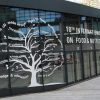
Tradition and Technology Take Centre Stage at BCFN Food Forum
A coffee producer will receive a cent and a half from a $2.50 cup of coffee. This one stark fact stood out as scientists, researchers, activists and grappled with solutions for change in food and nutrition practises, which would benefit the greater community.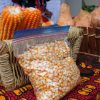
Biofortified Food, a Business Boost for Smallholder Farmers
A start-up in Zimbabwe is producing high nutrition foods using biofortified crops in a bid to fight micronutrient deficiency. Vitamin A deficiency (VAD) leads to night blindness, illness and death from childhood infections. In Zimbabwe, 36 percent of children under five years of age suffer from Vitamin A deficiency, according to the World Health Organisation (WHO).« Previous Page — Next Page »


The Week with IPS

NEXT STOP - SDGs
Tracking global progress towards a sustainable world
Tracking global progress towards a sustainable world
