Languages
Tuesday, November 17, 2026



News and Views from the Global South
Africa
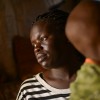
Gang-Raped and Nowhere to Turn
Owuor P.’s 16-year-old sister Nekesa tried and tried to get an abortion after she was gang-raped and found herself pregnant during Kenya’s post-election violence in 2007-8. “We are not sure how many raped her,” Owuor told me. “She told us that she saw three men rape her and then she lost consciousness. She was quiet most of the time after the rape.” In desperation after the birth of the child, she killed herself. The baby survived, and today Owuor is raising the child, who has a serious mental health condition, and is still grieving for his sister.
The tragedy of Darfuri asylum-seekers in Uganda
After escaping the genocide in Sudan’s Darfur region during which his father and two brothers were killed and his mother and sister displaced, Adam (named changed), began a new chapter. But it was a life “in limbo”. Over a decade later, he remains trapped in a strange country where he struggles to prove his identity; cannot find work or receive financial support.
Rural Youth Can Be Tomorrow’s Entrepreneurs
Bolstering widespread prosperity in Africa is a key necessity if the world is to achieve its commitments to eradicate poverty and hunger by 2030.
Press Crackdown Is Likely to Worsen
On October 2015, the day that Ugandan journalist Enoch Matovu, 25, was allegedly shot by the police for simply “doing my job”, the police had “run out of tear gas”, he claimed.
Cameron at large: Want Not to Become a Terrorist? Speak Fluent English!
“Do you speak English fluently? No? Then you risk to become a terrorist!.” IPS posed this dilemma to some young Muslim women living in Cairo, while explaining that this appears to be UK prime minister David Cameron's formula to judge the level of Muslim women's risk to fall, passively, into the horrific trap of extremism.
Women’s Empowerment Will Accelerate Kenya’s Economic Prosperity
When President Barack Obama made his first visit to Kenya as US President in July 2015, one of the poignant messages he left was an exhortation for communities to shun cultures that degrade women and girls.
Rabbit Farming Now a Big Hit in Zimbabwe
Tichaona Muzariri, 44, a villager based at Range in Chivhu, a town 143 kilometers south of Harare, the Zimbabwean capital, quit his job as a teacher in 2009 to start a rabbit farm on a small scale with three does (female rabbits) and one buck (male). With around US$30 as capital, Muzariri waded into rabbit farming back then. Today, his rabbit farm breeds nearly 3,000 rabbits every year and slaughters up to 120 every week for sale to grocery stores, restaurants and hotels.
Ebola Recovery Funds Impossible to Track, Says New Study
When the Ebola epidemic devastated three West African countries – Liberia, Sierra Leone and Guinea two years ago – the international community responded with pledges of over $5.8 billion in funds to fight the disease which has killed over 11,300 people.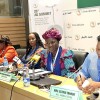
Women’s Rights First — African Summit
Despite the enormous challenges facing Africa now, the leaders of its 1.2 billion plus inhabitants have decided to spotlight the issue of Human Rights With a Particular Focus on the Rights of Women in their 26th summit held in Addis Ababa on 21-31 January this year. Why?
Combating HIV among Teens
Keziah Juma is coming to terms with her shattered life at the shanty she shares with her family in Kenya’s sprawling Kibera slum where friends and relatives are gathered for her son’s funeral arrangements. While attending an antenatal clinic, Juma who is only 16 years discovered that she had been infected with HIV. “I went into shock and stopped going to the clinic, that is why they could not save my baby and I have been bed-ridden since giving birth two months ago,” she told IPS.
Response to Ethiopia’s Drought: A Story of Success or Anguish?
 Inside a health clinic run by the Catholic Daughters of Saint Anne, a nurse wraps a special tape measure around the upper arm of 2-year-old Rodas cradled in her mother’s arms. The tape reads yellow, meaning “moderately” malnourished, according to the attending nurse.

WFP’s Chief Calls for Support for Those Most Vulnerable to Climate Change
With El Nino affecting countries in southern Africa, threatening agricultural production due to a massive heat wave, the World Food Programme has urged the international community to support the upscaling of climate smart agricultural technology for resilience.
Time to Repeal Anti-Terrorism Law in Ethiopia
With the African Union celebrating the African Year of Human Rights at its 26th summit, at its headquarters in Addis, Ethiopia, the venue raises serious concerns about commitment to human rights.
Tanzania: Girls Struggle to Avoid Forced Marriage, Yearn to Learn
Maria was barely 16 when her father removed her from school to marry her off to a man 20 years older than she was just so that the family could receive eleven cows as her dowry.
Africa, Only If It Bleeds It Leads?
Africa is clearly one of the most negatively impacted regions in the world, not helped by the increasing trend of the mainstream media to focus on tragic news, following a self-imposed rule: “if it bleeds it leads”.
Fire a Hot Topic in Youth Employment in South Africa
Nolukhanyo Babalaza finished her final year of high school and received her diploma in 2000, but this was not an immediate passport to a good life. She was frustrated to see some people making it while she struggled to afford basic things like everyday food.
Science: Not Just a Western Sector, It Can Help Africa Too
Small-scale farmer Augustine Sibanda has grown resilient traditional sorghum varieties passed down through generations but has increased his yields after he adopted improved seed varieties developed through research.
A Commercial Village Brings Business to Poor Kenyan Farmers
High incidents of poverty coupled with decreasing land acreage amid a changing climate pouring havoc on weather patterns has compelled farmers in the Tangakona area of Busia County in western Kenya to embrace an innovative initiative to improve livelihoods.
Seven Top Challenges Facing African Women
Economic exclusion; financial systems that perpetuate their discrimination; limited participation in political and public life; lack of access to education and poor retention of girls in schools; gender-based violence; harmful cultural practices, and exclusion of women from peace tables, are the major standing barriers to achieving gender equality in Africa.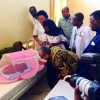
Maternal and Child Health Key to Kenya’s Economic Growth
On Friday, 06 November 2015, we had the honor of meeting the First Lady of Kenya Ms Margaret Kenyatta, a tireless advocate for “every woman and every child”, during the launch of the Beyond Zero campaign in Mandera County, North-Eastern Kenya, a place which has often been described as ‘the worst place on earth to give birth’.
Thousands Face Hunger and Pray for Enough Rain in Malawi
It is 9 am in the morning but the scorching sun makes it feel like mid-afternoon. This type of weather is what experts are calling El Nino; a heat wave that is affecting countries in southern and eastern Africa.« Previous Page — Next Page » *#*

The Week with IPS

NEXT STOP - SDGs
Tracking global progress towards a sustainable world
Tracking global progress towards a sustainable world
