Languages
Monday, September 21, 2026



News and Views from the Global South
Asia-Pacific

Global Solidarity Needed to Address Taliban’s Attacks on Women’s Rights
Matiullah Wesa’s crime was to try to ensure young people got an education in Afghanistan. His recent forceful abduction by the Taliban offers the latest stark reminder that global solidarity and coherent action from the international community are needed to prevent the complete loss of the rights of women and girls in Afghanistan.
Pacific Island Countries To Develop Advanced Warning System for Tuna Migration
Climate change and warming ocean waters are causing tuna fisheries to migrate to international waters, away from a country’s jurisdiction, thereby putting the food and economic security of many Pacific Island countries and territories at risk.
Myanmar’s ‘Forgotten War’ Lurches Deeper into Horror
Food is passed around a campfire, and a guitar strums as cool night air tumbles down mountain cliffs, relieving the jungle of its heat. A dozen or so young Myanmar activists – some having just travelled long distances evading military checkpoints, others already living in exile – have come together in a jungle camp for a training course with a difference. Instead of armed combat, their chosen role is enabling the overthrow of the military junta through non-violent means.
Water is Life: How the UN in Samoa is Responding to the Triple Planetary Crisis
Water is life. No other definition captures quite so aptly what this essential element means for our lives, livelihoods and the natural environment.
Afghan Tailors Flee to Pakistan After Ban on Stitching Women’s Clothing
"I had my shop in Afghanistan but came here after the Taliban's warning against stitching women's clothes. Now, I am working on daily wages in a shop owned by a local tailor master," Noor Wali, 32, told IPS.
India’s Bihar Leads Efforts to Strengthen Global Poverty Alleviation Through South-South Knowledge Exchange
Under the Bihar Rural Livelihoods Promotion Society, Bihar’s government announced the development of a new Program for Immersion and Learning Exchange (ILE) to be headquartered in Patna.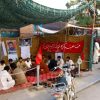
Journalists in Balochistan: Keep Quiet or Die
Geologists have described the region as the most similar to Mars on Earth. Whether it's violent sandstorms or ice found on its surface, we get more news from the red planet than from Balochistan.
Food Shortages Deepen in Cyclone-Devastated Vanuatu
One month after the Pacific Island nation of Vanuatu was hit by two Category 4 cyclones within three days, food scarcity and prices are rising in the country following widespread devastation of the agriculture sector.
Rethinking Public Debt as Positive Investment in Sustainable Development
The unprecedented fiscal firepower used to protect the vulnerable from the harsh socio-economic impact of the COVID-19 pandemic and the resulting economic contraction have pushed the average government debt level in the Asia-Pacific region to its highest since 2008.
Our Wonderful Differences Enriches Societies
When is too much Autism awareness still not enough? This thought recurs every April as we near World Autism Day on April 2, and parents reach out to me after reading enthusiastic and well-meaning news and journal articles – which are actually harmful and hurtful.
Stampedes as Destitute Throng Pakistan’s Free Flour Distribution Points
The free Atta (flour) distribution scheme launched by the government to assist the inflation-hit communities during the holy month of Ramzan has left at least ten dead and over 100 injured as would-be beneficiaries rush to claim their 10-kilogram bags.
Pressure from the Taliban has Contributed to Rise in Underage Marriages in Afghanistan
Afghan girls have been denied the right to attend school and university since the Taliban took power in August 2021. But as if this was not tragic enough, many girls have also been forced to marry too early in life.
Bhutan’s Long-Serving Political Prisoners Should be Released
“The physical torture was merciless,” said one man, “so we had no option but to present ourselves to the court based on [the security forces’] demands and their statements.”
Championing Sustainability Despite Adversities in Asia & the Pacific
As we reach the midpoint of the 2030 Agenda for Sustainable Development, it is an opportune moment to reflect on the Asia-Pacific region’s progress and accelerate efforts to achieve our goals.
Scaling up Climate-Smart Trade Policies in the Pacific
The impacts of the climate crisis are acutely felt in the Pacific region. In recent years, the region has been hit by devastating climate events, which cause widespread destruction and significant loss of lives and livelihoods across countries.
Parliamentarians Pledge to Act on Grim Realities of Child Marriage, Gender-Based Violence
Child marriage, gender-based violence (GBV), sexuality education, religion, and tradition came under the spotlight during a conference, Arab and Asian Parliamentarians’ Meeting to Follow-Up on ICPD25 Commitments: Addressing Youth Empowerment and Gender-Based Violence, held in Jakarta, Indonesia.
Vanuatu Twin Cyclones Underscore the Pacific’s Vulnerability to Compounding Climate-Disaster Risks
Two destructive Category 4 tropical cyclones, Judy and Kevin, and an earthquake of 6.5 magnitude impacted over 80 per cent of the Vanuatu population from 1 to 3 March 2023. To address this emergency situation, the UN, along with Pacific member States have deployed personnel on the ground to coordinate humanitarian assistance and prepare post-disaster damage assessment.
Excluded Afghan Girls Forced to Seek Education in Pakistan
Hundreds of young women and girls are moving to Pakistan to continue their studies after the Taliban’s restrictions on women’s education in Afghanistan.
Parliamentarians Tackle Youth Employment, SRHR in Post-COVID Asia and Pacific
With more than 600 million youth aged between 18 and 24 in the Asia and Pacific region, putting their issues front and center is crucial. Speakers at a recent forum, Youth Empowerment: Education, Employment and Sexual and Reproductive Health and Rights, held in Phnom Penh, Kingdom of Cambodia, agreed that policy development and implementation should be youth-centered.
How The Ass Used Satire To Poke Fun at Nepal’s Leaders – PODCAST
 Welcome to Strive, a podcast of IPS News, where we chat with new voices about fresh ideas to create a more just and sustainable world. My name is Marty Logan.
We’ve all made asses of ourselves at one time or another. But today’s guest actually made a career out of it — not of messing up but of being The Ass, the author of a satirical column that ran on the back page of the Nepali Times newspaper for more than two decades.
Welcome to Strive, a podcast of IPS News, where we chat with new voices about fresh ideas to create a more just and sustainable world. My name is Marty Logan.
We’ve all made asses of ourselves at one time or another. But today’s guest actually made a career out of it — not of messing up but of being The Ass, the author of a satirical column that ran on the back page of the Nepali Times newspaper for more than two decades. 
International Women’s Day, 2023
Unleashing Our Region’s Most Untapped Potential: Harnessing the Digital Age to Empower Women & Girls
New technologies and innovations are reshaping our world and its future, often at a dizzying pace. Yet women and girls continue to be left behind in this burgeoning digital universe. How, then, can we harness these developments to create a better future for all of us?
« Previous Page — Next Page »


The Week with IPS

NEXT STOP - SDGs
Tracking global progress towards a sustainable world
Tracking global progress towards a sustainable world
