Languages
Tuesday, November 10, 2026



News and Views from the Global South
Europe
China Looks at Life After Euro
If Chinese detractors of liberal democracy and unbridled market development ever needed more fodder for their attacks on the West, then last week's Greek farce provided plenty. But behind the headlines announcing "the collapse of Europe" there is little sense of ideological triumph. Instead Beijing is busy drawing up contingency pans for the break up of the eurozone and absorbing the lessons of welfare state excesses.
TURKEY: A Rising Influence Among Arab Nations
Assurances to women by the winners of the Tunisian elections that they will be free not to wear the Muslim veil has come as music to the ears of Turkish secularists. It was another signpost confirming Turkey’s growing position and influence among Arab countries.
G20: Final Push for Financial Transactions Tax
While the Greek bailout and stimulus package dominated discussion among the Group of 20 (G20) major industrialised and emerging market economies at the high-level summit in Cannes, France, this week, the proposed financial transactions tax (FTT) received meagre attention.
At G20 Summit, Civil Society Demands ‘People First, Not Finances’
While the 20 heads of state of the Group of 20 (G20) industrialised and emerging countries gather in southern France to deliberate on the future of the global economy – particularly the crises unfolding in the Eurozone – pockets of activists are amassing around the summit to make their voices heard.
Antigua Partners with EU for Emergency Docking Port
The scars on the pilings adjacent to the new Emergency Ferry Docking Facility here are still visible, graphic evidence of the devastation caused by Hurricane Luis when it hit Antigua and Barbuda in 1995.
BALKANS: Who’s Afraid of Serbian Violins
The path of reconciliation in former Yugoslavia has taken a musical turn, as the philharmonic orchestras of Ljubljana, Zagreb and Belgrade team up for their first joint season since 1991.
Greek Government on Verge of Collapse
The government in Greece is on the verge of collapse as opposition to the Greek prime minister's proposed referendum on more eurozone bailout funds grows.
KAZAKHSTAN: Sea Reclaimed as Lake
Just six years after the completion of a dike that raised the level of the northern part of the Aral Sea by two metres and slashed its salt content by two-thirds, this remote Central Asian lake once synonymous with ecological catastrophe has become a model of environmental recovery.
GREECE: Austerity Measures Responsible For Athens’ ‘New Poor’
Harsh austerity measures and a struggling economy have given birth to the ‘new poor’ in Athens, a term used to describe those suffering the impacts of social exclusion and rapidly shrinking civic welfare institutions.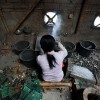
GHANA: Toxic Electronic Waste Contaminates Nearby Areas
Mountains of hazardous waste grow by about 40 million tons every year. This waste, mostly from Europe and North America, is burned in developing countries like Ghana in a hazardous effort to recover valuable metals.
EUROPE: ‘Agenda for Change’ Leaves Middle-Income Countries Out in the Cold
Last week the European Commission unveiled its ‘Agenda for Change’, a new policy framework outlining priorities for the European Union’s development aid and detailing the Commission’s renewed focus on economic growth as a means of poverty reduction, particularly in the world’s poorest countries.
Hard Times Ahead for Caribbean Sugar
The Sugar Association of the Caribbean (SAC) has been buoyed by a large crop this year, but a recent proposal by the European Union to abolish domestic quotas would likely cut into preferential sugar exports by the SAC and other sugar associations in the African, Caribbean and Pacific (ACP) countries to European markets.Anti-G20 Summit Prepares Its Case
Anti-globalisation and anti-capitalist groups are gathering ahead of the G20 meeting in Cannes in the south of France next week.MIDEAST: UNESCO Becomes a New Battleground
Palestine’s bid to become a member of the United Nations Educational, Scientific and Cultural Organisation (UNESCO) has created a tense atmosphere here, as the United States threatens to cut financing if the application is approved.
SPAIN: Detained Immigrants “Are Treated Like Criminals”
"It was very tough, like being in prison," says 29-year-old Algerian immigrant Sid Hamed Bouziane, in slow Spanish, about his 28-day stay at the Immigrant Detention Centre, or CIE, in the southern Spanish city of Málaga.
SPAIN: ETA Announces End to Europe’s Last Armed Conflict
"This is probably the most important day ever for us, the Basque people, since the death of (dictator) Franco in 1975," journalist and historian Urko Apaolaza told IPS.Greek Strike Resumes Ahead of Austerity Vote
Thousands of Greeks, furious at the government's austerity measures, gathered outside parliament in the capital Athens, as the second day of a general strike and mass protests began.Media Called to Arms in Green Battle
In a "call to arms" in this northern Italian town, environmentalists are urging the international media to help disseminate ideas and solutions that could reduce carbon emissions, stop land-grabbing by wealthy countries and stem the tide of environmental refugees.BALKANS: Serbs Turn From the State Towards Themselves
Dismayed by the lack of beer and chips at a football game three years ago, Dragan Stancic and Uros Petrovic, two young Belgradians, hatched a plan to take matters into their own hands.Turkish Troops Enter Iraq After PKK Attacks
Turkish forces have launched an incursion into the mountains of northern Iraq following simultaneous attacks by Kurdish separatists in southeastern Turkey that killed at least 26 soldiers.
PORTUGAL: Crisis Pushes Women into Prostitution
The severe financial and economic problems in Portugal are driving many women to desperation and pushing them into prostitution as a last resort to support their families.« Previous Page — Next Page »





The Week with IPS

NEXT STOP - SDGs
Tracking global progress towards a sustainable world
Tracking global progress towards a sustainable world
