Languages
Saturday, November 21, 2026



News and Views from the Global South
Regional Categories

What Might Help Save Our Planet? Different Approaches to Desertification
I am in the Swedish countryside, lush and beautiful in its late summer attire, having a conversation with the son of a friend of mine. Oskar Olin runs a sheep farm, Stabbehyltan Lamm AB, where he practises holistic management. His three-hundred sheep graze within an area of 30 ha where Oskar every day moves his flock from one pasture to another. It takes between 45 to 90 days before the sheep are back on the same pasture where the rotation began. The animals are thus not overgrazing the area, while they at the same time trample down a protective layer of vegetation, which fertilizes the soil. Carbon is bound in the earth, soil organic matter increases, retaining humidity and accordingly deepen the root systems of wholesome plants.
UN’s Ultimatum to Staff & Diplomats: Get Vaccinated or Go Hungry
As New York city struggles to cope with the widespread outbreak of the deadly new coronavirus Delta variant -– which has claimed more than 100,000 cases per day in the US— the United Nations is laying down strict guidelines at its headquarters (UNHQ) for staffers, diplomats and visiting delegates.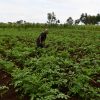
Digitisation Boosts Mechanised Farming Among Kenyan Farmers
When 33-year-old Kimani Mwaniki, an Irish potato farmer in Elburgon, Nakuru County in Kenya’s Rift Valley, heard about a farmer’s virtual school, he didn’t hesitate to enrol. He was keen to learn how the programme will enable him to get higher crop yields for his market in the capital city Nairobi and elsewhere.
Here Is How We Can Keep Women Safe From Sexual Violence
The past weeks have been quite traumatic for the women of Pakistan. Recently, a young woman named Noor Mukadam was murdered and beheaded by her alleged partner in Islamabad, Pakistan’s capital city. A few weeks ago, the prime minister’s statement on rape erroneously construed the crime as being the fault of the victim.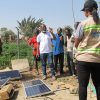
How Market Knowledge is Powering Africa’s Solar Irrigation Sector
‘Know your customers’ is arguably the first rule of marketing. By identifying and segmenting customer groups, companies can target their products and services to the right people, in the right way. This can open-up opportunities for growth, inform product development and improve customer retention.
World Bank Looks to Trains in Argentina’s Climate Battle
Argentina will receive a 347 million dollar loan from the World Bank to upgrade one of the most important suburban railway lines in the city of Buenos Aires. The operation is part of the multilateral lender’s new policy, which deepens its commitment to the fight against climate change.
Will World Leaders Risk a UN Visit Amid a Surge in the Deadly Virus?
The annual high-level debate during the upcoming 76th General Assembly sessions beginning September 21 —which traditionally attracted over 150 world leaders in a pre-pandemic era-- is now clouded in uncertainty.
‘Proud of Being Able to Speak the Truth’: Journalist Nidhi Razdan on her Cyber Attack
Earlier in January, Indian journalist Nidhi Razdan found out she was a victim of one of the most sophisticated and elaborate cyber attacks. Razdan wrote in a piece that it was all an attempt to access her bank account details, personal data, emails, medical records, passport and access to all her devices, including computer and phone.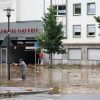
The Water Cycle Is Intensifying as the Climate Warms, IPCC Report Warns – That Means More Intense Storms and Flooding
The world watched in July 2021 as extreme rainfall became floods that washed away centuries-old homes in Europe, triggered landslides in Asia and inundated subways in China. More than 900 people died in the destruction. In North America, the West was battling fires amid an intense drought that is affecting water and power supplies.
Zimbabwe’s Urban Sprawl Dilemma
Ndaba Dube, a Bulawayo resident, says he built himself a home on a small piece of land after the authorities kept him on the housing waiting list for more than two decades. The land he chose is in an old township established before Zimbabwe’s independence in 1980.
Power of Creative Expression during Lockdown
Screens, devices, and smartphones replaced the human touch and day-to-day interactions as COVID-19 protocols forced millions of people into harsh lockdowns and prolonged isolation.
Trouble in the Land of Smiles?
Could the rise of the youth-led 'Ratsadon' movement lead to changes in Thai politics? Prime Minister General Prayuth Chan-ocha now faces an ongoing threat as the movement continues to mobilize many, especially young people, against the government. They have broken traditional taboos by opening new conversations about the monarchy and shaping public discourse to question many conservative views in Thai society.
Q&A: Why the World ‘Can’t Afford to Wait’ for Transparent, Equitable Food Systems
The world has been put on notice that there is no time to waste in achieving the goal of food systems transformation.
A Transformational Approach to Climate Change
The International Panel on Climate Change (IPCC) issued its starkest report yet, expressing a clear consensus on the rapid changes to global temperatures.
How to Sustainably Finance Universal Health Care
To achieve universal health coverage, a country needs a healthcare system that provides equitable access to high quality health care requiring sustainable financing over the long term. Publicly provided healthcare should be on the basis of need, a citizen’s entitlement for all regardless of means.
Child Protection Schemes Are Failing Children Orphaned by COVID-19 in India
The second wave of COVID-19 brought with it unimaginable grief, agony, and frustration. India saw a sharp increase in the number of deaths, especially among younger people, which meant that many children lost one or both parents. Reports of people seeking help for orphaned children as well as requests to ‘adopt’ these children emerged on social media.
A Code Red Warning on the Hazards of Climate Change & an Impending Global Disaster
A landmark report on the hazards of climate change predicts a devastating future for the world at large. Authored by the Intergovernmental Panel on Climate Change (IPCC) and released August 9, the study is being described by UN Secretary-General Antonio Guterres as “code red for humanity”— a rallying cry before an impending global disaster.
We Were Born to Do This!
The first time I visited South Sudan in 2004 - prior to its independence - I travelled across the entire the country which was then a region devastated by man’s inhumanity to man. Although South Sudan is slightly larger than France, I could find only one concrete school building in Rumbek.
The ‘Covid-19 Timebomb’ – Dispelling the Single- Story Humanitarian Narrative for Africa
An article published in April 2020 by the World Economic Forum warning that Africa was facing a Covid-19 time bomb was widely shared among the humanitarian sector, with increasing alarm.
UN Preaches Transparency to the Outside World but Fails to Practice it in its Own Backyard
The United Nations has long preached the wisdom of transparency and accountability to the outside world, but has failed to practice the same principles in its own backyard – or even on the 39th floor of the Secretary-General’s office in the UN Secretariat.
Between Horror and Hope in the Villages of Ituri
“We have buried twenty-eight people. I have seen them with my own eyes. We also found three bodies in the fields and buried them too. I can show them to you. It’s not far from here. We buried them there.” The man points to the hills. He doesn’t want to show his face or say his name, but he agrees that his voice can be recorded, so that his words don’t get lost. The camera can’t shoot him; it can only look at the tall grass or at the forest towards the countryside where it is no longer possible to cultivate food. The man talks while music from Lengabo’s catholic church marks the time of truce and hope.« Previous Page — Next Page »


The Week with IPS

NEXT STOP - SDGs
Tracking global progress towards a sustainable world
Tracking global progress towards a sustainable world
