Languages
Saturday, November 28, 2026



News and Views from the Global South
Regional Categories

World Hunger on the Rise Again
Exacerbated by climate-related shocks, increasing conflicts have been a key driver of severe food crisis and recently re-emerged famines, a major United Nations joint report has just revealed.
Communities Can be Role Models for Sustainable Development
The United Nations, governments, civil society, business, thought leaders and media will gather in New York on September 17 to celebrate the winners of the Equator Prize 2017. The 15 prize winning communities successfully advance innovative solutions for poverty, environment, and climate challenges.
Caribbean Picks Up the Pieces After Monster Storm
When Hurricane Irma ripped through the British Virgins Islands on Sept. 6, claiming seven lives, injuring an unknown number of people and destroying built infrastructure as well as significantly damaging the natural environment, the ferocity of the storm shocked many of the islands’ residents, including 72-year-old Egbert Smith, who has lived through plenty of severe storms.
Why Aung San Suu Kyi Chooses Silence
On 23rd August, just days before thousands of Rohingyas began fleeing their homes from Rakhine State, Aung San Suu Kyi’s recently appointed Rakhine Advisory Commission, established in 2016, submitted its final report. The engaging of an independent Commission, tasked with recommending newer ways of improving the lives of Rohingya Muslims, Myanmar’s most deeply persecuted minority group, carried some weight of diplomacy.
At Key Finance Meet, Mongolia Seeks Path to a Greener Economy
Rapid growth of a coal-fired economy often leads to environmental degradation, and Mongolia is a case in point.
Secretary-General Talks Myanmar, Trump Ahead of General Assembly
In an environment full of major threats, countries must work together towards peace and stability, the Secretary-General said ahead of the General Assembly.
Civilians ‘Direct Targets’ as Conflict Spreads in Central African Republic
Rape, torture, pillage, murder and forced displacement by the Union for Peace in Central Africa (UPC) rebel forces are the new horrifying realities faced by communities in Basse-Kotto, Central African Republic, according to the prominent London-based human rights group Amnesty International.
Dear Nobel Laureate, 19 September is 144 hours too late
Dear Nobel Laureate Aung San Suu Kyi, We learned today that you will address the Rohingya issue via television in Myanmar on 19 September - over 144 hours from now.

Myanmar Rohingya Face “Textbook Example of Ethnic Cleansing”
As hundreds of thousands of Rohingya Muslims flee violence in Myanmar’s Rakhine State, thousands that remain in the country face mass atrocities at a scale never seen before.
Alert: Nature, on the Verge of Bankruptcy
Pressures on global land resources are now greater than ever, as a rapidly increasing population coupled with rising levels of consumption is placing ever-larger demands on the world’s land-based natural capital, warns a new United Nations report.
Improved Fish Processing Brings Dramatic Gains for Women
Fishing is the capture of aquatic organisms in marine, coastal and inland areas. According to the Food and Agriculture Organisation of the United Nations (FAO), marine and inland fisheries, together with aquaculture, provide food, nutrition and a source of income to 820 million people around the world, from harvesting, processing, marketing and distribution. For many, it also forms part of their traditional cultural identity.
South-South trade cooperation key to sustainable and inclusive model of globalization
Thanks to globalization and trade liberalization of commodities, services and goods, global trade has reached an unprecedented level. According to the United Nations Conference on Trade and Development, world trade in goods was valued at approximately USD 16 trillion. North-North trade generates the highest trade volume at approximately 6 trillion; trade flows within and between countries of the Global South amounts to 4.6 trillion. Trade between the Global South and the Global North -approximately between 2.5 and 3 trillion - add up to less than the trade flows within the Earth’s two main poles.
Much more climate finance now!
Funding developing countries’ climate change mitigation and adaption efforts was never going to be easy. But it has become more uncertain with President Trump’s decision to leave the Paris Accord. As a candidate, he threatened not to fulfil the modest US pledge of US$3 billion towards the 2020 target of US$100 billion yearly for the Green Climate Fund (GCF).
Latin America in Search of Sustainable Food Systems
A paradigm shift is needed regarding how food is produced, consumed and marketed in Latin America and the Caribbean, in order to curb health problems related to poor nutrition.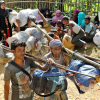
Dear Nobel Laureate Aung San Suu Kyi,
When you were finally able to accept your Nobel Peace Prize, you spoke eloquently of the ultimate aim of a world in which “every corner is a true sanctuary where the inhabitants will have the freedom and the capacity to live in peace.”
Floods, Hurricanes, Droughts… When Climate Sets the Agenda
When officials and experts from all over the world started the first-ever environmental summit hosted by China, they were already aware that climate and weather-related disasters were already seriously beginning to set the international agenda – unprecedented floods in South Asia, strongest ever hurricanes Harvey and Irma, and catastrophic droughts striking the Horn of Africa, among the most impacting recent events.
Taking Stock of SDG Actions on UN’s Development Agenda
Taken together, the 2030 Agenda for Sustainable Development (SDGs) and the Paris Agreement on Climate Change, provide humanity with a masterplan for a sustainable way of life on this planet.
114 Nations Seek Support to Implement UN’s 2030 Development Agenda
Two years have passed since the world came together to adopt a truly remarkable framework for common progress: the 2030 Agenda for Sustainable Development. The Agenda is transformative and inspiring its own right. That it was agreed at a time of severe political divisions on so many other issues was especially encouraging. Since then there has been very promising momentum around the world.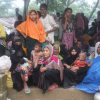
Refugee Camps “bursting at the seams” in Bangladesh
A dramatic increase in the number of refugees fleeing Myanmar is placing a huge strain on already very limited resources in Bangladesh, the UN refugee agency (UNHCR) said.
Latin America Discusses How to Finance the Sustainable Development Agenda
Is it possible for the financial sector of Latin America and the Caribbean not only to think about earning money but also to contribute to the 2030 Agenda for Sustainable Development? The answer was sought in Buenos Aires, Argentina, at a regional roundtable on sustainable finance, the United Nations Environment Finance Initiative.
“I Decide for Myself”: South Sudanese Woman Shows Power of Knowledge
Elizabeth Ayumpou Balang is a teacher at a nursery and primary school in Rumbek, a town in central South Sudan. It is her dream job, but it did not come easily. Like many girls in South Sudan, Ms. Balang was married, and became a mother, while just a teenager.« Previous Page — Next Page »


The Week with IPS

NEXT STOP - SDGs
Tracking global progress towards a sustainable world
