Languages
Sunday, October 18, 2026



News and Views from the Global South
Regional Alliances

New Development Bank to be Key BRICS Building Block
Emerging market leaders want their Brazil, Russia, India, China and South Africa club to be taken seriously, and next month they are expected to make a decisive move towards setting up a development bank to give it real substance and credibility.
Tourism Lies at the Heart of the BRICS
As tourism between the emerging nations of Brazil, Russia, India, China and South Africa starts to increase, South Africa is determined to weld the iron while it is hot.
BRICS Summit Means Business
African nations and other emerging countries are expected to soon outperform the developed world, and South Africa wants to take advantage.Climate Change Threatens Caribbean Coral Reefs
Scientists and researchers are working together in a new initiative to collect data that will help determine the effects of climate change on coral in the Caribbean Sea.
Draft Arctic Oil Spill Agreement “Inadequate”
Environmentalists are warning that a meeting of environment ministers that took place Monday in Sweden has agreed on a weak and inadequate response plan in case of an oil spill in the Arctic Ocean.
Solar Streetlights Light the Way Toward Green Energy in Caribbean
The tiny federation of St. Kitts-Nevis and its larger neighbour to the north, Jamaica, are leading the Caribbean's search for new ways to become more energy efficient by installing new solar streetlights, a green alternative to traditional ones.Cuban Diplomacy Bypasses U.S. via CELAC
Cuban diplomacy will be working full blast this year, promoting its own approach to integration in line with the needs and goals of the Community of Latin American and Caribbean States (CELAC), a regional body that excludes the United States, Cuba's leading ideological opponent.
Latin America and Caribbean Aim for “Unity in Diversity”
Openly conceding the differences in their ideological, economic and geopolitical views, leaders and high-level representatives of the 33 member countries of the Community of Latin American and Caribbean States (CELAC) committed themselves to integration at their first ever summit.
Latin America Flexes Muscles at Joint EU Summit
The nations of Latin America and the Caribbean strengthened their position with respect to Europe at the CELAC-EU summit held this weekend in the Chilean capital, reaching agreements that protect their natural resources from foreign investors and securing a joint condemnation of the United States’ trade embargo against Cuba.
Can Europe and Latin America Meet as Equals?
The European Union's serious economic and financial crisis stands in stark contrast to the relative stability and decade-long growth enjoyed by Latin America and the Caribbean and could put the two blocs on equal footing, giving the Southern region more leverage to further its demands and economic growth.
In Caribbean, Climate-Smart Agriculture Bolsters Farm Production
A new initiative is catching on in the Caribbean that aims to increase and sustain agricultural productivity by incorporating information about weather and climate into the farming process, all under the umbrella of climate-smart agriculture.
Latin America and the Venezuelan Question Mark
A lot of water has passed under the bridge in Latin America since Hugo Chávez first took office as president of Venezuela in 1999, with left-wing and centre-left governments coming to power and the emergence of paths toward integration that exclude the United States.
South Africa-Brazil Trade Partnership Hits Potholes
As the five members of the BRICS group of emerging economies – Brazil, Russia, India, China and South Africa – tighten ranks and seek to expand their global influence, the inevitable trade spats have begun.
Asia Leaps Forward in Regional Economic Integration
As the United Nations continues to intensify the promotion of South-South cooperation among member states, Asia plans to take a great leap forward in regional economic integration during the next decade.CAR Rebels Halt Advance on Capital
Rebels in Central African Republic have said they have halted their advance on the capital, Bangui, and would participate in dialogue, as head of regional African forces warned them against making further moves.Thai-EU FTA Raises Alarm for People With AIDS
Days before leaders of the European Union (EU) arrived in Norway to collect this year’s Nobel Peace prize, Thai public health activists sent a letter to the northern powerhouse, warning that the EU’s 2012 accolades face a credibility test in this Southeast Asian country.Bolivia Takes the Leap into the Big Pond of Mercosur*
To go down fighting in the Andean Community (CAN), with a combined market of 92 million consumers, or move up to the big leagues of Mercosur, with 275 million? This was the dilemma faced by Bolivia’s foreign trade strategists when it came to pursuing full membership in the bloc formed by its neighbours to the south.
BRICS Seeks New Dialogue with Africa
South Africa plans to boost links between Africa and its partners in the Brazil, Russia, India and China alliance at a landmark summit, which will be held in this country in March, Xavier Carim, deputy director general at the Department of Trade and Industry, told IPS.
BRICS Tracking Where the Money Flows
The five leading developing nations grouped in the BRICS alliance – Brazil, Russia, India, China and South Africa – are planning to intensify efforts to collect accurate trade data, so they can get a better picture of trade flows.
Cambodian Activists Challenge ASEAN Policies
For a brief moment last month, mainstream international media turned the spotlight on Cambodia, one of the world’s 48 least developed countries (LDCs), as a high-level visit from U.S. President Barack Obama and the annual summit of the Association of Southeast Asian Nations (ASEAN) gave this country of 14.3 million people a glamorous edge.
First Muslim Human Rights Commission to Launch End December
Gathering for the first time here in Washington, representatives of the newly established human rights commission of the Organisation of Islamic Cooperation (OIC) stated Thursday that they plan to start their substantive work by the end of the month.« Previous Page — Next Page »





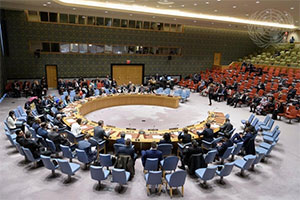 Security Council Considers Cooperation between UN and ASEAN. Credit: UN Photo/Manuel Elías
Regional alliances within the Global South have emerged as key international players in recent years, reshaping multilateral diplomacy and development governance. In 2023, the Group of 20 incorporated the African Union as a new parliamentary member, making the African Union the second regional bloc to become a member after the European Union. This action symbolized the ascent of the Global South’s international position. In 2025, the Association of Southeast Asian Nations also led a new collaborative climate effort with the creation of ASEAN Sparks, a program seeking to accelerate the growth of climate technology enterprises. Additionally, the African Continental Free Trade Area strengthened its intra-regional economic resilience. However, despite these advances, regional alliances and organizations continue to face mounting challenges. In 2025, the African Union, the Economic Community of West African States, and the Organization for Security and Co-operation in Europe all struggled with geopolitical deadlock and underfunding when it came to peace operations. This highlights how regional alliances are not yet capable of replacing UN-led multilateral frameworks. IPS gives timely reports on new developments within regional alliances in the Global South.

The Week with IPS

NEXT STOP - SDGs
Tracking global progress towards a sustainable world
Tracking global progress towards a sustainable world
