Languages
Thursday, October 8, 2026



News and Views from the Global South
Sustainability
Sustainable Development Goals: What to salvage from Covid-19
Once the Covid-19 pandemic is under control, and the world economy is back on its tracks, the status and fate of the 2030 Agenda, also known as Sustainable Development Goals (SDGs), needs to be reassessed. The year 2020 was supposed to kick-off the Decade of Action. With just 10 years to go, plans were made to undertake "ambitious global efforts" to deliver the 2030 promise—by mobilising more governments, civil society, businesses, and calling on all people to make the Global Goals their own.Change is Coming for Youth-led Ocean Activism
The youth’s role in environmental action remains crucial and leaders must ensure that they are given proper access under current circumstances to carry out that work, activists said at a online meeting held this week.
COVID-19: Zimbabwe’s Smallholder Farmers Step into the Food Supply Gap
Bulawayo, Zimbabwe' second city of some 700,000 people, has experienced a shortage of vegetables this year, with major producers citing a range of challenges from poor rains to the inability to access to bank loans to finance their operations. But this shortage has created a market gap that Zimbabwe smallholders — some 1.5 million people according to government figures — have an opportunity to fill.
Finding Money for Public Health, Green Economic Recovery & SDGs
The coronavirus pandemic underscores the profound fragility and unsustainability of today’s world. It exposes the chronic underinvestment in human health and well-being and the consequences of a relentless exploitation of biodiversity and the natural environment.
Africa’s Health Dilemma: Protecting People from COVID-19 While Four Times as Many Could Die of Malaria
Experts across Africa are warning that as hospitals and health facilities focus on COVID-19, less attention is being given to the management of other deadly diseases like HIV/AIDS, tuberculosis and malaria, which affect millions more people.
Has COVID-19 Reversed Progress for India’s Small Tea Growers?
As the sun sets over the hills, Prafulla Debbarma, a small tea grower in Dhanbilash village in north eastern India, walks along the labyrinth path of his farm and past a thick blanket of well-grown tea plants. In the fading light, the farmer appears deeply worried. This tea farm, the sole source of his livelihood, remains unharvested thanks to the ongoing COVID-19 crisis.
COVID-19 Stimulus Measures Must Save Lives, Protect Livelihoods, and Safeguard Nature to Reduce the Risk of Future Pandemics
There is a single species that is responsible for the COVID-19 pandemic - us. As with the climate and biodiversity crises, recent pandemics are a direct consequence of human activity – particularly our global financial and economic systems, based on a limited paradigm that prizes economic growth at any cost. We have a small window of opportunity, in overcoming the challenges of the current crisis, to avoid sowing the seeds of future ones.
Time to Raise the Ambition for Climate Action
In recent days we have seen the understandable decision reached to postpone the UN climate change conference – COP26 – which was due to take place this November. As the world reels from the widespread impacts of the coronavirus crisis, it is the right call.
Asia-Pacific Response to COVID-19 and Climate Emergency Must Build a Resilient and Sustainable Future
The unprecedented public health emergency triggered by the COVID -19 pandemic and its multi-faceted impact on people’s lives around the world is taking a heavy toll on Asia and the Pacific. Countries in our region are striving to mitigate the massive socioeconomic impact of the pandemic, which is also expected to affect the region’s economic health. In its annual Economic and Social Survey of Asia and the Pacific 2020 launched today, the United Nations Economic and Social Commission for Asia and the Pacific (ESCAP)expectsgrowth in Asia-Pacific developing economies to slow down significantly this year.
The Boardwalk For Birds: Protecting Lake Victoria’s Dunga Beach Wetland
At around 11am on a Saturday, Luke Okomo arrives at Dunga Beach, on the outskirts of Kenya’s Kisumu City, and heads straight to what is known as the ‘Dunga Papyrus Boardwalk’.
Zimbabwe’s Afforestation Challenge
“I have never planted a tree in my life,” laughs Jairos Saunyama, a tobacco farmer, revelling at the absurdity of the question of whether he is involved in the country's afforestation efforts. Sawunyama is one of thousands of farmers who are blamed by local conservationists for turning the country's forests into deserts and dust bowls.
Djibouti Intensifies Awareness-raising Efforts Against FGM
Female Genital Mutilation (FGM) is still widely practised in the African country of Djibouti. Despite efforts by the government and development agencies to curb this practice, culture, tradition and religion continue to slow down progress.
Brazil: Low on FSI but Much to Offer the South
Brazil is one of the world’s largest producers and exporters of coffee, sugar, beef, soya, cotton, and ethanol but due to its environmental and water footprint it ranks low on sustainability. Brazilian agriculture’s contribution to the loss of rainforest is a case in point – the Amazon lost as much as 3,465 square miles of forest due to fires last year – triggering widespread international outrage over the lax environment policies that allowed all of this to happen. Its large commercial cattle herd is also a source of greenhouse gas emissions. Brazil’s challenge is to make its model of agricultural development more environment-friendly.
On 8th March – and All the Other Days: Each for Equal
Development efforts over the past two decades have seen millions of people freed from poverty and hunger, and inequalities reduced worldwide. This is an undoubted achievement, but is no reason for complacency. The fact is that inequality between men and women, between boys and girls, remains not only a social justice concern, but one of the impediments on development in countries across Africa and beyond. Addressing such inequalities is a duty for all of us, and one which is at the heart of the theme of this year’s International Women’s Day on 8th March: Each for Equal.
The Future Pacific Island Children Want
For 13-year-old Karen Semens, growing up on Pohnpei -- one of the four main island states in the Federated States of Micronesia, which comprises of more than 600 islands in the western Pacific Ocean -- the main challenge is being a girl. “In our culture, girls don’t have the same rights and opportunities nor do they get credit and recognition for their achievements as boys do. This prevents us from speaking our minds. For example in family meetings, only men make the decisions. I would like all girls to be treated as equals and have a say in decision making,” the 8th grade pupil from the Ohmine Public Elementary school in Pohnpei, tells IPS.
Senegal Farmer Succeeds with Regenerative Agriculture & Begins Teaching Others
Souylemane Samb sits under a crowded tent on a hot Senegalese day. He wears a canvas vest with Trees for the Future printed across the back.
Climate-Smart Agriculture means More Time for Eswatini Women Farmers
Aside from the seven hours Mantfombi Msibi (63) would spend daily during the Eswatini farming season planting, applying herbicides and weeding her 1.2-hectare maize field, she would also spend E1 750 ($125) on tractor services. It was a huge cost of both time and money. But this season, Msibi will be benefiting from climate-smart farming technology that has opened up a new world of farming to her, saving her time in the process.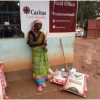
Biofortified Crop Project Reaches Refugees in Zambia
The Mutwales farm a small plot of land in the camp, growing primarily cassava and maize for food. They are also one of the 105 refugee farming families participating in an initiative during the 2019/2020 growing season to help them cultivate nutritious, vitamin A-biofortified orange maize, which was developed by the International Maize and Wheat Improvement Center (CIMMYT) in partnership with HarvestPlus.
India’s Orange Farmers Search for Sustainable Agriculture
Hillol Datta, 26, travelled for two days from Kolkata to Jampui Hills – a picturesque hill station in the north eastern province of India – to see its fruit-laden orange orchards. However, after driving for several hours, all the young traveller saw were bald patches along the hill slopes and scattered rows of areca (nut) palm trees.
SDGs Corporate Tracker to Monitor Progress of UN’s Development Agenda
This year marks just ten years ahead of the deadline for completing the UN Sustainable Development Goals (SDGs) by 2030. These universally supported targets were always ambitious in their scope – yet what is clearer now than ever before is that quicker progress is crucial in the decade to come.
A Post-2020 Global Biodiversity Framework Aims at Reinforcing Efforts to Save World’s Ecosystem
The UN’s highly-touted socio-economic agenda, which lays out an ambitious global plan for “people, planet and prosperity”, has been dominated by “goals, targets and deadlines.”« Previous Page — Next Page »





The Week with IPS

NEXT STOP - SDGs
Tracking global progress towards a sustainable world
Tracking global progress towards a sustainable world
