Languages
Friday, November 20, 2026



News and Views from the Global South

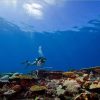
The Last Coral Reef Wilderness: the Chagos Archipelago
On the Global Reef Expedition—the largest coral reef survey and mapping expedition in history—scientists from the Khaled bin Sultan Living Oceans Foundation traveled to the Chagos Archipelago to study some of the most remote coral reefs on Earth.
Myths, Lobbies Block International Tax Cooperation
Too many have swallowed the myth that lowering corporate income tax (CIT) is necessary to attract foreign direct investment (FDI) for growth. Although contradicted by their own research, this lie has long been promoted by influential international economic institutions.
Acceleration Rights Plan for Gender Equality Mooted at Equality Forum
As the global gathering for gender equality, the Generation Equality Forum, kicks off in Paris on June 30, 2020, IPS conducted an exclusive interview with Katja Iversen.
Why Pacific Island Nations, like the Federated States of Micronesia, need Climate Change Finance for Food Security Now
Robby Nena is one of the many farmers and fishermen on the frontline of climate change in the Federated States of Micronesia (FSM), where coastal flooding and erosion, variable and heavy rainfall, increased temperature, droughts and other extreme weather events are becoming all too common.
Universal Civil Registration and Vital Statistics Are Critical for Truth, Trust and COVID Recovery in Asia and the Pacific
With health systems at a breaking point, hospitals at capacity and desperate family members searching for oxygen for loved ones, the devastating second wave of COVID-19 that has swept across South Asia has felt ¬surreal. Official figures have indicated record-breaking daily coronavirus cases and deaths, not only in South Asia, but across the entire Asia-Pacific region during the latest surge. As devastating as it has been, the truth is we may never know how many people have died during the pandemic.
Towards an Equal Future in Parliaments
In elections last October in Georgia, women’s share of seats in parliament went up by nearly seven percent, following the enforcement of a 25 percent quota for women candidates.
UN’s Double Standard on Human Rights Abusers Protects Big Powers
When the UN’s annual report on Children and Armed Conflict was released last week, it was expected to “name and shame” some of the world’s worst human rights violators – particularly the abusers of children.
To Build Back Better from the Pandemic, We Must Overhaul the Way We Deal with Development Finance
Over the past 18 months, the impacts of the coronavirus pandemic have transformed our lives and prompted a period of deep reflection as a global community. In some sense, we are only now starting to understand our vulnerabilities, and in particular, how deeply exposed and interconnected we are as people, communities and as countries.
Weaponizing Science in Global Food Policy
In July, the United Nations will convene “Science Days”, a high-profile event in preparation for the UN Food Systems Summit later this year. Over the course of two days, the world will be treated to a parade of Zoom sessions aimed at “highlighting the centrality of science, technology and innovation for food systems transformation.”
“The Creation of a Palestinian State Is Inescapable”
Every Israeli will sooner than later realize that the creation of a Palestinian state is the only way by which Israel can protect its democracy, independence, national security and national Jewish identity. Denying Palestinian statehood defies Israel’s existence as we know it.
Southeast Asia and Food Price Inflation: Double Whammy
In 2020, Southeast Asian countries were already facing varied challenges that affected the region’s food supplies and prices. The onset of the Covid-19 pandemic later in the year exacerbated the region’s food insecurity and poverty. Southeast Asian countries need to take a hard look at food security, even as the double challenges — climate change and the Covid-19 pandemic — continue to fester.
Latin America Vastly Underspends on Green Post-Pandemic Recovery
Latin America is investing too little in a green recovery from the Covid-19 pandemic, with only 2.2% of the region's stimulus funds spent on environmentally sustainable projects last year, according to a new platform developed by Oxford University and the UN.
COVID-19 as Instigator of Bigotry, Chauvinism and Megalomania
By the end of April 2019, a government campaign to vaccinate more than 40 million children under five against polio in Pakistan was suspended after a series of attacks on health workers and police. On 23 April, a police officer protecting polio workers was gunned down in Bannu, the same day a polio worker was in Lahore seriously wounded by a father “protecting his child from vaccination”, these incidents were followed by the murder of another police and a health worker under his protection. Health workers were also seriously wounded in the districts of Sindh, Balochistan and Punjab. Afghanistan and Pakistan are the only countries where polio remains, in all other nations of the world vaccination campaigns have eliminated the disease. In April this year, three female polio vaccine providers were killed in Afghanistan.
A Time for Systemic Solutions in Latin America & the Caribbean
The first wave of COVID-19 never ended in Latin America and the Caribbean (LAC). Since the region became a hotspot for the pandemic in June 2020, successive waves have continued to build upon the first.
130 Countries Promise to Protect and Invest in Health Care Workers
One hundred and thirty countries have signed a statement recognising the efforts of health care workers, first responders and essential workers during the COVID-19 pandemic – "one of the greatest global challenges in the history of the United Nations".
Water Harvesting Strengthens Food Security in Central America
At the school in El Guarumal, a remote village in eastern El Salvador, the children no longer have to walk several kilometers along winding paths to fetch water from wells; they now "harvest" it from the rain that falls on the roofs of their classrooms.
Maldives’ UN General Assembly Presidency Renews Hope for Small Island Developing States
Earlier this month, Abdulla Shahid, the Maldives’ foreign minister, was elected President of the 76th Session of the United Nations General Assembly (UNGA), which commences in September.
Digital Media on the Frontline: Supporting the Ones who Support the Rest
For Dr Farzana Khan, a frontline worker and a second-generation immigrant from Pakistan living in California, social media helped her connect and realign herself during the COVID-19 pandemic.
The Importance of Being Listed: Why Politics Threaten the Protection of Children in Armed Conflict
Frontline workers who document and respond to violations against children have faced a particularly challenging last year, from the impact of Covid-19 on operations and child protection to the record levels of displacement worldwide to the ever-worsening threats from militaries and non-state armed groups.
Three Million in Three Years: Jamaica’s Tree-Planting to Tackle Climate Change
By the time he is finished, Dr. Satyanarayana Parvataneni expects he will be responsible for planting over 200,000 tree seedlings in Jamaica. It is an effort driven by a desire to preserve the planet for the next generation, as well as the one of the largest contributions to date to a national effort to plant three million trees in three years.
Boldly Finance Recovery to Build Forward Better
COVID-19 has become a “developing country pandemic”, retreating from the North’s mass vaccination. With developing countries heavily handicapped, the International Monetary Fund (IMF) warns of a “dangerous [new] divergence”.« Previous Page — Next Page »


Want to keep up with the latest news and views from the Global South? Sign up for IPS Daily News Report for daily emails with our top stories about international development, climate change, gender and more. (Formerly IPS TerraViva since 1993).

The Week with IPS

NEXT STOP - SDGs
Tracking global progress towards a sustainable world
Tracking global progress towards a sustainable world
