Languages
Friday, November 20, 2026



News and Views from the Global South


Bangladesh’s Indigenous Forest Dwellers Fear Losing Ancestral Land as Officials Grapple with Land Grabs
When the Bangladesh Forest Department felled Basanti Rema’s banana orchard, Rema, a Garo indigenous forest-dweller of Madhupur Forest, felt she was living a nightmare. Rema, from Pegmari village in Madhupur, Tangail district, had cultivated the banana plants on half an acre in the Madhupur Forest. But the Forest Department claimed that the land on which the bananas were cultivated belonged to the department.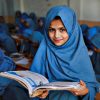
Investing in Education as Driver for All Our Futures
Never before have so many children been out of school. 1.6 billion children and young people – more than 90% of students worldwide – have been impacted by school closures during the pandemic. Hundreds of millions of those children have gone without any learning at all, deprived of all the benefits that being in school provides.
Agroecology as the Centrepiece of Sustainable Food Systems
In three weeks, the United Nations will bring together farmers, scientists, policymakers and civil society for the last major event ahead of the September UN Food Systems Summit.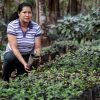
Why we Need to Build Economies– not Walls– to Stop Migration
If you speak to farmers in El Salvador, many will tell you about the time they were driven to head north across Central America towards the US. The routes to the border are many, but the origins are so often the same: desperation and hope that better employment opportunities can be found elsewhere.
Developing Country Solidarity Needed to Overcome Pandemic
As rich countries have delayed contagion containment, including mass vaccination, in developing countries, much weaker fiscal efforts in the South have worsened the growing world pandemic apartheid.
USMCA Agreement: Towards a New Economic Relationship in North America?
The visit of the Vice President of the United States to Mexico on June 8 served to address various issues on the bilateral agenda . The media gave importance especially to the migration issue, but Mrs. Harris gave a prominent place , also , to the labor question. Her appointments deserve some comments.
Threat of Blackouts in Brazil Highlights Climate Crisis
Twenty years after the blackout that prompted nine months of rationing to keep the power grid from collapsing, Brazil may see a repeat of the traumatic situation, this time with a more obvious climate change undertone.
UN Ready for Breakaway Nations but the Pace Remains Slow
When the United Nations renovated its building at a cost of over $2.1 billion, as part of a seven-year refurbishing project back in 2014, the seating in the cavernous General Assembly hall was increased from 193 to 204—primarily in anticipation of at least 11 new member states joining the world body sooner or later.
Flaws in Asia’s Pearl
For well over a century Ceylon, now Sri Lanka, has been known to the world as the ‘Pearl of the Indian Ocean’ for its multifaceted attractions. That is until blurb writers ruined it all with hyperbolic epithets that obscured the country’s magnetic charms, which attracted visitors from around the globe.
Families Search for Loved Ones Gone Missing in Post-War El Salvador
The pain that María Estela Guevara feels over the disappearance of her niece Wendy Martínez remains as intense as it was four years ago, when she learned that the young woman, then 31, had vanished without a trace in eastern El Salvador.
If “A Nuclear War Must Never Be Fought,” Then …
After more than a decade of rising tensions and growing nuclear competition between the two largest nuclear-weapon states, U.S. President Joe Biden and Russian President Vladimir Putin agreed at their June 16 summit to engage in a robust “strategic stability” dialogue to “lay the groundwork for future arms control and risk reduction measures.”
Dalit and Muslim Indian Women Leading Change in South Sudan
Two Indian women, one Muslim and the other Dalit (former untouchables), separated by culture and geography, have found common ground in leading change in conflict-torn South Sudan.
France Needs More Civil Liberties and Less Hypo-Securitization of Religion
In 2020, French President Emmanuel Macron announced plans for tougher laws to tackle what he called, “Islamist Separatism”, and a crackdown on “radical Islamists” in France, which he said were materializing through repeated deviations from the Republic’s values. To counter this, President Macron announced his plans to create a “French Islam”, a practise of the faith which would be regulated by the state.
Stopping Marine Plastic Pollution: A Key IUCN Congress Goal
Documented images of albatross chicks and marine turtles dying slow deaths from eating plastic bags and other waste are being seared into our consciences. And yet our mass pollution of Earth’s seas and oceans, fuelled by single-use plastics and throw-away consumerism, just gets worse.
Water: A Matter of Survival in the World of Pandemics
The COVID-19 pandemic has undeniably amplified the existing vulnerabilities of billions of people worldwide. Marginalized communities in developing countries were excluded from social protection and support.
Anti-Gay ‘Therapy’ Offered at Uganda Health Centres Run by Aid-Funded Groups
At Mulago, Uganda’s biggest public hospital, a receptionist at an HIV clinic for marginalised and ‘most at risk’ populations, including LGBT people, said that an undercover reporter’s 17-year-old gay brother could “quit” his same-sex attraction.
COVID-19 Pandemic Exacerbates Domestic Workers’ Plight in Bangladesh
Rani Akter, a mother of five, usually works as a domestic helper in Dhaka’s Zikatola area. When the coronavirus pandemic broke out in Bangladesh last March, her employers asked her not to come to their homes for fear of infection. “I lost my work in three houses one after the other, which became a nightmare for me. My rich employers did not allow me in their homes as they thought that I might carry the invisible virus,” Akter told IPS.
“We Need to Act Now” — as Sub-Saharan Africa Faces Third Wave of Covid-19
Sub-Saharan Africa is in the grips of a third wave of COVID-19 infections that threatens to be even more brutal than the two that came before.
Climate Change: Your Choices Matter
Life is a series of choices. And choices have consequences. When it comes to climate change, some choices have bigger consequences than others, and there's a startling takeaway: your next "big" decision will play a meaningful role in our collective ability to reach Net-Zero by 2050.
Does a New ‘Gold Standard’ Really Protect Miners?
Many products these days come with the promise that workers and communities all along their supply line are protected from abuse under a particular standard or code of conduct. Since the United Nations adopted the Guiding Principles for Business and Human Rights a decade ago, a plethora of such certification systems have emerged, including for mining and connected industries ranging from cars to jewelry and electronics.
With a Little Help, Local Communities Rack up Record Success with Heritage Rice Grains
Madhuri Roy left the famous Kamakhya temple in Guwahati, Assam. She had sought the goddess’s blessings for the safe delivery of her youngest daughter's baby, which was due in a few weeks. Shanty shops lined the temple outside and Roy’s eyes fell on a stack of black rice packets. All through her daughter’s pregnancy she had craved her childhood favourite black rice pudding. But during the country’s COVID-19 lockdown Roy could not procure it even though Meghalaya, her Himalayan home state, grew it.« Previous Page — Next Page »


Want to keep up with the latest news and views from the Global South? Sign up for IPS Daily News Report for daily emails with our top stories about international development, climate change, gender and more. (Formerly IPS TerraViva since 1993).

The Week with IPS

NEXT STOP - SDGs
Tracking global progress towards a sustainable world
Tracking global progress towards a sustainable world
