Languages
Sunday, November 8, 2026



News and Views from the Global South
Africa

Digital Tech can Help African Island States Cope with Climate Change
Investing in digital technologies can help African small island developing states (SIDS), vulnerable to extreme weather events, cope with growing impacts of climate change, says the United Nations (UN) Economic Commission for Africa (ECA).
“Don’t Call It Ethnic. Ituri Conflict Is a Mystery”
It is a metallic sound, harmless. It lasts just over a second, but it can become as sharp as a machete blade or as devastating as the burst from an assault rifle. It is a beep, just the beep of a phone notification. A woman is on the ground, her belly open, her intestines exposed and her severed head resting on her arm. A pagne of colorful fabric still girds her hips. Where? Why? Then, a video. Do you hear those voices? It happened there, in that village. It was them who did it, it was them.
Southern African Migrants Excluded as COVID-19 Pandemic Grows
Migrants across the Southern Africa region are massively disadvantaged as they find themselves excluded from vaccine programmes – even when the global vaccine initiative COVAX often funds these programmes.
Parliamentarians Determined to Reach ICPD 25 Goals
Politicians from Asia and Africa shared activism anecdotes demonstrating their determination to meet ICPD 25 commitments. They were speaking at a hybrid conference held simultaneously in Kampala, Uganda, and online.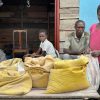
Eastern DRC Under a State of Siege: A Bitter Pill in North Kivu
On May 6, 2021, after a decision by President Félix Tshisekedi, a state of siege was established in Ituri and North Kivu, two provinces that are located in the eastern Democratic Republic of the Congo and that are in the grip of endless violence.
Building Water Resilience Needs a Holistic Approach
Even as COVID-19 ravages communities across the continent, climate change is widening the gap between those who have access to water and sanitation - key elements in fighting the pandemic.
Community Inclusion Currencies: Money for the People – Podcast
 Do you think it’s possible to transform communities that are stagnating from a lack of currency into places where people’s income-generating activities create a vibrant, self-sustaining circular economy? It is in parts of Kenya that are using the community currency Sarafu, according to today’s guest.

How Many More Innocent Lives Must be Lost in Tigray, asks Adama Dieng
Despite a June 30 unilateral ceasefire declaration by Ethiopian President Abiy Ahmed, United Nations agencies say a recent escalation in fighting has been ‘disastrous’ for children, amid reports of over 100 children being killed in an attack on displaced families.
Poor Sales at Slated Namibian Elephant Auction
A heavily criticised Namibian government sale of elephants has attracted only a third of its expected sales as government officials admit that an international outcry when the plans were announced may have put buyers off.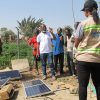
How Market Knowledge is Powering Africa’s Solar Irrigation Sector
‘Know your customers’ is arguably the first rule of marketing. By identifying and segmenting customer groups, companies can target their products and services to the right people, in the right way. This can open-up opportunities for growth, inform product development and improve customer retention.
Zimbabwe’s Urban Sprawl Dilemma
Ndaba Dube, a Bulawayo resident, says he built himself a home on a small piece of land after the authorities kept him on the housing waiting list for more than two decades. The land he chose is in an old township established before Zimbabwe’s independence in 1980.
We Were Born to Do This!
The first time I visited South Sudan in 2004 - prior to its independence - I travelled across the entire the country which was then a region devastated by man’s inhumanity to man. Although South Sudan is slightly larger than France, I could find only one concrete school building in Rumbek.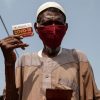
The ‘Covid-19 Timebomb’ – Dispelling the Single- Story Humanitarian Narrative for Africa
An article published in April 2020 by the World Economic Forum warning that Africa was facing a Covid-19 time bomb was widely shared among the humanitarian sector, with increasing alarm.
Between Horror and Hope in the Villages of Ituri
“We have buried twenty-eight people. I have seen them with my own eyes. We also found three bodies in the fields and buried them too. I can show them to you. It’s not far from here. We buried them there.” The man points to the hills. He doesn’t want to show his face or say his name, but he agrees that his voice can be recorded, so that his words don’t get lost. The camera can’t shoot him; it can only look at the tall grass or at the forest towards the countryside where it is no longer possible to cultivate food. The man talks while music from Lengabo’s catholic church marks the time of truce and hope.
Wildlife Trafficking to Come under Fire at IUCN Congress
A recent seizure at Johannesburg’s international airport of a large consignment of rhino horns confirmed worst fears – illegal trafficking of wildlife and the plundering of treasured species is back with a vengeance after a Covid-19 lockdown lull.
African Farmers Could Benefit from More Friendly EU Agriculture Policies
Gilbert Bor manages a small farm in the western highlands of Kenya. Landscapes are hilly, village roads lined with pine trees, his cows mostly of the Friesian breed. He is up at 6:00am daily to lead his animals through the woods into the valley below.
Olympian Turned Volunteer Keeps Traffic Running in Busy Lagos
Bassey Etim Ironbar is a rare example of an Olympian that transformed from an athlete to a volunteer who does menial jobs like sweeping the streets and clearing debris from open sewers.
DR Congo, Ituri. Fleeing War, Weaving Life in IDP Camps of Bunia
He moves aside the curtain, thin as gauze, and then bends over. The darkness dazzles for a few seconds when one enters the house—actually, a den made of earth where air and light filter through the narrow entrance. Jean de Dieu Amani Paye holds her tiny baby, wrapped in an elegant fabric, in his arms. He was a teacher of French and Latin and had a small business. He also cultivated the land: cassava, corn, sorghum, and beans.
Alarming Crisis of Impunity for Crimes Against Journalists in DRC
The Democratic Republic of Congo is one of the most hostile and dangerous regions for journalists. A complex conflict, deeply rooted in the country’s past, allows very little freedom, both movement and the press.
Kenya’s Huge Railway Project Is Causing Environmental Damage. Here’s How
Kenya is constructing a railway line that connects the coastal port of Mombasa and the interior of the country. It is expected to terminate at Malaba, a town on the border with Uganda, and link up with other railways that are being built in East Africa. It’s locally known as the Standard Gauge Railway (SGR).
To Prevent Teenage Pregnancies in Sub Saharan Africa, It Takes a Whole Village to Raise a Child
Honorine Meda is 23. Cycling through her hometown of Dissin, in Burkina Faso’s verdant southwest, she smiles, waves and stops to chat with one of the girls she counsels.« Previous Page — Next Page »





The Week with IPS

NEXT STOP - SDGs
Tracking global progress towards a sustainable world
Tracking global progress towards a sustainable world
