Languages
Sunday, November 8, 2026



News and Views from the Global South
Africa

Q&A: Drawing Attention to the Crisis in the DRC’s Education Sector
Yasmine Sherif, Director of Education Cannot Wait (ECW), has sounded the alarm on the need for Central African Republic refugee children and youth to access quality education during her visit to a refugee site in the Democratic Republic of the Congo (DRC) from Apr. 20-23.
One Year Later; No Justice for Victims of 2020 Mali Protests & Coup
It has been about a year since anti-government demonstrations and a coup in Mali, which saw 18 people, including a 12-year-old boy being killed. But there has been no justice for the families of those injured and killed by defence and security forces during last year's May to August protests.
Disability in Goma. The Power of Staying Together Against Covid-19, War, and Stigma
 Sylvain Kakule Kadjibwami lost the use of his legs during one of those ambushes that bloodlessly bleed North Kivu. “When I was shot, I thought it was the end of my life, but when I shared it with other disabled people, I discovered that life is still possible,” he said. Now it is Covid-19 that risks destroying the dreams of Sylvain, a small trader from Goma, a city whose roads are volcanic rock-ridden screes where pick-ups trudge. Those who walk face the risk of falling at every step. However, for those who cannot, the same roads can become traps where it is not only war that kills but also a stigma fostering misery and disease.
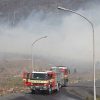
Table Mountain Ablaze in Cape Town
 Cape Town-based photojournalist Yazeed Kamaldien reported on a massive mountain fire that broke out on Sunday on Table Mountain and near residential areas on its foothills. By this morning, Wednesday 21 April, officials said the fire had been extinguished after three grueling days for firefighters. Firefighters are still monitoring on the ground for any flare-ups.

COVID-19 Locks Down Therapy Support for Zimbabwe’s Trafficking Survivors
Before Zimbabwe imposed lockdown measures last March as part of global efforts to curb the coronavirus pandemic, Grace Mashingaidze* would attend workshops in Harare arranged by a nongovernmental organisation assisting trafficked women who had safely made it back home.
Another False Start in Africa Sold with Green Revolution Myths
Since the Alliance for a Green Revolution in Africa (AGRA) was launched in 2006, yields have barely risen, while rural poverty remains endemic, and would have increased more if not for out-migration.
Kenya’s Poor Need Different Lockdown Restrictions to Survive, Scientists Urge
After Joseph Mandu lost his job because of the country’s coronavirus lockdown, he would still wake every morning and leave his home in the City Carton slum in Kenya’s capital, Nairobi. But instead of heading to the restaurant he worked at as a pool-table attendant, he would walk around City Carton searching for odd jobs to earn an income so he could pay for the food his family needed to survive.
Helping Youth Agribusiness Keep Pace with Fast Growing Africa
From small towns to big cities, sub-Saharan Africa has the fastest urban growth rate in the world. The continent’s population is expected to double by 2050 with the youth representing 60% of the overall population. The UN Department of Global Communication, for example, projects that for the next 15 years urban growth is set to double for several African cities: Dar es Salaam will reach over 13 million inhabitants and Kampala will exceed seven million.
Farming-Specific Loans Help Tanzania’s Smallholders Increase Productivity
Small agricultural loans, disbursed through mobile phones and targeting specific farming activities at different phases of production, have more than doubled food productivity among thousands of smallholder farmers in southern and central parts of Tanzania over the past three years, improving their livelihoods.
Tech Savvy Youth with High Social-Emotional Skills Succeed in Agriculture – Study Shows
Saheed Babajide, a young animal production graduate and a manager at a national milk production company in Iseyin, Nigeria, is a beneficiary of the government's youth agriculture intervention programme. But he feels he received almost no training during the three years he participated.
Oral Health Should be a Development Priority
The mouth is a barometer of social inequities -- it reflects the injustices in our society. As George Cuvier, an 18th century naturalist said: "Show me your teeth, and I will tell you who you are". To me, as a dentist, the mouth is like a microscope that reveals more than just tooth decay. It exposes us to a world where people lack access to water, health, quality education and live on low income.
Why Children Are Prime Targets of Armed Groups in Northern Nigeria
Due to growing insecurity, Nigeria is gradually becoming one of the most dangerous places to live. The 2020 Global Terrorism Index identified the country as the third most affected by terrorism. There was a sharp increase in Boko Haram’s targeting of civilians by 25%, and killings by herdsmen increased by 26%, compared with the previous year. The two countries higher on the index are Iraq and Afghanistan.
Policy Inconsistencies and Poor Research Slow Young Farmers in Africa
It is not everyday that a young farmer registers success in his enterprise and vows this is what he will do for the rest of his life. Yet this is the story of Lihle Moyo, a 27-year-old farmer from Gwanda, about 160km south of Bulawayo, Zimbabwe's second-largest city.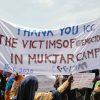
Sudan Took Important Step, But Now Should Send the ICC Suspects to The Hague
Sudanese authorities concluded a Memorandum of Understanding with the International Criminal Court (ICC) in February in its investigation of Ali Kushayb. This much needed step is expected to allow ICC investigators access to Sudan ahead of ICC judges’ deliberations in May to assess whether there is sufficient evidence to send his case to trial.
Death of an Ambassador and the Congolese Slaughter
On the morning of 22nd February a jeep from the World Food Programme (WFP), followed by another one with the Italian ambassador, Luca Anastasio, was driving along Route Nationale 2 passing by The Virunga National Park, an UNESCO Congolese World Heritage Site famous for its dwindling population of unique mountain gorillas.
Malawian Youth Wipe Away Unemployment Tears with Agribusiness
After getting tired of searching for employment for seven years, Feston Zale from Chileka area in Malawi’s Southern Region decided to venture into agribusiness.
Down in Hell
I am about 200 feet down a rickety old mine shaft, in the Ashanti gold mining region of Ghana. It is stiflingly hot and darker than a moonless night. I can only feel the touch of sweaty bodies passing in the darkness and hear the reverberating sound of miners coughing and breaking rocks. The lack of oxygen and dust make it hard to breathe. I have no idea how deep this shaft goes – hundreds of feet? More? If there is a Hell this must be what it feels like.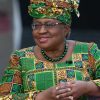
What Africa Expects of New WTO Chief Dr. Ngozi Okonjo-Iweala
When on 15 February the chair of the World Trade Organization’s (WTO’s) General Council, Ambassador David Walker of New Zealand, announced that Dr. Ngozi Okonjo-Iweala would be the new Director-General, the mood among delegates was of relief.
International Women’s Day, 2021
Women Are the Future of Africa’s COVID-19 Recovery
The COVID-19 pandemic is arguably one of the biggest disruptors to modern day life as we know it. The economic and social disruption caused by the pandemic is devastating; millions of people have lost their lives, tens of millions of people are at risk of falling into extreme poverty and nearly half of the global work force is at risk of losing their livelihoods. Africa is facing its first economic recession in 25 years due to the impact of the pandemic. 
International Women’s Day, 2021
Women in Leadership: Achieving an Equal Future in a COVID-19 World
International Women’s day 2021 heralds a particularly challenging time for women and girls. The Covid pandemic has battered our world to such an extent that we know that our lives have been irrevocably changed and has rolled back some of the gains we made in the human rights and gender equality field.

International Women’s Day, 2021
Removing Barriers to Women’s Leading Role in African Agriculture
Africa’s population will double by 2050 if growth rates continue their trajectory, but the creation of jobs is not keeping pace, with up to five times more young people seeking employment each year as there are new posts to fill. And, on top of this, the COVID pandemic is plunging Africa into its first recession in 25 years.
« Previous Page — Next Page »





The Week with IPS

NEXT STOP - SDGs
Tracking global progress towards a sustainable world
Tracking global progress towards a sustainable world
