Languages
Sunday, November 8, 2026



News and Views from the Global South
Africa

Child Marriage and Domestic Violence: What We Found in 16 African Countries
The number of girls who marry before their 15th birthday has remained unchanged for 20 years in most countries in sub-Saharan Africa. The region has the highest rate of child marriage, with nearly four in 10 girls married before age 18. In Niger, for example, over 77% of girls are married before the age of 18.
Calls for Zimbabwean Journalist Jeffrey Moyo to be Given a Fair Trial after Bail is Denied
As international correspondent Jeffrey Moyo was denied bail for allegedly breaching a section of the Zimbabwe Immigration Act by helping two foreign journalists work in the country without proper media accreditation, local organisations have called for his release and for him to be accorded a fair trial.
Africa’s Forgotten Crisis
A few weeks ago, I traveled with the UN High Commissioner for Refugees Filippo Grandi to the Modale refugee site in the Nord-Ubangi province of the Democratic Republic of the Congo (DRC). What we witnessed there was a profound humanitarian crisis that has left 4.7 million children and youth in need of urgent, life-saving, life-changing educational support.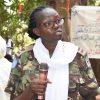
The Kenyan Peacekeeper Championing the Ideals of the Women, Peace and Security
Major Steplyne Buyaki Nyaboga of Kenya singles out the establishment of gender-responsive military patrols in farming communities in Central Darfur, Sudan as one of the proudest moments of her two-year mission with the African Union–United Nations Hybrid Operation (UNAMID).
COVID-19 Widens Learning Gap For Girls In Rural Ghana
Seventeen-year-old Muniratu Adams, a form two student of the Jeyiri D/A Junior High School at Funsi in the Wa East District of the Upper West Region of Ghana, is fortunate to have returned to school this January after the long COVID-19 shutdown.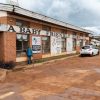
Wards Without Water
Malawian healthcare workers are facing challenges from all sides. More than half of healthcare facilities in Malawi are without handwashing facilities, almost two thirds have no decent toilets and almost one fifth do not have clean water on site.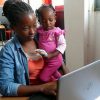
Five Ways to Measure the Effects of a Crisis Like COVID-19 on Women
Social issues and crises tend to affect women more severely than men. This is why terms like “gender mainstreaming policies”, “gender-responsive interventions” and “gender-based budgeting” have become more popular in public policy discussions in recent years.
– The Global Insecurity of Climate Change –
On the occasion of World Environment Day, 5 June 2021, drawing from IPS’s bank of features and opinion editorials published this year, we are re-publishing one article a day, for the next two weeks. The original article was published on February 24 2021

Exclusive: Mauritius’ First Female President on Why We Need Science Diplomacy to Address Major Challenges
If we want to address the great challenges this world is facing, we have to factor in science into all our narratives, according to Dr. Ameenah Gurib-Fakim, the first woman president of Mauritius and renowned biodiversity scientist.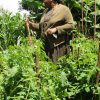
County Climate Risk Profiles Critical and Timely for Kenya’s Struggling Smallholders
Peris Wanjiku, a smallholder farmer in Othaya, Nyeri County, which lies approximately 152 kilometres from Kenya's capital, Nairobi, has watched as her fellow farmers have slowly started to sell off their land in the face of increasingly erratic weather patterns.
– Successful Crop Innovation Is Mitigating Climate Crisis Impact in Africa –
On the occasion of World Environment Day, 5 June 2021, drawing from IPS’s bank of features and opinion editorials published this year, we are re-publishing one article a day, for the next two weeks. The original article was published on February 17 2021

Women Leading Somalia’s Health System
Somalia is one of the most complex regions of the world, with threats and political instability, extreme weather conditions, movement of internally displaced people (IDPs), decades of conflict, poverty-related deprivation, poor health and communicable diseases that are killing people. There is a constant risk of gender violence making women, children and members of minority groups particularly vulnerable, and more so during displacement or while seeking work. Three decades of civil war and instability have weakened Somalia’s health system and contributed to it having some of the lowest health indicators in the world. The COVID-19 pandemic has added yet another strain on its tremendously fragile infrastructure presenting unexpected challenges and dilemmas.
Africa’s Worsening Climate: Here’s How the United States can Help Africa
Recently, I participated in a Congressional hearing on the “Effects of climate change in Africa”, before the House Foreign Affairs Subcommittee on Africa, Global Health, Global Human Rights, and Internal Organizations, chaired by Congresswoman, Karen Bass.
COVID-19 Brings Fresh Challenges to Nigeria’s Leprosy-affected
 People affected by leprosy, also known as Hansen’s disease, are often stigmatised. In countries like Nigeria, many of them end up as beggars due to the psycho- and socio-economic problems they face. The COVID-19 pandemic has brought fresh challenges for them and life is getting increasingly difficult. Sam Olukoya in Lagos takes a look at how people affected by leprosy in Nigeria are faring in the face of the COVID-19 pandemic.
One Health Approach Key to Tackling Africa’s Challenges
The COVID-19 pandemic has shown us that global health challenges cannot be solved only by health sector interventions.
Kenya’s Dryland Farmers Embrace Regenerative Farming to Brave Tough Climate
It is an uncommon occurrence to see farms with flourishing healthy crops in Kenya’s semi-arid Makueni County. But in Kithiani village, Justus Kimeu’s two-acre piece of land stands out from the rest. After embracing the regenerative agriculture (RA) technique, the 52-year-old farmer is looking forward to a bumper harvest of maize as all his neighbours count their losses following this year’s failed season.
Equipped by US & Israeli Firms, Police in Botswana Search Phones for Sources
Oratile Dikologang was naked when police officers pulled black plastic over his head during his detention in April 2020. It was difficult to breathe, but the interrogation continued, he told CPJ in a recent phone interview.
Africa Goes Digital
In rebuilding after COVID-19, policymakers must invest in innovative technology to leapfrog obstacles to inclusive development. Africa has enjoyed strong economic growth for most of the 21st century, mainly because of robust global demand for primary commodities.
How West African Leaders Can Tackle Youth and Gender Inequities
Recently, both Republics of Benin and Chad held their 2021 national elections. These countries are among thirteen countries on the continent billed to elect new political leaders in 2021 alone. This is a good opportunity to improve conditions on the continent. Indeed, the COVID-19 pandemic has magnified other issues on the continent like youth unemployment that better leadership could help improve.
Refugee Children Explain How Education Helped Put Their Trauma Behind Them
Eighteen-year-old Chuol Nyakoach lives in the Nguenyyiel Refugee Camp in Gambella, Ethiopia. Chuol is grateful that despite the trauma she has already experienced in her young life, she is able to continue her education in the refugee camp. Learning has given her a reason to wake up every day.
COVID-19 Vaccine Rollout Kicks Off in Africa’s Most Populous Country
Since the COVID-19 vaccination began in the US in mid-December 2020, Africa had been looking forward to its turn. For Nigeria, that time came on 2nd March 2021 when the first batch of 3.9 million doses of AstraZeneca’s COVID-19 vaccine arrived in the country from the Serum Institute of India.« Previous Page — Next Page »





The Week with IPS

NEXT STOP - SDGs
Tracking global progress towards a sustainable world
Tracking global progress towards a sustainable world
