Languages
Sunday, November 8, 2026



News and Views from the Global South
Africa

Uganda’s Rare Tree Climbing Lions and Endangered Primates Threatened By Climate Change
As climate change leads to increased temperatures in East Africa, a thicket of invasive thorny trees with the ability to withstand harsh climatic conditions have begun threatening Uganda’s second-largest park, home to a rare breed of tree climbing lions and one of the highest concentrations of primates in the world.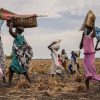
Displaced in South Sudan – A journey of 1,000 kilometers
(UNOCHA) - Conflict, hunger and disease forced nearly 700,000 people to flee South Sudan to become refugees in neighbouring countries in 2017. More than 70 percent of those fled in the first half of 2017, when multiple military offensives occurred in Upper Nile, Unity, Jonglei, and the Greater Equatoria region.
OGP-APRM Collaboration A Positive Step for Good Governance in Africa
When two high profile governance initiatives strategically collaborate, the expected intent is to effect significant outcomes. Thus, the universe of democratic governance – lately buffeted by adverse winds of nationalism, intolerance and other threats – should take a keen note of the memorandum of understanding between Open Governance Partnerships (OGP) and Africa’s flagship governance programme, the African Peer Review Mechanism (APRM), sealed on the sidelines of the just concluded 6th Convening of the Open Government Partnership (OGP), in Ottawa, Canada.
Mobilisation Needed for Climate-Related Disasters
Climate-related displacement and food insecurity is not a future possibility, but it is already happening and it’s only projected to worsen without urgent action in coming years.
Zimbabwe’s Resettled Farmers Hawking Cigarettes to Survive
For subsistence farmer Rogers Hove—who proudly brandishes a worn out letter for his five hectare piece of land he obtained from government following the chaotic land seizures from white commercial farmers over two decades ago—what matters most to him, “is to see my piece of land in my possession”.
Educating Girls about Menstruation and Menstrual Hygiene
The organisers of Menstrual Hygiene Day say that although there has been a lot of good work on Menstrual Hygiene Management (MHM) either currently underway or already completed, we are a long way off from achieving an even playing field for girls and women worldwide.
The World Made Promises to Women and Girls, We Must Fulfil Them
In 1994 the International Conference and Population and Development (ICPD) was hosted in Cairo by the Government of Egypt. Twenty-five years later, Kenya is ready to convene the ICPD “Nairobi Summit” in November 2019.
Report Reveals Mounting Pressure on Zambia’s Environmental Resources
There is a strong link between provision of basic social services and the use of natural resources in a country. Thus, with increased population comes additional pressure on natural resources. This is a key finding in the latest Zambia Environment Outlook (ZEO) Report 4, published by the Zambia Environmental Management Agency (ZEMA).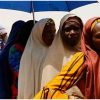
Women & Youth Remain Politically Underrepresented in Africa’s Most Populous Nation
Two months after the general elections in Nigeria, Africa’s most populous nation, things are back to normal. The incumbent President Muhammadu Buhari, a 76-year-old general and former military Head of State, clearly defeated his challengers.
Cyclones and Struggling Economy Could Impact Mozambique’s Elections
Mozambique, which was affected by an unprecedented two tropical cyclones over a matter of weeks, is still reeling from the impact a month after the latest disaster. But resultant devastation caused by the cyclones could impact the country’s elections as concerns are raised over whether the southern African nation can properly hold the ballot scheduled for later this year.
Cameroon Crisis “More Alarming Than Ever”
The United Nations must act to prevent further devastation from the escalating crisis in Cameroon, human rights groups said.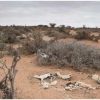
Global Hunger Is Threatening Families Because of Climate Change
There is barely a corner of human life that will not be affected by climate change, and some of its impacts are already being felt. Consider this, 821 million people are now hungry and over 150 million children stunted, putting the hunger eradication goal, SDG 2, at risk. Today 15 May, is the United Nations International Day of Families and the theme for this year is, ‘Families and Climate Action’.
South Africans Look to Re-elected Government to Rebuild a Stagnant Economy
Millions of South Africans headed out in large numbers, some braving cold and wet weather to cast their ballot in the country's sixth democratic elections this week. The 2019 election was one of the most competitive and contested elections that also saw a whopping 48 parties on the national ballot—up 300 percent from a mere 10 years ago.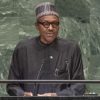
The Age of the Internet Calls for Younger Leaders
Days before Algeria’s 82-year-old strongman president Abdelaziz Bouteflika was ousted from power, the country made one last ditch attempt to keep control: it shut down the internet.
“We Move from Job to Job and Earn from Feast to Famine”
The fast-growing motion picture industry of South Africa is aiming for the stars. But the boom has a flipside. The South African Guild of Actors (SAGA) is fighting against precarious working conditions, being shut out of social security systems, and unfair copyright laws. This, and the legacy of apartheid.
The Ethiopian City Lost in the Shadow of South Sudan’s War
 Right up against the border with South Sudan, the western Gambella region of Ethiopia has become a watchword for trouble and no-go areas as its neighbour’s troubles have spilled over. But now there may be reason for optimism on either side of the border.
UN Chief’s Reprehensible Bankrolling of Violence in Burundi
Last week the Washington Post published a scathing critique by the executive director of Human Rights Watch, titled “Why the U.N. Chief’s Silence on Human Rights is Deeply Troubling.” Kenneth Roth argued that Secretary-General António Guterres “is becoming defined by his silence on human rights—even as serious rights abuses proliferate.”
West Africa’s Fine Line Between Cultural Norms and Child Trafficking
On a bus in Cotonou, Benin’s commercial capital, four Nigerian girls aged between 15 and 16 sit closely together as they are about to embark on the last part of their journey to Mali, where they are told that their new husbands, whom they never have met, await them.
Women, Peace and Security: Let’s Turn Words into Action
To be able to tackle a problem we must first recognize that it exists. When I first spoke at the United Nations Security Council in 2009, I was asked why the issue of sexual violence was even relevant to peace and security. At that time, it was not generally accepted that rape is in fact a weapon of war. Today, that statement is both widely accepted and central to the international community’s understanding of this crucial issue.
Sierra Leone’s Journalists Demand Justice for “Murdered” Colleague and Call for Law Reform
Ibrahim Samura, erstwhile editor and publisher of New Age, an independent Freetown newspaper, was beaten up with “heavy-duty metal chains and sticks” during Sierra Leone's presidential run-off election in March 2018—in front of the police and army. He died from his injuries three months later. But more than a year since the assault the perpetrators are yet to be brought to book.
On World Press Freedom Day, Let us Ask: #WhereIsAzory?
Speaking in parliament recently, Tanzania’s information minister, Harrison Mwakyembe, wondered why people were still concerned about the whereabouts of Azory Gwanda, a freelance journalist who went missing in November 2017 in the country’s Coast Region.
« Previous Page — Next Page »





The Week with IPS

NEXT STOP - SDGs
Tracking global progress towards a sustainable world
Tracking global progress towards a sustainable world
