Languages
Sunday, November 8, 2026



News and Views from the Global South
Africa

‘Women Not Speaking at the Same Table as Men’ Means a Widening Digital Gender Gap in Africa
'Think Bigger', urge the colourful posters on the walls of Ideario, an innovation hub in Chamanculo, a modest neighbourhood in Maputo, Mozambique’s capital. The message is right on target for the new female trainees, eager eyes glued to laptop screens as they learn internet and computer skills.
South-South Cooperation in a Transformative Era
On 12 September, the international community commemorated the UN Day for South-South Cooperation. This is an important acknowledgement of the contributions of Southern partnerships in addressing the many development challenges that confront the international community, such as poverty, climate change, inequality, contagious diseases and humanitarian crises.
Former Wall Street Banker Who Advanced the Cause of Women & Children in Africa
What is it like to work for the United Nations? Many probably imagine little more than an almost endless round of boring speeches, bureaucrats and governments discussing and disagreeing over long-standing conflicts with stalemate and few results.
International Law Experts Warn Europe’s ‘Pull Back’ of Migrants is Illegal – Part 2
“The Italian and other European authorities are engaging – on the migration issue – in a policy which has the foreseeable results of numerous deaths.” It is a grim warning from expert on international law, refugees and migration issues, and member of the Global Legal Action Network (GLAN), Itamar Mann.
‘All the Roads Leading to Agadez and Italy are Dangerous’
El Adama Diallo left his home in Senegal on Oct. 28, 2016, with dreams of reaching Europe in his heart and a steely determination that made him take an alternative, dangerous route to get there despite the absence of regular migration papers in his pocket.
Migrants as Messengers Explain the Dangers of Irregular Migration
 Migrants as Messengers is a peer-to-peer messaging campaign by the International Organization for Migration (IOM) where returning migrants share with their communities and families the dangers, trauma and abuse that many experienced while attempting irregular migration.

China-Africa Cooperation a Vibrant Partnership for Sustainable Development
This Forum on China-Africa Cooperation is an embodiment of two major priorities of the United Nations: to pursue fair globalization and to promote development that leaves no one behind in the context of a rules-based system of international relations supported by strong multilateral institutions.
How Accurate Information About the Weather is Yielding Resilience for Zambia’s Smallholders
Just having better information about when and for how long it will rain is proving the difference between success and failure among smallholder farmers in southern Zambia. Empowered with timely information about the weather ahead of the 2017/18 farming season, 56-year-old Fainess Muzyamba of Pemba district ditched her traditional maize crop for sweet potatoes.
When Being ‘Offensive’ or ‘Morally Improper’ Online Carries an Indeterminate Jail Sentence in East Africa
JamiiForums was Tanzania’s largest whistleblowing online platform, with one million visitors each day. But now some 90 percent of staff has been retrenched and the owners are considering shutting down their offices since the June implementation of the country’s online content communication law.
Q&A: Comoros Power Grab Rejected by Opposition, Amid Pleas for International Intervention
President Azali Assoumani of the Comoros Islands is tightening his grip on power. First, he insisted on holding a referendum allowing him to extend his term of office and abolish the country’s constitutional court. Which he won. And now, the lawyer of former President Ahmed Abdallah Sambi has said that his client has been charged Tuesday with corruption and the misappropriation of public funds in a passport fraud.
Africa’s Economic Growth Prospects Amongst the World’s Brightest
The best time to invest in Africa is now. However, foreign investors have not moved into the continent as quickly as expected because foreign investment decisions are often methodically over-structured. One of the major factors cited is too much risk. But risks and profits are inseparable twins: high-risk ventures are frequently associated with higher profits.
I am a Nigerian Migrant, Struggling to Live the ‘European Dream’ – Part 1
Jim*, a 34-year-old Nigerian, has been living in Italy for the last eight years. And even though he has a legal permit to reside in the country, he is yet to find steady employment. Instead, for three days a week you will find him begging for alms in front of a supermarket in Rome.
Q&A: A New Leader with a Vision to Redefine Human Rights
The human rights movement must be bigger, bolder, and more inclusive if we are to tackle today’s challenges, said Amnesty International’s first South African Secretary General.
Poverty-Stricken Communities in Ghana are Restoring Once-Barren Land
In the scorching Upper East Region of Ghana, the dry seasons are long and for kilometres around there is nothing but barren, dry earth. Here, in some areas, it is not uncommon for half the female population to migrate to the country’s south in search of work, often taking their young children with them.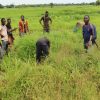
How Ghana’s Rapid Population Growth Could Become an Emergency and Outpace Both Food Production and Economic Growth
Paul Ayormah and his fellow farmers make their way home after hours spent manually weeding a friend’s one-acre maize farm in Ghana’s Eastern Region. “Tomorrow it will be the turn of my maize farm,” he tells IPS.
Music: Nigeria’s New Cultural Export
It is a cold evening in Antwerp, Belgium’s second-largest city, famous for diamonds, beer, art and high-end fashion. Inside a small restaurant, a mix of the latest American pop and rap—clearly enjoyed by diners—is playing on a radio. Nigerians Olalekan Adetiran and Adaobi Okereke, enjoying a kebab dinner, are startled when the radio begins playing the unmistakable “Ma Lo”—a catchy, midtempo and bass-laden song by popular Nigerian artistes Tiwa Savage and Wizkid.
Let Food Be Thy Medicine
When faced with a crisis, our natural reaction is to deal with its immediate threats. Ateka* came to the make-shift clinic with profuse diarrhoea: they diagnosed cholera. The urgent concern in the midst of that humanitarian crisis was to treat the infection and send her home as quickly as possible. But she came back to the treatment centre a few days later – not for cholera, but because she was suffering from severe acute malnutrition. Doctors had saved her life but not restored her health. And there were others too, who like Ateka eventually succumbed to severe malnutrition.
Which Way Now for Zimbabwe as Constitutional Court Receives Petition Against Election Results?
Many in Zimbabwe are questioning whether the country can break with its horrid past or embrace a new future after a watershed election that saw Emmerson Mnangagwa win the presidential race by a narrow margin and the opposition lodge a formal petition challenging the results in the Constitutional Court.
How the Lack of Affordable Vegetables is Creating a Billion-Dollar Obesity Epidemic in South Africa
Every Sunday afternoon, Thembi Majola* cooks a meal of chicken and rice for her mother and herself in their home in Alexandra, an informal settlement adjacent to South Africa’s wealthy economic hub, Sandton.
Q&A: Honouring Women of Africa and the Diaspora
This year, the African Union and the Diaspora African forum are honouring the first woman minister for education in Kenya for her long and outstanding work in girls’ education and governance.
Along with Peace, Eritreans Need Repression to End
“Military service was the only prospect on my horizon -- I didn’t want that,” a 20-year-old Eritrean who fled the country last year told me. “My dad had spent his whole life in military service.”« Previous Page — Next Page »





The Week with IPS

NEXT STOP - SDGs
Tracking global progress towards a sustainable world
Tracking global progress towards a sustainable world
