Languages
Tuesday, October 20, 2026



News and Views from the Global South
Global

Warning: Climate Crisis Is Now the Single Biggest Health Threat Facing Humanity
While the world’s top scientists and experts continue their arduous work to finally submit to politicians at the 27th session of the Conference of the Parties (COP 27) in Sharm El-Sheikh, Egypt (7-18 November 2022), a new alert now emerges: the climate crisis has already become the single biggest health threat to humankind.
Perils of Hunger, Food Insecurity in Southern Africa- Challenges & Opportunities
Food systems are under severe stress around the world now. The thresholds of tolerance are already exceeding limits with millions facing acute food and water scarcity throughout all continents. Over a quarter of Africa’s population are facing hunger and food insecurity. Conflict, droughts, flooding, rising unemployment, inequality, economic crises, and the impacts of Covid-19 pandemic have been ravaging the Continent on an unprecedented scale.
Deepening Stagflation: Out of the Frying Pan into the Fire
The world is sailing into a perfect storm as key leaders seem intent on threatening more war, albeit while proclaiming the noblest of intentions. By doing so, they block international cooperation to create conditions for sustainable peace and shared prosperity for all.
War, Displacement & A Global Refugee Crisis: A Wake-Up Call to Increase Refugee Participation
It has been a month since Russia’s invasion of Ukraine, which has now created one of the biggest refugee crises of modern times. More than 3.7 million people have left the country, in what has become the fastest exodus globally since World War II.
UN Should Aspire to Turn Sports into a Tool for Social Change
The International Day of Sport for Development and Peace, which will be commemorated on April 6, is a day that celebrates the positive effects that sports can have on the society.
A Battle Between a UN Chief & US Envoy Ends in a Decisive Blow with an American Veto
When Madeleine Albright was nominated to be the first female US Secretary of State back in 1997, some apparently questioned whether “a woman could go toe-to-toe with world leaders”. “Madeleine quickly quashed those misguided doubts,” says Secretary of State Antony Blinken in a tribute to Albright, who passed away last week at the age of 84. “There was simply no doubt that, in any room, she was as tough as anyone and often tougher. That said, it wasn’t always easy.”
Learning from the Tuberculosis Pandemic
As countries around the world—from Kenya to Canada, South Africa to Sweden—relish the prospect of an unofficial transition of COVID-19 from pandemic to endemic and start to ease pandemic-related restrictions, many of us in the tuberculosis (TB) community find it hard to relate. In TB, we know what can happen when a pandemic becomes an accepted fact.
War or Peace, Barbarism or Hope
The spectre of ‘stagflation’ threatens the world once again. This time, the risk is the direct consequence of political provocations and war, and not simply due to inexorable economic forces. Stagflation? Stagflation is a composite word implying inflation with stagnation. Stagnation refers to weak, ‘near zero’ growth, inevitably worsening unemployment. Inflation refers to price increases – not high prices, as often implied.
Ukraine Shows Why the G20 Anti-Corruption Agenda Is More Important than Ever
The world has quickly transitioned from a global health crisis to a geopolitical one, as the war in Ukraine rages into its second month. But the Russian invasion of Ukraine is just the latest in a long list of challenges that at their heart are either caused by or exacerbated by corruption.
Water & Sanitation, a Better Future for Girls & our Planet
At the World Water Forum this week (March 21-26), the international community will raise awareness of the 2 billion people worldwide who lack access to clean water and sanitation. Among them are millions of women and girls, who walk hundreds of miles each year to find water for their families and are blocked from education and economic empowerment also due to poor sanitation services.
NGOs Seeking a Monterrey+20 Summit on Financing for Development
This week, exactly 20 years ago, world leaders adopted the United Nation’s Monterrey Consensus. They committed to “Confronting the challenges of financing for development” with a global response and to creating a fully inclusive and equitable global economic system.
Water & Sanitation Crisis Escalates as Yemenis Mark World Water Day
As Yemen enters its 8th year of an escalating conflict, 21.7 million of my fellow Yemenis are forced to rely on humanitarian assistance to survive. The conflict has left a trail of devastation in its wake – the country is in economic freefall, and families face intensified violence, hunger, and disease. As we also mark another World Water Day on March 22, within Women’s History Month, it is a time to reflect on the immense water and sanitation crisis that continues to take countless lives – and how it impacts women and girls so acutely. The destruction of the country’s health and water infrastructure has left Yemen acutely vulnerable to multiple epidemics including malaria, diphtheria, dengue, cholera, and COVID-19.
UN’s Guterres Must be Visibly Proactive as Peacemaker in Ukraine
In an opinion piece published in PassBlue on 15 March 2022, historian Stephen Schlesinger asked, "Where is the UN's Guterres?" as Vladimir Putin’s unprovoked war on Ukraine has been dominating the world’s headline news.
Stagflation Threat: Be Pragmatic, Not Dogmatic
“If your only tool is a hammer, every problem looks like a nail”. Still haunted by the clever preaching of monetarist guru Milton Friedman’s ghost, all too many monetary authorities address every inflationary threat or sign they see by raising interest rates.
Planet Earth into Planet Plastics
Planet Earth is increasingly being transformed into planet Plastics. Approximately 400,000,000 metric tons of plastics are produced worldwide annually. Those plastics amount to about 50 kilograms, or 110 pounds, every year for each of the 8 billion human inhabitants living on the unfolding planet Plastics.
Addressing Global Food Security with Optimism and Resilience
In an exclusive interview with IPS, Ambassador Cindy Hensley McCain, Permanent Representative of the US Mission to the food and agriculture organizations of the United Nations in Rome, Italy, shares her thoughts on food security, sustainable food systems, the impact of climate change on food production, conflicts and the ongoing crisis in Ukraine, and her plans while working with the Food Agricultural Organization of the United Nations (FAO), International Fund for Agricultural Development (IFAD) and World Food Programme (WFP) with Farhana Haque Rahman and Sania Farooqui.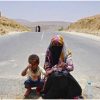
Brutal War on Yemen: Dire Hunger Crisis Teetering on the Edge of Catastrophe
Yemen’s already dire hunger crisis is teetering on the edge of outright catastrophe, with 17.4 million people now in need of food assistance and a growing portion of the population coping with emergency levels of hunger, three UN agencies warned on 14 March 2022.
How Collective Action Can Move the Needle on Gender Equality
During this year’s sixty-sixth session of the Commission on the Status of Women (CSW66), we are eager to see the global community pivot towards more inclusive approaches to advocacy. It's imperative to put the spotlight on women’s rights and youth-led organizations in communities that are often left out of key discussions. By handing the mic over to advocates across all backgrounds and ages, we can shift to a model that enables all advocates to take a lead role in policy-making and ultimately translate promises and rhetoric into real impact and accountability.
Don’t Risk our Multi-Billion Dollar Pension Fund in Wall Street, Warn UN Staffers
The United Nations Joint Staff Pension Fund (UNJSPF), which is expected to provide retirement, death, disability and related benefits for staff, upon cessation of their services-- has a staggering portfolio amounting to over $81.5 billion ranking far, far ahead of the UN’s annual budget of $3.1 billion and its average peacekeeping budget of over $6.4 billion.
The Rise in Food Insecurity Amid the COVID-19 Pandemic and Conflicts
The effects of COVID-19 over the past two years, in addition to the increase in wars and conflicts, climate change and economic crises, have aggravated global food insecurity, generating serious concerns for 2022.
Youths Trailblazing Paths in Sexual and Reproductive Health Ahead of ICFP Family Planning Conference
Travelling in northern Nigeria, Peace Umanah noticed teenage girls with multiple children – they would be walking with one strapped to their back, holding another by hand and with a protruding belly.« Previous Page — Next Page »





The Week with IPS

NEXT STOP - SDGs
Tracking global progress towards a sustainable world
Tracking global progress towards a sustainable world
