Languages
Thursday, November 12, 2026



News and Views from the Global South
Global

G77 Expresses “Deep Appreciation” to UN Secretary-General Ban Ki-moon
The Group of 77 has expressed its “deepest appreciation” to outgoing UN Secretary-General Ban Ki-moon “for his service and dedication to the United Nations over the past ten years.”
Immunisation and Inequality in 2016
Childhood immunisation is one of the safest and most cost-effective health interventions available, yet many of the world's most vulnerable children continue to miss out. A World Health Organisation report entitled State of inequality: childhood immunisation was released last week. While the report is mostly good news, immunisation rates are up and many countries have eradicated diseases entirely, a large population of children remain unimmunised.
More Than 50 Internet Shutdowns in 2016
Governments around the world shut down the internet more than 50 times in 2016 - suppressing elections, slowing economies and limiting free speech.
Reporting from Inside a Refugee Detention Centre
Despite being locked up in an Australian detention centre on Papua New Guinea's Manus Island, Kurdish-Iranian journalist Behrouz Boochani has continued reporting - gaining bylines and media attention around the world. Journalism is the reason Boochani was forced to flee his home country of Iran, and - like the other 900 men detained indefinitely on Manus Island - seek refuge in Australia.
Arms Trade Treaty Falling Down in Yemen
Two years after the UN Arms Trade Treaty entered into force many of the governments which championed the treaty are failing to uphold it, especially when it comes to the conflict in Yemen.
A “Selective” Concern for Universal Human Rights?
As Human Rights Day approached this Dec. 10, the United Nations Office of the High Commissioner (OHCHR) issued a statement urging all governments to join in the fight for universal equality and justice.
New Ebola Vaccine Trial Results Offer Hope
A new Ebola vaccine may be the first to successfully protect against one of the world’s most lethal pathogens, according to a trial involving over 11,000 participants in Guinea.
Outgoing UN Chief Yearns for Majority Rule in World Body
As he packs his bags to head home to South Korea, the outgoing UN Secretary-General Ban Ki-moon has been sharply critical of the decision-making process in the world body – specifically the veto powers in the Security Council and the increasing “consensus” rule in voting – where a single country can defy the rest of the 192 members, particularly on politically and financially sensitive issues.
Stop worrying about ‘Doing Business’ ranking
Without any hint of irony, the World Bank’s most recent Doing Business Report 2017 promises ‘Equal Opportunity for All’. Bangladesh ranked 176th among 190 economies, below civil war-ravaged Iraq and Syria! Bangladesh even slipped two places from 174 in the 2016 ranking and is three places below its 2015 ranking.
A Pivotal Moment for Biofortification
This year’s World Food Prize pays tribute to biofortification, an intervention that strengthens efforts to address one of the world’s most insidious and pervasive public health challenges—hidden hunger. That is good news for the majority of the two billion people globally who suffer from hidden hunger, and likewise for those fighting to end the epidemic.
You must be the change you wish to see in the world – Mahatma Gandhi
2016 has been a dramatic year for the world, and for the media. Political dysfunction appears to be on the rise, putting social media under increasing critical scrutiny even as prestigious global commercial news brands capable of acting as the fourth estate are downsizing.
More of the Same: World Bank Doing Business Report Continues to Mislead
The World Bank’s Doing Business Report 2017, subtitled ‘Equal Opportunity for All’, continues to mislead despite the many criticisms, including from within, levelled against the Bank’s most widely read publication, and Bank management promises of reform for many years.
New Technologies in Debate in Biodiversity Conference
Synthetic biology, geoengineering and the recognition of ancestral knowledge are the issues that have generated the most heated debate in the United Nations Conference on Biodiversity, which ends in this Mexican resort city on Friday Dec. 17.
War of Words in UN Security Council as Aleppo’s Civilians Suffer
UN Secretary-General Ban Ki-moon told UN Security Council members of credible reports of civilians in Aleppo being summarily executed during an emergency meeting held on Tuesday.
Gender Equality “Clear Priority” for New UN Secretary-General
Achieving gender equality in UN staff appointments will be a "clear priority" for incoming UN Secretary-General Antonio Guterres, when he takes up the UN’s top administrative role in January 2017.
Developmentalism and Conservation Clash Out at Sea
“We don’t have access to marine areas, because most are protected areas or are in private hands. We indigenous people have been losing access to our territories, as this decision became a privilege of the state,” complained Donald Rojas, a member of the Brunka indigenous community in Costa Rica.
Food Insecurity: An Agent for Violent Conflict
Up to two billion people live in countries affected by violence, conflict and fragility. Often, such political instability goes hand in hand with food insecurity. “Conflicts have pushed over 56 million people either into crisis or emergency levels of food insecurity”, Kimberly Flowers, Director of the Global Food Security Project, said at this years’ John McGovern Lecture held at the Food and Agriculture Organization of the United Nations (FAO). The number continues to grow with the escalation of conflicts and violence in countries like Syria, Yemen or South Sudan.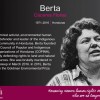
Women Human Rights Defenders: Targeted for Identity and Activism
AWID’s 5th online tribute to Women Human Rights Defenders (WHRDs) who have died in recent years, commemorates sixty feminists and activists. Thirty eight of these defenders died violently, and were murdered as a result of who they were, their identities, and the rights they defended.
Fiscal Austerity Has Been Blocking Economic Recovery
Instead of concerted and sustained efforts for a strong, sustained economic recovery to overcome protracted stagnation, the near policy consensus on fiscal austerity in the G7 and the G20 OECD countries, except for the US and Japan, has dragged down economic recovery in developing countries.
Climate-Resistant Beans Could Save Millions
A global food watchdog works around the clock to preserve crop biodiversity, with a seed bank deep in the Colombian countryside holding the largest collection of beans and cassava in the world and storing crops that could avert devastating problems.
Europe to Decide on Use of Mercury in Dentistry
Europe will soon decide the future of a common but controversial dental practice: mercury in tooth fillings. Three major European institutions, namely the European Commission, Parliament and Council, are due to meet on 6 December to discuss regulations on mercury, particularly its use in dentistry.« Previous Page — Next Page »





The Week with IPS

NEXT STOP - SDGs
Tracking global progress towards a sustainable world
Tracking global progress towards a sustainable world
