Languages
Thursday, November 12, 2026



News and Views from the Global South
Global

UN Releases Plan to Increase Refugee Responsibility Sharing
The UN wants to create a new Global Compact to encourage countries to share the responsibility for hosting the 19 million refugees who have fled their home countries.
WFO Calls for Farmer-Centred Sustainable Development
Over 600 delegates representing at least 570 million farms scattered around the world gathered in Zambia from May 4-7 under the umbrella of the World Farmers' Organisation (WFO) to discuss climate change, land tenure, innovations and capacity building as four pillars on which to build agricultural development.
MSF Withdrawal Part of Ongoing Debate Over Humanitarian Aid
Aid organisations have differing views about the upcoming World Humanitarian Summit, after Médecins Sans Frontières (MSF) pulled out last week some still hope the Summit will help bring about much needed change.
Let’s Not Forget Disaster Risk as we Rush to Adapt to Climate Change
Helping at-risk communities adapt to climate change impacts is an important part of the Paris Climate Change agreement, but adaptation will not be complete without considering disaster risk.
Nobel Peace Laureates to Help Achieve Food Security
The Food and Agriculture Organisation (FAO) believes that ongoing military conflicts, which have also devastated agricultural crops and livestock, are one of the primary causes of food shortages in war zones in Africa and the Middle East.
An Inclusive and Sustainable Approach to Rural Electrification in India: Case of Decentralized Renewable Systems
The Declaration of 2014- 2024 as the ‘Decade of Sustainable Energy for All’ by the United Nations (UN) is a clear manifestation of the importance attached to energy in the process of development. Setting ‘Universal Access to Energy’ as one of the goals of UN’s ‘SE4All’ initiative is reiteration of the fact that access to energy constitutes an essential ingredient in the process of economic development of any country. This underscores the complex and inextricable link that exists between energy and sustainable development.
Deteriorating Protection of Journalists’ Sources a Global Problem
The freedom of the press is a universally cherished democratic right, but what may have been overlooked as the World Day Freedom of Information was celebrated on Wednesday is that the ability of journalists to protect their source is increasingly coming under attack by authorities.
Farmers Hold Keys to Ending Poverty, Hunger, FAO Says
With recent data showing that 793 million people still go to bed hungry, ending hunger and poverty in 15 years is the next development challenge that world leaders have set for themselves.
Seeking a New Farming Revolution
As the World Farmers' Organization meets for its annual conference in Zambia to promote policies that strengthen this critical sector, IPS looks at how farmers across the globe are tackling the interconnected challenges of climate change, market fluctuations, water and land management, and energy access.
Is the System Broke or Broken?
Though the upcoming World Humanitarian Summit may seem timely, a debate ensues on an important question: is the world humanitarian system broke or broken?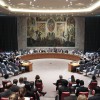
Could the UN be Doing More to Protect Journalists?
As the world commemorates World Press Freedom Day, a coalition of some 35 press freedom groups is calling on the 193-member General Assembly to appoint a Special Representative of the Secretary General to monitor and oversee the safety of journalists worldwide.
Analysis: The Role of the Free Press in Sustainable Development
This year’s World Press Freedom Day marks the 250th anniversary of the first-ever freedom of information law, enacted in what are now Sweden and Finland. 3 May, 2016 is more than just an important anniversary, however; this is the first celebration of World Press Freedom Day since the adoption of the United Nations’ Sustainable Development Goals. Securing a free press is essential for progress towards achieving these ambitious goals for people and planet by the year 2030.
Black Colombian Activists Continue Our Struggle For Rights
While Colombia’s peace talks continue in Havana, Cuba, back home in the region of North Cauca, Black Colombians have found their cries for access to their ancestral lands met with tear-gas and rubber bullets.
“Together, Civil Society Has Power”
When Tamara Adrián, a Venezuelan transgender opposition legislator, spoke at a panel on inclusion during the last session of the International Civil Society Week held in Bogotá, 12 Latin American women stood up and stormed out of the room.
Opinion: Illicit Financial Flows
International capital flows are now more than 60 times the value of trade flows. The Bank of International Settlements (BIS) is now of the view that large international financial transactions do not facilitate trade, and that excessive financial ‘elasticity’ was the cause of recent financial crises.
Can the UN Security Council Stop Hospitals Being Targets in War?
Hospitals, health care workers and patients in war zones are supposed to be protected under international humanitarian law yet recent attacks from Syria to Afghanistan suggest that they have become targets.
Violence Against Women Journalists Threatens Media Freedom
For women journalists, violence and intimidation don't just happen in conflict zones, they are every day experiences.
UN Predicts 40 Percent Water Shortfall by 2030
Ten presidents and prime ministers from around the world will work together to resolve the growing global water crisis amid warnings that the world may face a 40 percent shortfall in water availability by 2030.
How We Can Keep Press Freedom from Withering Away?
Media freedoms appear increasingly under siege around the world, with concerning signs that achieving middle-income status is no guarantee for an independent political watchdog in the form of the press.
Why we need to stand united against governments cracking down on dissent
Last month, after receiving threats for opposing a hydroelectric project, Berta Caceres, a Honduran indigenous and environmental rights campaigner, was murdered. A former winner of the Goldman Environmental Prize for her opposition to one of Central America’s biggest hydropower projects, Berta was shot dead in her own home.
Why the World Needs a UN Leader Who Stands Up for Human Rights
Last August, Balla Hadji, a 61-year-old truck driver in Bangui in the Central African Republic, was having breakfast with his wife when they heard shots outside. He ran out to call his daughter inside, but troops were already there, and shot him in the back as he ran away. His 16-year-old son, Souleimane, was also shot when he ran towards his father. Balla died on the spot, his son Souleimane the next day.« Previous Page — Next Page »


The Week with IPS

NEXT STOP - SDGs
Tracking global progress towards a sustainable world
Tracking global progress towards a sustainable world
