Languages
Sunday, November 22, 2026



News and Views from the Global South
Latin America & the Caribbean
ARGENTINA: Drought Threat Looms Again
The low humidity in Argentina's most agriculturally productive region has already caused a decline in grain yield - in particular corn and soybean - with ensuing losses for producers and the government.EL SALVADOR: Gangs May Be Scapegoat for Soaring Murder Rate
El Salvador is one of the most violent countries in the world, with one of the highest murder rates. But the authorities cannot agree on whether or not most of the killings should be laid at the door of the youth gangs known as "maras".JAMAICA: “Mama P” Faces Prejudice, Economic Challenges
Running on promises of job creation, economic growth and wider stakeholder consultations, Jamaica's most popular politician and the country's first female prime minister Portia Simpson Miller swept to power in a victory almost no one had predicted.ARGENTINA: In Famatina, Water Is Worth Far More Than Gold
Thousands of people in the northwest Argentine province of La Rioja are mobilising to stop an open-cast gold mining project in the Nevados de Famatina, a snowy peak that is the semi-arid area's sole source of drinking water.Only Civil Society Can Save Rio+20, Say Activists
Large-scale social mobilisation, including street protests and parallel activities, is the only thing can save the United Nations Conference on Sustainable Development (Rio+20) from ending in nothing but frustration, according to activists and analysts.
PUERTO RICO: Cleaner Energy Sources Prove Divisive
As Puerto Rico seeks to lower soaring utility rates while simultaneously shifting toward cleaner energy sources, it faces grassroots opposition to two major projects even though at least one is 100-percent renewable.CHILE: Recovery from Forest Fire Could Take 80 Years
"It's extremely serious, a full-blown environmental catastrophe," environmentalist Sara Larrain told IPS, describing the impact of the fire that has been raging through the Torres del Paine National Park in Chilean Patagonia since Dec. 27.The Green Economy, Boon or Menace?
The development of the green economy is the subject of pitched debate among specialists. While some believe it will deepen social inequalities and increase corporate control over natural and biological resources, others highlight its potential role in protecting the environment and creating employment.Mayans Demand Voice in “Doomsday Tourism” Boom
The indigenous people of southeast Mexico are demanding to be included in the official programmes planned for 2012 to take advantage of the world's interest in the "Mayan prophecy", while at the same time fearing a "doomsday tourism" that could damage and contaminate their sacred sites.Guatemalans Long for Security, Fear More Abuses
Guatemala's new president, retired general Otto Pérez Molina, made campaign promises to deal with crime with a firm hand ("mano dura") in this country, one of the most violent in the world where impunity is almost absolute, giving rise to cautious hopes from civil society.Montevideo Tackles Gas Emissions from Solid Waste
The government of the Uruguayan capital plans to reduce greenhouse gas emissions from the solid waste produced by its 1.3 million inhabitants, through a project set to enter into operation in March. The carbon credits generated will be purchased by the World Bank.MEXICO: Even Educated Young Women Face Poor, Jobless Future
The year 2012 started off with little promise for workers in Mexico, with analysts projecting job losses and wages below subsistence levels.EL SALVADOR: Twenty Years of Peace Fail to Bring Prosperity
Two decades after the signing of the Peace Accords, together with the social commitments they contained, El Salvador's levels of poverty and violence are so high that academic and social leaders are proposing new accords to overcome the crisis.MEXICO: Cross-Border Child Custody, a Legal Tangle
Mexican or foreign-born children being held by one of their parents in this or another country are caught up in a legal tangle marred by red tape and the arbitrary powers of judges, according to experts.GUATEMALA: For the Maya, the World Isn’t Ending – the Environment Is
The end of the Maya long-count calendar does not predict a global catastrophe, let alone the end of the world, say native activists and elders who spoke to IPS in Guatemala. But what are coming to an end are the world's natural resources, as a result of human activity, they warn.EL SALVADOR: Pesticides Fill Graveyards in Rural Villages
Sitting in the shade under a tree at a careful distance, Francisco Sosa watches his son prepare the land for planting by spraying the weeds with an herbicide from a tank carried on his back.BRAZIL: Growing Pains in a Country Under Construction
Major infrastructure works are sprouting like mushrooms in Brazil, generating millions of jobs and drawing more than 60 billion dollars in foreign investment in 2011. But this thrust has failed to sustain economic growth, which according to the latest projections is below three percent.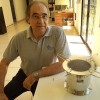
CLIMATE CHANGE: Clean, Efficient Wood Stoves Good for People and the Planet
In his quest to make the most efficient possible use of energy generated through wood combustion, Salvadoran René Núñez developed a simple but highly efficient wood stove that produces no smoke and reduces greenhouse gas emissions by 95 percent.Salvadoran Poet Roque Dalton’s Murder – Case Closed
It was the first time that a Salvadoran judge was holding a hearing to decide whether the case of Roque Dalton, a poet murdered 36 years ago, should go to trial. But the hopes of his family were dashed.SOUTH AMERICA: Responsible Tourism at the “End of the World”
An innovative responsible tourism initiative in the Beagle Channel - a narrow strait linking the Atlantic and Pacific near the southernmost tip of South America - ensures the compatibility of the observation and conservation of unique bird and mammal species.No One Wants Mexico City’s Garbage
The closure of Mexico's biggest garbage dump has highlighted the absence of a comprehensive policy for urban waste collection, disposal and processing, a failure that has serious consequences for health and the environment.« Previous Page — Next Page »


The Week with IPS

NEXT STOP - SDGs
Tracking global progress towards a sustainable world
Tracking global progress towards a sustainable world

