Languages
Sunday, November 22, 2026



News and Views from the Global South
Latin America & the Caribbean

HAITI: Open for Business – Part 2
Ever since being elected earlier this year, Haitian President Michel Martelly and his team have been betting Haiti's reconstruction on foreign investors.ARGENTINA: Things Slowly Getting Better for Transgender People
Transvestites and transsexuals in Argentina, who were among the most marginalised minority populations, have seen respect for their rights grow in recent years, especially since same-sex marriage became legal in this country a year and a half ago.
HAITI: Open For Business – Part 1
"Haiti is open for business." That's what President Michel "Sweet Micky" Martelly said at a recent ceremony as he and former U.S. president Bill Clinton laid a cornerstone for a giant industrial zone being built in northern Haiti.
AGRICULTURE-BOLIVIA: Adapting to the Floods
Margarita Amabeja holds out her hands full of golden rice grains and rough brown manioc roots - the first results of a strategy to adjust the agricultural cycles to the seasonal floods and droughts in the vast plains of Beni, in northeastern Bolivia.
Mexico Ignores Warnings about Bisphenol A
Bisphenol A (BPA), a chemical found in strong plastics, is banned in baby bottles in Canada and the European Union. But Mexico has made no move to outlaw it from plastic bottles or the lining of food cans, despite the threat to health.
SOUTH AMERICA: Mercosur Trade Bloc – Integration or Protectionism?
As Mercosur foreign ministers gather this Monday ahead of Tuesday's summit of heads of state, political harmony is growing between the governments of member countries, although free trade not only remains a pending challenge but is increasingly facing pitfalls.
BRAZIL: Amazon Turtles – Illegal Protein for the Poor, Delicacy for the Rich
"Many people lie" about the common practice of poaching turtles to eat or sell, said a man renowned for his fishing skills who lives on the banks of the Xingu river in Brazil's eastern Amazon jungle region.
GUATEMALA: When Vigilante Protection Turns Ugly
"Masked men came and threatened us. Some information was distorted, and they wanted to attack us all," said Enrique Boj, an activist from San Juan Sacatepéquez, 31 km from the Guatemalan capital.
MEXICO: No Protection for Activists
Gabriel Echeverría de Jesús, 20, and Jorge Alexis Herrera, 21, paid a high price for taking part in student protests in the southern Mexican state of Guerrero: they were killed when police tried to break up their roadblock.
ARGENTINA: Water – Some Waste It, Some Want It
In Argentina, the availability of water far outstrips demand, yet 11 percent of the population still lacks piped water, while a large proportion of the rest squanders it without a second thought.PERU: Humala Surrounds Himself with Uniforms
Peruvian President Ollanta Humala is taking an increasingly hard-line stance against protests, and is losing important allies less than five months into his term.GUATEMALA: Discrimination Undermines AIDS Prevention
"At the clinic we were attended to by a woman who criticised us and only talked to us about religious questions," says Carlos Valdez of Proyecto Unidos, an NGO in Guatemala that fights for access to HIV/AIDS prevention services by homosexuals and sex workers.
Q&A: “‘Sustainable Development’ Is Often Used Gratuitously”
People are disillusioned with global conferences "that mobilise thousands of people and fail to achieve real global progress" in reducing greenhouse gas emissions, says Boris Graizbord, head of the sustainable development studies programme at one of Mexico's leading research universities in the social sciences
CLIMATE CHANGE-BRAZIL: Contradictory Goals in Agriculture
Brazil aims to meet its climate change targets in agriculture by stimulating techniques that have been proven to reduce greenhouse gas emissions – but which may increase the use of toxic agrochemicals, activists say.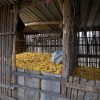
MEXICO: Saving Native Seeds to Protect Food Heritage
When Guadalupe Ortiz planted gardens in Mexico, she was struck by the importance of saving and preserving the seeds, and decided to do something about the problem of seed supply.
JAMAICA: Waking Up to Urgency of a National Climate Policy
As increasingly extreme and erratic weather driven by the earth's changing climate exacts a heavy toll on Jamaica's population, economy and infrastructure, a consensus has emerged among scientists and policy makers here that adaptation measures must include hazard mitigation.
Q&A: “Opposition to Restitution of Land Not Surprising”
"I find it extremely painful to see that there are people in Colombia trying once again to deceive" people displaced from their land, just when "they have hope of being recognised and compensated," said Swedish diplomat Anders Kompass on a visit to this country to support rural victims of the civil war.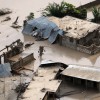
CUBA-CARIBBEAN: Forging an Alliance to Fight for Climate Action
When the U.N. Conference on Sustainable Development dubbed Rio+20 convenes in Brazil next year, Caribbean leaders want to ensure that the concerns of vulnerable low-lying coastal and Small Island Developing States (SIDS) will be heard.
ARGENTINA: Poison from the Sky
Argentina's soy boom has been a major source of foreign exchange. But the other side of the coin is the toxic effects among the rural population, from spraying agrochemicals.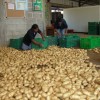
HONDURAS: Indigenous Cooperatives Cultivate Success
Thanks to the quality and freshness of their produce, indigenous Lenca farmers in western Honduras are regular suppliers of seven supermarket chains. This year they won the National Environmental Prize, in the community initiatives category.
BRAZIL: Child-Adapted Formula to Deal Major Blow to Chagas Disease
A new paediatric formulation developed in Brazil holds out hope for a cure for over 90 percent of newborn babies infected with Chagas disease, a parasitic infection endemic in 21 Latin American countries, where it kills more people every year than malaria.« Previous Page — Next Page »


The Week with IPS

NEXT STOP - SDGs
Tracking global progress towards a sustainable world
Tracking global progress towards a sustainable world

