Languages
Monday, November 23, 2026



News and Views from the Global South
Latin America & the Caribbean
BOLIVIA: Women Fight Superstition, Machismo in Mining Cooperatives
Hundreds of women belonging to mining cooperatives in Bolivia are striving for the right to mine seams of tin and silver in the country's western highlands, where an age old superstition maintains that the presence of women "scares away" the minerals.HUMAN RIGHTS-MEXICO: Overdue Homework
Although four of the five sentences in which the Inter-American Court of Human Rights has found the Mexican state guilty involved cases from the southwestern state of Guerrero, the effects of the rulings have not yet had an impact on that area, one of the poorest parts of the country.GUATEMALA: Multi-Partner Alliance Wages War on Hunger
"Now I get supplies to feed my children, and I have a family garden where I grow carrots, onions and beets," Marta Quinilla, a native of Uspantán, an area northwest of the Guatemalan capital that was devastated by the 36-year civil war, says cheerfully.
NICARAGUA: Rape Victim Launches New Hunger Strike for Justice
After a series of hunger strikes and vigils, Fátima Hernández had managed to become an exception, as one of the few rape victims in Nicaragua to obtain justice. But now her fight has started all over again and the hope that her case offered to others might become a mirage.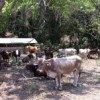
Hidden Poisons in Mexican Meat
Serious concerns about industrial livestock production in Mexico have been raised once again by recent controversies over the use of the non-steroidal anabolic clenbuterol and a feed medicine for poultry containing aresenic.PERU: Dam Project Temporarily Suspended to Calm Protests
The outgoing government of Peruvian President Alan García has suspended construction of the Inambari hydroelectric complex, part of an energy deal with Brazil. But activists say the move is merely aimed at calming tempers among local people opposed to the dam, while handing the problem on to García's successor, president-elect Ollanta Humala.
BRAZIL: Women Gain More Ground in the Presidential Palace
By appointing women this month to two key ministries, Brazilian President Dilma Rousseff has nearly met her goal of having 30 percent of women in her cabinet, and is putting women in predominant roles at the Planalto Palace, the seat of government.ARGENTINA: Mothers of Plaza de Mayo Scandal “Toxic” for President
Above and beyond the impact it might have on Argentina's Oct. 23 general elections, few doubt that the government of Cristina Fernández will feel the effects of the fraud scandal involving the alleged misuse of public funds by the former right-hand man of the head of the Mothers of the Plaza de Mayo Association.BRAZIL: Rousseff Wants Those Who Have More to Pay More
The Brazilian government of Dilma Rousseff is attempting to push through long-delayed reforms of the tax system, which is one of the most onerous and unequal in the world, with a tax burden as heavy as that of many rich countries, but accompanied by deficient public services.New Ministry to Tackle Venezuela’s Notorious Prisons
Venezuela's prisons are considered to be among the most violent and dangerous in the world. But the country now has a new ministry specifically tasked with improving conditions in the penitentiaries and making them fit for inmates.
MEXICO: Search for Missing Daughter Points to Int’l Trafficking Ring
Mexican economist Javier Morlett has virtually put his life on hold to search for his daughter Adriana, missing since Sept. 6, 2010. Since her disappearance, Morlett has reported her absence to the authorities and has organised marches and campaigns.TRINIDAD: Unions Use Labour Day to Send Strong Message to Govt
What a difference a year makes. Less than a month after she led the five-party coalition to a convincing victory in the 2010 general election, Prime Minister Kamla Persad Bissessar became the first head of government to address a Labour Day rally in Trinidad and Tobago.
EL SALVADOR: Radio Station under Threat in Mining Region
Manuel Navarrete fiddles with the buttons and adjusts the volume on the control panel at the Radio Victoria community radio station in northern El Salvador, while he reads over the microphone the latest communiqué in which social organisations express their solidarity with the station's journalists, who have received death threats.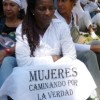
RIGHTS-COLOMBIA: Murdered Activist’s Children Go into Exile
"They are very distressed. Their father, mother and two brothers have been killed. They have expressed the wish to leave the country," Colombian Vice President Angelino Garzón said after meeting Tuesday with the surviving daughters and son of Ana Fabricia Córdoba, a prominent land rights activist assassinated on Jun. 7.LATIN AMERICA: Renewable Energies Will Devour Metal Resources
The expansion of renewable energies in Latin America will drive up demand for metals like copper, which only recycling will be able to meet.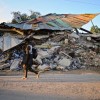
HAITI: Behind the Closed Doors of Port-au-Prince “Reconstruction”
Almost 17 months after the Jan. 12, 2010, earthquake that devastated Port-au-Prince and three other cities, reconstruction of the capital's downtown appears stalled, and over 800,000 people still live in tents – some 30,000 of them right across from the collapsed National Palace.Central America Should Turn to Community Policing, Experts Say
The countries of Central America should adopt community policing as a strategy to fight organised crime, say experts in the region ahead of a key summit on security to be held Jun. 22-23 in the Guatemalan capital.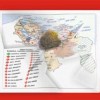
Biodiverse Venezuela Flunking Basic Conservation
Threats to biodiversity, spreading pollution, degraded river basins and disappearing forests are problems in oil-rich, megadiverse Venezuela, where climate change is knocking on the door.
Q&A: “Full Reparations Must Be Guaranteed” for Displaced Victims in Colombia
Human rights groups and small farmers' associations will keep close watch in Colombia to make sure the new Victims' and Land Restitution Law, signed by President Juan Manuel Santos Friday, is effectively implemented.
Q&A: Land and Victims Law Crucial for Millions of Displaced Farmers in Colombia
The Victims and Land Restitution Law, signed Friday by Colombian President Juan Manuel Santos, "is an important message for reconciliation in the country," said lawmaker Guillermo Rivera, one of the sponsors of the law.
PERU: Humala Pledges Justice for Sterilisation Victims
Peruvian President-elect Ollanta Humala will push the legal system to investigate and prosecute those responsible for a massive forced sterilisation campaign targeting poor indigenous women carried out by the government of Alberto Fujimori (1990-2000), said the spokeswoman for Humala's party, Aída García Naranjo.« Previous Page — Next Page »


The Week with IPS

NEXT STOP - SDGs
Tracking global progress towards a sustainable world

