Languages
Wednesday, October 21, 2026



News and Views from the Global South
Children Under Siege

EDUCATION-BRAZIL: Public Schools Fend Off Invasion of New Ideas
Two non-governmental initiatives managed to penetrate the walls around public education in Brazil, temporarily assuming responsibility for the administration of schools where they left their seeds planted. But ultimately they discovered how resistant the school system is to innovation.SRI LANKA: Gov’t to Resettle Displaced Tamils Ahead of Monsoon
The Sri Lankan government, accused of keeping the refugees who fled fighting between the military and Tamil rebels against their will, is preparing to resettle these minority civilians ahead of next month’s monsoon period, officials from non-government agencies said Friday.HEALTH: WHO Data Underscores Pneumonia’s Deadly Toll
New data released by the World Health Organisation (WHO) sheds light on the leading causes of pneumonia and provides the first country-level information about the effects of pneumonia, the world's leading killer of children under five.GUATEMALA: Malnutrition Killing Children Again
The deaths of 25 children from severe malnutrition this year in Guatemala, mainly in the eastern province of Jalapa, shows that the specter of hunger is still haunting the country, aggravated by the global economic crisis and drought.
BRAZIL: Artistic Energy as Antidote to Exclusion
Putting the power of art to the test in extreme situations has become an unintended but necessary task for the Axé Project, a Brazilian non-governmental organisation (NGO) aimed at creating the conditions for street kids and other at-risk children to overcome educational, family and community exclusion.
BRAZIL: From Learning Circle to Flights of Artistic Imagination
Slender, small and long-haired, 11-year-old Higor Fonseca sounds much older when he talks. He has a great deal to tell, in spite of living in this small, sleepy town in the interior of Brazil, where most workers are employed as seasonal migrant labourers in other parts of the country.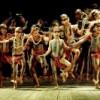
BRAZIL: Changing Lives Through the Power of Dance
"My family’s lives changed," said Maria Erilma da Silva, a mother of three girls and a teenage boy, listing a whole series of transformations, from changes in eating and personal hygiene habits to "the security of knowing where my daughters are" and even an end to her husband’s frequent drinking binges.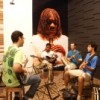
MUSIC-BRAZIL: A School Without Teachers
The participation of renowned professional musicians as instructors and special guests at workshops, instead of academic professors, is what sets Brazil’s Bituca University of Popular Music apart, and is earning it a reputation as a model of experimentation and excellence in music education.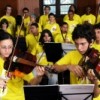
BRAZIL: Music Education Opens Doors to Social Inclusion
"It takes us an hour and 20 minutes to get there. We have to walk, because we can't afford the 30-minute bus ride. But the girls never miss their music classes, not even when they have to go without lunch because they don't have time to eat after school," says their mother, Maria da Cruz.NICARAGUA: Literacy Goal Met – Further Education Planned
After an intense two-year literacy campaign, Nicaragua has managed to reduce the number of people who cannot read and write to below four percent of the adult population, from nearly 21 percent.EDUCATION-SIERRA LEONE: Schools in Crisis as Thousands of Teachers go Unpaid
Government’s refusal to pay the salaries of thousands teachers, while looking to recruit thousands more, has plunged the schooling system into crisis.RIGHTS-ARGENTINA: The Unfinished Story of the “Disappeared”
"The night of Oct. 23, 1976, nearly 33 years ago, was the last time I saw my son Pablo. He was 17 years old, and he was terrified. Since then I have had no reliable news about his fate. My family and I have been left at the mercy of the anguished torments of our imagination."
RIGHTS: Sweet 16 Marriages Cause Controversy in Malawi
Malawi's president, Bingu wa Mutharika, has come under severe pressure from civil society groups who are demanding he scrap a newly-passed bill allowing 16-year-olds to marry with the consent of their parents.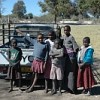
RIGHTS-NAMIBIA: Updating Child Protection
A mammoth draft bill on child care and protection is nearing completion in Namibia. A gaggle of experts has made recommendations; a muster of officials will decide what goes in and what stays out. And all worry what the politicians will say.ARGENTINA: 20 Years for Manager in Tragic Club Blaze, but Band Acquitted
Nearly five years after a fire in a night club in the Argentine capital claimed the lives of 194 young people, a court sentenced the club manager and several city officials Wednesday. But the judges absolved the members of the band that was playing that night, touching off angry reactions from families of the victims waiting outside the courthouse.
ANGOLA: Teenage School Programme Gives Drop Outs Second Chance at Education
Free primary education for all is an Angolan government policy, but unfortunately this has not translated into a reality that sees all children receiving education.
RIGHTS-PARAGUAY: NGO Offers Girls a Way Out of Sexual Exploitation
Claudia was 13 years old when she came to the capital of Paraguay from her small rural town. Just a few weeks after her arrival she was wandering the streets of downtown Asunción, a victim of sexual exploitation.
MIDEAST: Children Have a Way With Miracles
Call it that choice between looking at the half-full or half-empty part of the results. And it is almost half; 55 percent of schoolchildren passed their exams in Gaza this year.RIGHTS: Disfiguring Disease Linked to Right to Food
Noma, an ulcerous disease whose name comes from a Greek word that means "to devour" because it literally eats away at malnourished children's faces in just a few months, is found in the developing world, mainly in Africa.MIDEAST: New Israeli Plan to Warn of Impending Attacks
The Israeli Defence Force (IDF) is taking new measures to warn Palestinian civilians about impending aerial attacks. This comes in response to questions raised over whether Israel had complied with international laws during its 2006 war in Lebanon and the Gaza offensive earlier this year.CUBA: Compulsory Rural Boarding School on the Way Out
Without fanfare or major explanations, the Cuban government has begun to dismantle the system of mandatory rural boarding school for students in the last three years of high school – one of various reforms aimed at improving the quality of education that will start to be implemented at the start of the next school year in September.« Previous Page — Next Page »





The Week with IPS

NEXT STOP - SDGs
Tracking global progress towards a sustainable world
Tracking global progress towards a sustainable world
