Languages
Tuesday, October 13, 2026



News and Views from the Global South
Colombia
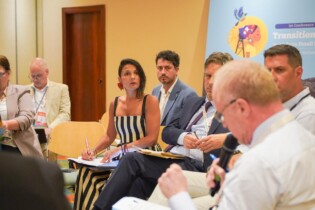
How Santa Marta Finally Made Fossil Fuel Phase-Out Politically Discussable
The First Conference on Transitioning Away from Fossil Fuels in Santa Marta, Colombia, may eventually be remembered as a defining moment in global climate politics, not because it produced a treaty or a formal negotiation outcome, but because it changed the tone, structure, and ambition of the conversation itself.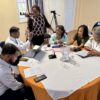
Caribbean Leaders and Civil Society Prepare for Global Push on Fossil Fuel Phase-Out
As the world edges closer to breaching key climate thresholds, Caribbean policymakers, scientists and civil society leaders gathered in Saint Lucia this month to coordinate the region’s position ahead of a landmark global meeting on transitioning away from fossil fuels.
Cold or Heat, A Disputed Roadmap to Leave Fossil Fuels Behind in COP30
The heat in the Hangar Convention Center of the Amazonia, in the northeastern Brazilian city of Belém, has reached the negotiation rooms of the climate summit. Over the past 72 hours, one of the most delicate and significant discussions of this climate meeting has been taking place: the path to progressively abandon the production and use of coal, gas, and oil.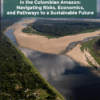
Intensified Legal, Political, and Grassroots Battles Over Amazon Oil Expansion
A report has warned about the risks of expanding oil and gas exploration in the Colombian Amazon, which may undermine environmental goals, Indigenous rights, and long-term economic stability, unless the government pivots toward sustainable development pathways.
What Is the Cost of Phasing Out Fossil Fuels in Latin America?
One of the most heated debates at the annual climate summit coming to a conclusion in this United Arab Emirates city revolved around the phrasing of the final declaration, regarding the "phase-out" or "phase-down" of fossil fuels within a given time frame.
Biodiversity Credits: Solution or Empty Promise for Latin America?
Located in northwestern Colombia, the Bosque de Niebla is home to 154 species of plants, 120 bird species, 21 species of mammals, 16 water springs and five hectares of wetlands.
‘News Deserts’ Are Rampant in Latin America
Without the means to receive information about what is happening around them, millions of Latin Americans who live in poor remote rural or impoverished urban areas inhabit veritable news deserts, according to an increasing number of studies conducted by journalistic organizations in the region.
Menstrual Health and Hygiene Is Unaffordable for Poor Girls and Women in Latin America
Menstrual hygiene management is elusive for millions of poor women and girls in Latin America, who suffer because their living conditions make it difficult or impossible for them to access resources and services that could make menstruation a simple normal part of life.
Holistic Education Support in Colombia Extended to Counter Snowballing Learning Crisis
The largest external displacement crisis in Latin America’s recent history is unfolding as countries open their borders to an influx of refugees from Venezuela following unprecedented political turmoil, socio-economic instability, and a humanitarian crisis.
New Seed Bank to Support Agriculture of the Future
As he points to a white shelf that holds bean seeds, Austrian biologist Peter Wenzl explains that one of them, obtained in Ecuador, provided a gene for the discovery that major seed protein arcelin offers resistance to the bean weevil.
Ethanol Not Enough to Heal Sugarcane’s Environmental Legacy in Colombia
As a visitor drives across the plains of the department of Valle del Cauca in southwestern Colombia, green carpets dominate the view: sugarcane fields that have been here since the area got its name.
Latin America Sets an Example in Welcoming Displaced Venezuelans
The exodus of more than five million Venezuelans in the last six years has led countries in the developing South, Venezuela's neighbours, to set an example with respect to welcoming and integrating displaced populations, with shared benefits for the new arrivals and the nations that receive them.
Nepal and Colombia Struggle With Mental Health Burden of Conflict
Children sit in a circle experimenting with different colours on palettes at a shelter in Godavari one morning this week. Some design flowers in bright colours, others draw homes nestled below mountains. Many of the children are survivors of rape or domestic violence, from rural parts of Nepal. The one thing they have in common is mental trauma.
Colombia – Trade Unionism Under Threat of Death
Miguel Morantes was almost murdered. Ever since, three bodyguards are part of his everyday life in one of the most dangerous countries for trade union members.
Latin American Rural Women Call for Recognition and Policies
Rural women in Latin America play a key role with respect to attaining goals such as sustainable development in the countryside, food security and the reduction of hunger in the region. But they remain invisible and vulnerable and require recognition and public policies to overcome this neglect.
Colombia Referendum – First Acid Test for Peace
It was like a huge party in Colombia. “Congratulations!” people said to each other, before hugging. “Only 20 minutes to go!” one office worker said, hurrying on her way to Bolívar square, in the heart of Bogotá. And everyone knew what she was talking about, and hurried along too. Complete strangers exchanged winks of complicity.
Colombia Includes Gender Focus for a Stable, Lasting Peace
The novel inclusion of a gender perspective in the peace talks that led to a historic ceasefire between the Colombian government and left-wing guerrillas is a landmark and an inspiration for efforts to solve other armed conflicts in the world, according to the director of U.N.-Women in Colombia, Belén Sanz.
Disagreement Continues Over Global Drug Policy
A new report has found that global drug use largely remains the same, but perspectives on how to address the issue still vary drastically.
Industrial-Level Aid Logistics in Colombia’s Decades-Long Humanitarian Disaster
“If you’re going to talk about Colombia and the peace process, do it somewhere else,” was heard at a regional preparatory meeting for the World Humanitarian Summit, according to Ramón Rodríguez, with the Colombian government’s Unit for Attention and Integral Reparation for Victims (UARIV).
Black Colombian Activists Continue Our Struggle For Rights
While Colombia’s peace talks continue in Havana, Cuba, back home in the region of North Cauca, Black Colombians have found their cries for access to their ancestral lands met with tear-gas and rubber bullets.
“Together, Civil Society Has Power”
When Tamara Adrián, a Venezuelan transgender opposition legislator, spoke at a panel on inclusion during the last session of the International Civil Society Week held in Bogotá, 12 Latin American women stood up and stormed out of the room.Next Page »





The Week with IPS

NEXT STOP - SDGs
Tracking global progress towards a sustainable world
Tracking global progress towards a sustainable world
