Languages
Tuesday, September 29, 2026



News and Views from the Global South
Culture
DEVELOPMENT: Women Adamant for Change as the Maldives Struggles to Reform
Authorities in the Maldives view women’s issues as a core human rights problem and are keen to tackle them head on, but cultural and religious issues often stand in the way.BRAZIL: Murky Finances Haunt 2014 Football World Cup
Delays in construction to prepare for the 2014 football World Cup, to be hosted by Brazil, bring to mind the budget overruns and the secretive bidding process ahead of the Pan-American Games held in Rio de Janeiro in 2007.Female Presence Growing in Brazil’s Gangs
They are no longer simply the girlfriends of gang members. Women have increasingly become members themselves of Brazil's youth gangs over the past decade -- though they have yet to reach the leadership positions of their male colleagues.CUBA: Church-State Dialogue Sends “Signals” to the World
The talks between the Catholic Church and the Cuban government are unprecedented in several respects in this socialist island nation, and this should be taken into account by the international community, experts say.
COLOMBIA: Drug Trade’s Hold on Football Persists
Football, the most popular sport in Colombia, has been subject to heavy pressures from drug trafficking since the mid-1970s. A new study shows that the illicit trade continues to tarnish the upper echelons of this sport.JAPAN: Left-Behind Parents Want End to Single Child Custody System
Masako Suzuki, 50, has been fighting tooth and nail for the last six years just to gain equal custody of her son, who lives with her estranged husband.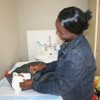
SWAZILAND: Focus on Infants in HIV Prevention
A proud mother, Nonhlanhla Mabuza cuddles her one-day-old baby boy, at the circumcision clinic of Raleigh Fitkin Memorial (RFM) Hospital. A day after delivering her second son, Thabiso Dlamini, the 20-year-old mother is not only beaming because she has just successfully delivered her tiny little tot – her bundle of joy has just undergone male circumcision.CHINA: Wives of Gays Struggle Alone
Wang Yibing had been married three years before she found out her husband was gay. He had known all along, yet, like many homosexual men in China, had chosen to enter into a traditional marriage to reduce the pressure he was feeling from his family and society.
LATIN AMERICA: Photos a Leveller for Maids and Their Employers
Fifty pairs of women -- maids and their employers -- from Argentina, Chile and Colombia abandoned their daily routines to pose for photographs for a project about the hierarchical relationship that unites them.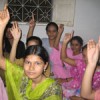
INDIA: Muslim Women Explore Opportunity in Non-Traditional Fields
In a small, dingy and humid room in Metiabruz, a poor Muslim-dominated locality in Kolkata in eastern India, at least 20 Muslim women are talking with excitement about their aspirations and why they decided to study information technology (IT), a short-term course offered for a minimal fee by a non- government organisation operating in their locality.
BRAZIL: The Football Nation Doesn’t Forget Its Heroes
Long known as "the football nation," Brazil today is seeking a new title: recognition as a global economic and political power -- though without denying the sport that made it famous.
Risking Life and Limb for Football in Somalia
"Some people think football is a matter of life and death. I assure you, it's much more serious than that," former Liverpool manager Bill Shankly once said. Uncomfortably close to a bald statement of fact for fans of the beautiful game in Somalia, who risk their lives to watch the World Cup unfolding in South Africa.Artists Refuse Silence on Zimbabwe Atrocities
In a bold attempt to stoke public debate on national healing, an art exhibition is challenging the government to publicly acknowledge one of the most hideous episodes in Zimbabwe's history.Argentine Football Violence Exported to South Africa
No one admits to providing them with support, but hundreds of Argentine football hooligans known as "barras bravas" flew to South Africa for the World Cup and are threatening to cause disturbances if the football clubs do not get them tickets to the games.ARGENTINA: Football Referee School Offers Way Out of Poverty
A new school to train football referees to work amateur-level tournaments in Argentina aims at providing skills and a legitimate source of income for young people from poor homes.Virtual Diversity in Cuban Blogosphere
There are blogs made in Cuba, and many more Cubans living abroad who blog, both in favour of or against the Cuban government. Caught up in the sea of political passions, the hundreds of blogs about this socialist island nation reflect a growing variety of viewpoints and realities.
BRAZIL: “Gol de Letra” Scores Goals off the Playing Field
In a country where many poor children dream of "making it big" through football or modeling, retired Brazilian football stars Leonardo and Raí could have simply basked in their fame. But they decided instead to combine sport with education, art and skills training.
Q&A: China Pays a Price for the ‘Lost’ Girls
In a country like China, that regularly exorcises the ghosts of the past, few understand the importance of oral history better than Chinese writer Xinran.Mexico’s Papagayo River Still Flowing
The Papagayo river in the southern Mexican state of Guerrero is still flowing, and local communities opposed to construction of a massive hydroelectric dam are making every effort to keep things that way, as reflected in a documentary about their struggle.BURMA: HIV Infection on the Rise Among Men Who Have Sex with Men
The only son in his family, Maung Maung Oo was forced to marry when he was 24 years old. By then he had been carrying on a sexual relationship with a man for four years – which he continued even after his marriage.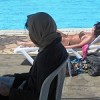
LEBANON: Where the Bikini Finds Sisterhood With the Hijab
Hijab or bikini? That is a question that Lebanon seems to be forever balancing.« Previous Page — Next Page »


The Week with IPS

NEXT STOP - SDGs
Tracking global progress towards a sustainable world
Tracking global progress towards a sustainable world
