Languages
Monday, October 12, 2026



News and Views from the Global South
MDG 5 - Maternal Health

Familiar Pledges on Child and Maternal Health in Africa
During the three-day summit of African Union heads of state, roughly 37,000 children and 2,000 women died across Africa, mostly from preventable causes, says a civil society coalition for child and maternal health. The coalition welcomed African leaders' pledge to make more resources available.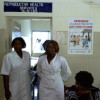
SIERRA LEONE: Defining New Role for Traditional Birth Attendants
Posseh Sesay will never be able to bear children again following a tragic birthing experience at the hands of her village traditional birth attendant (TBA).URUGUAY: Millennium Goal on Maternal Health in Sight
Uruguay is on the point of reaching the Millennium Development Goal for reducing the maternal mortality ratio, but it is still behind in other aspects of maternal health, like providing integrated sexual and reproductive health care, fighting syphilis and checking on mothers and babies during the postpartum period.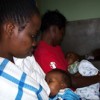
KENYA: Jury Still Out on Traditional Birth Attendants
The government of Kenya has been encouraging women to deliver in hospital. Home deliveries by traditional birth attendants are considered to be a major contributor to maternal deaths.ZIMBABWE: ‘Free’ Maternal Health Care Too Costly For Most
As African Union heads of state consider child and maternal health at the 2010 summit in Kampala, Uganda, the perennial question of user fees has reared its head in Zimbabwe. Fees for services are opening a growing gap between policy and implementation in maternal health care in the Southern African country.SWAZILAND: HIV – Long Distances Place Expectant Mothers at Risk
Affectionately known as Gogo Zondo by the community of Ndvwabangeni in northern Swaziland, Margaret Zondo is a traditional health practitioner who helps treat the sick and delivers babies.Nigeria Suffers Acute Lead-Poisoning Outbreak
The Nigerian government is trying to cope with an outbreak of lead poisoning which has killed over 200 people in Zamfara State since early July.North Korea in Dire Need of Food, Medical Aid, Amnesty Says
The fragile health system in the cash-strapped Democratic People's Republic of Korea (DPRK), long described as one of the world's most secretive countries, is on the verge of collapsing, Amnesty International (AI) warned Thursday.
LIBERIA: Men in Testing New Role as Midwives
Henry Teh gently slides down a blue hospital sheet to expose the bare belly of a pregnant woman. As he pokes around to feel the position of the foetus, the midwife-in-training knows he is breaking tradition and changing the face of obstetric care in Liberia.
COLOMBIA: Midwives Seek Legal Recognition, Respect
In Colombia, western medicine has nearly succeeded in pushing midwives -- "parteras" or "comadronas," as they are known in Spanish -- out of existence. But some tenacious practitioners are pushing for a law to formalise the role of midwife as a health worker.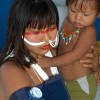
More Than 200 Ways of Becoming a Mother
"You can only have one mother," as the saying goes, but in Brazil there are 215 ways of becoming a mother, one for each of the ethnic groups in this South American country. Promoting maternal health while respecting cultural traditions is a major health challenge.Midwives vs. Doctors in U.S. Maternal Mortality Crisis
"I was baking a cake when my contractions were two minutes apart," Kristine says, her voice warm with memory, "not in a hospital, holding onto a bedside somewhere screaming."
Making 2010 a Turning Point for Women’s Health
As the international community readies to commemorate World Population Day Sunday, the United Nations is reviewing the state of the world's women - and how they stack up against the risks of maternal mortality and the lack of universal access to reproductive health.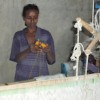
ETHIOPIA: Unique Community Leads on Gender Equality
Married at just 13 years of age, Fantaye Adem wishes her life had been different.Latin America Keeps Poverty Goals in Sight Despite Harsh Times
Nine million more people have fallen into poverty in Latin American and Caribbean countries since the global financial crisis struck, threatening the achievement of all the Millennium Development Goals (MDGs) by the 2015 deadline, according to a report released Thursday by 18 U.N. agencies.
KENYA: Tradition an Obstacle to Maternal Health
Their kangas and heavy bead necklaces are the only colour in an arid landscape. The weary women waiting outside the Kangatotha dispensary have walked up to 50 kilometres to receive food aid; now they will walk home carrying their share.Activists Slam G8’s Aid Shell Game
The G8 bloc of wealthy nations promised five billion dollars Saturday for health and nutrition programmes that benefit women and children in developing countries.LATIN AMERICA: Majority Favours Legalising Abortion – But Not for All Cases
The majority of people surveyed in Brazil, Chile, Mexico and Nicaragua are in favour of legalising therapeutic abortion, but not all forms of elective abortion, according to a study by the Latin American Faculty of Social Sciences (FLACSO).
DEVELOPMENT: Cambodia Struggles to Reduce Maternal Deaths
For Chan Theary, a remote, mountainous stretch of land in western Cambodia encapsulates the uphill struggle this South-east Asian nation faces in reducing the alarming number of women who die during pregnancy.
MEXICO: Extending the Reach of Safe Abortion
By 5:00 AM, dozens of women are already lined up outside of this clinic in the Mexican capital. Most come with their mothers, sisters, husbands, friends or boyfriends. A few show up alone.Keeping the Pressure on to Invest in Women’s Health
Men, women, NGOs, governments, the Gates Foundation. Everyone agrees – women are awesome. More importantly, protecting the health of the people that make up more than half of the human population and do far more than half of the work to sustain it should be everyone's priority.« Previous Page — Next Page »





The Week with IPS

NEXT STOP - SDGs
Tracking global progress towards a sustainable world
Tracking global progress towards a sustainable world
