Languages
Saturday, November 7, 2026



News and Views from the Global South
Millennium Development Goals (MDGs)

ANGOLA: Solar Panels Turning Dirty Water Clean
The brightly painted old shipping container with solar panels on its roof and high-specification filtration devices inside looks out of place in this dusty Angolan village of Bom Jesus, 50 kilometres east of the capital Luanda.
U.N. Aims at Major Global Conference on Women in 2015
As the race towards gender equality moves at an exceedingly slow pace, the United Nations is calling for a major international conference on women in 2015 - 20 years after a landmark meeting in Beijing in 1995.
Brazilian Women Are the World’s Happiest
Money may not buy happiness – but it has helped make women in Brazil become the happiest, most optimistic women in the world, according to a study.
Protesters Lift Roadblocks in Southern Chile
Leaders of the protests in Aysén decided to end the roadblocks that had paralysed this southern region of Chile for more than three weeks, and the government promised to "immediately" resume talks to defuse the conflict.
Temporary Toilets Threaten Permanent Damage in Haiti – Part 2
Complete with gallery and garden, the 534 wood and plasterboard houses are arranged in neat rows on a gravel plot of former sugarcane land northwest of the capital.
Money for Cleaning Toilets in Haiti Down the Drain? – Part 1
The drawdown of hundreds of non-governmental organisations which have been in Haiti since the disastrous 2010 earthquake was inevitable. But with their departure, so too goes their purse and the millions earmarked for cleaning latrines.
World Has Met Development Target on Water, U.N. Claims
When the U.N. General Assembly unanimously adopted a resolution back in September 2000 laying out eight Millennium Development Goals (MDGs), it specified 2015 as the target date to achieve them.
Campaign in Chile Fights “Disgraceful” Under-representation of Women in Power
The More Women in Power campaign in Chile, carried out by a group of social organisations, is seeking to increase the number of women in public decision-making positions, to move towards "parity democracy".
World Has Met Development Target on Water, U.N. Claims
When the U.N. General Assembly unanimously adopted a resolution back in September 2000 laying out eight Millennium Development Goals (MDGs), it specified 2015 as the target date to achieve them.Poverty Encourages Early Marriages in Tajikistan
When she was 16, Kibriyo Khaitova’s parents told her that if she didn’t marry, she’d soon be a spinster. So, like many girls from Tajikistan, Khaitova married a man her family found for her. Now 20, she has two children, no husband and is fending for herself.
Q&A: “Social Unrest Can Be a Creative Force”
Social unrest and demands for change are not a negative thing during times of crisis like today, says Rubens Ricupero, a Brazilian diplomat and thinker.Little Money to Promote Gender Equality in Eastern Europe
Despite pushes from international bodies such as the United Nations (UN) or the European Union (EU) to promote gender equality in Central and Eastern Europe, access to funding for such initiatives remains largely conditional upon national governments’ willingness to embrace this agenda.Pakistan’s Hospitals That Come Home
With no money to see a doctor, Gul Lakhta,50, had resigned himself to blindness when a ‘mobile hospital’ drove into his village in the Bajaur Agency of the Federally Administered Tribal Areas (FATA), on Pakistan’s rugged border with Afghanistan.
Hospitals That Come Home
With no money to see a doctor, Gul Lakhta,50, had resigned himself to blindness when a ‘mobile hospital’ drove into his village in the Bajaur Agency of the Federally Administered Tribal Areas (FATA), on Pakistan’s rugged border with Afghanistan.
U.N. Meet Holds Governments to Account on Women’s Equality
In 2008, delegates meeting for the annual U.N. Commission on the Status of Women (CSW) agreed that much greater investments in women and gender equality were a critical – and overlooked – aspect of sustainable development.Argentine Women Refused Legal Abortions in Cases of Rape
For over 90 years, a law in Argentina has allowed women who become pregnant as a result of rape to have an abortion. However, hospitals often refuse to carry out the procedure, instead referring the women to the justice system.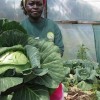
KENYA: Microloans, Greenhouses Help Women Cope with Climate Change
At Gakoromone Market in Meru, in Kenya’s Eastern Province, Ruth Muriuki arrives in a pickup full of tomatoes and cabbages despite the scarcity of rainfall in the area, thanks to the greenhouse technology she uses on her farm – and microcredit.U.N. Meet Holds Governments to Account on Women’s Equality
In 2008, delegates meeting for the annual U.N. Commission on the Status of Women (CSW) agreed that much greater investments in women and gender equality were a critical – and overlooked – aspect of sustainable development.Hard to Stay in Libya, Difficult to Return
At the battered terminal of Tripoli’s tiny Mitiga airport, over 150 young men and women jostle to be repatriated home to Nigeria on Libya’s Buraq airlines. This journey to Lagos is one of hundreds the International Organisation for Migration (IOM) has facilitated since the start of the uprising against Gaddafi’s regime over a year ago.
PERU: Time to Adapt to Climate Change Impact on Women’s Lives
This year’s unusually rainy season in Peru is having a negative effect on the wellbeing and health of women in rural areas who are forced, for example, to spend three times as much time walking to collect firewood and water. But the authorities continue to turn a blind eye to the problems they face.India’s Girl Child Struggles to Survive
At the intensive care unit of the state-run All India Institute of Medical Sciences (AIIMS) hospital in New Delhi, a two-year-old battered baby girl is fighting to survive.« Previous Page — Next Page »





The Week with IPS

NEXT STOP - SDGs
Tracking global progress towards a sustainable world
Tracking global progress towards a sustainable world
