Languages
Saturday, November 7, 2026



News and Views from the Global South
Millennium Development Goals (MDGs)

Living on a Meal a Day in Swaziland
Margaret Gamedze earns a living doing laundry for people in her community in Msunduza Township, which lies about a kilometre outside Swaziland’s capital city of Mbabane. But since the country’s fiscal crisis began, she no longer earns enough to pay the rent for her one-roomed mud shack, which she shares with her five children.
Saving Kenya’s Maize Crop
While some maize farmers in Kenya’s Western Province are stilling living off the produce from last season’s harvest, Robert Oduor is counting his losses after the deadly Striga weed infested his one-hectare maize field.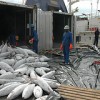
An Assault on Multilateral Trade Negotiations
India, Brazil, and South Africa, the international grouping for promoting international cooperation among the three countries known as IBSA, along with China and several other developing countries, have denounced the ongoing attempts to craft an exclusive, plurilateral agreement to liberalise trade in services without concluding the multilateral trade negotiations of the World Trade Organization.
Q&A: Expo 2012 to Focus on Protecting World’s Marine Resources
The United Nations, which is hosting a major international summit on the global environment in Brazil in late June, points out that while the world's oceans account for 70 percent of the earth's surface, only one percent of this area is protected.
Saving Face for Pakistan
By winning an Oscar at this year’s Academy awards, filmmaker Sharmeen Obaid-Chinoy has brought home the genius of Pakistan’s women as well as the extreme violence they often suffer in a male-dominated society.
Men Still Make the Decisions on Reproductive Rights in Côte d’Ivoire
"I would like to use contraception, but my husband is against it," says Bintou Moussa*. The 32-year-old mother has just given birth to her sixth child at the Abobo General Hospital in Cote d’Ivoire’s commercial capital Abidjan.
Lukewarm Response to Guilty Verdict for DRC Warlord
The International Criminal Court delivered its first verdict Wednesday: Thomas Lubanga Dyilo was found guilty of recruiting children under the age of 15 to fight in a militia group in the eastern Democratic Republic of Congo.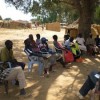
Lessons in Democracy on South Sudan’s Airwaves
It is late afternoon and a group of men and women begin to converge under the shade of a huge mango tree in Yambio town, the capital of South Sudan’s western Equatoria state. The group is not gathering for an ethnic, political or religious meeting. They are here to listen to the radio.
Struggling to Rebuild Côte d’Ivoire’s Health System
One-year-old Angama Ouattara lies on a rusted hospital bed, a drip attached to her tiny, left foot. Her mother, Minata, sits on the edge of the mattress, smoothing out the sheets she had to bring from home.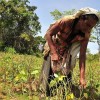
Gender Empowerment Still Lags Far Behind in Global Village
When the United Nations concluded a two-week session highlighting the plight of rural women last week, the meetings singled out both the achievements and shortcomings of the ongoing relentless battle for gender equality in a world still dominated - and overwhelmingly ruled - by men.Children Lost in Aftermath of Congo’s Arms Dump Explosion
Five-year-old Vianey hasn't seen his parents since a series of explosions ripped through an ammunition dump in Brazzaville on Mar. 4. A stranger, Jules Bomboko, said he found Vianey days later, wandering around the Tréchot neighbourhood, a few hundred metres from the site of the blasts.
Q&A: Cultural Sensitivity Key to Reaching Rural Women
Empowering rural women in the Iraqi marshlands, who mostly remain off the radar of international support, must involve local languages and dialects as well as local women trainers, says Mishkat Al Moumin, founder of the Iraqi group Women and the Environment Network (WATEO).
Angola’s Police Silence the Media
Rights groups and activists are warning of a rapidly deteriorating political climate in Angola following a police raid on a private newspaper and a violent crackdown on anti-government protests.
The Sound of Peace in Kenya’s Kibera Slum
In a Kibera-bound mini-bus taxi, the driver changes the station just as he turns onto Ngong Road, kilometres away from the Kenyan slum. He tunes into Pamoja Radio 99.9 FM, a local community radio station that broadcasts only in Kibera.
Q&A: Prevention Is the Best Cure for Gender Violence
As many as seven in 10 women in the world report experiencing physical and/or sexual violence at some point in their lifetime, leaving a devastating aftermath for individuals, communities and nations.Women Have New Weapon against Domestic Violence in Argentina
Women victims of domestic violence in a city in Argentina will be given an electronic device with a panic button that will bring them immediate assistance from the police.
Central America Looks to Sustainable Development
Central America, a narrow tropical isthmus flanked by the Pacific Ocean and the Caribbean Sea, suffered 259 extreme weather-related events between 1930 and 2009, while the cumulative effects of innumerable smaller-scale events have not even been recorded.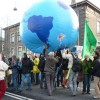
Rio+20 Summit: A Moment That Must Be Seized
The upcoming Rio+20 conference has to be the moment in human history when the nations of the world come together to find ways to ensure the very survival of humanity, many science and environmental experts believe.
Caribbean Looks Ahead to Stave Off Fresh Water Scarcity
Two years after a severe drought wreaked havoc with a number of Caribbean countries, some are now adopting new strategies in a bid to prevent a repeat of a situation where countries were rationing water and imposing strict restrictions on residents.
U.N. Chastises Mexico’s Support for Agribusiness
The United Nations criticised Mexico’s food policy, a month and a half after President Felipe Calderón launched to great fanfare an alliance of agribusiness for sustainable development, which was welcomed by giant food corporations.RIGHTS-DR CONGO: Disabled Left to Fend for Themselves
The outlook for people living with disabilities in the Democratic Republic of Congo remains bleak, despite a variety of efforts to improve their lot and bring them in from the margins of society.« Previous Page — Next Page »





The Week with IPS

NEXT STOP - SDGs
Tracking global progress towards a sustainable world
Tracking global progress towards a sustainable world
