Languages
Saturday, November 7, 2026



News and Views from the Global South
Millennium Development Goals (MDGs)

CLIMATE CHANGE-AFRICA: Farming By Phone
Francis Mburu used to keep indigenous cattle in Entasopia village in the semi- arid Kajiado region, 160 kilometres southwest of Nairobi. However, increasing temperatures and frequent droughts in Kenya have made this difficult in recent years.
Clinton Champions Gender Agenda at Busan
Women toil in the fields for most of their lives producing food and strengthening the largely agricultural economy of African countries, but when their fathers, husbands or older sons die, they are no longer welcome on land they may have tended for years.
Nicaragua Sows Quality Seeds to Reap Quantity
"Using high quality seed, I harvested 20 quintals (one quintal = 100 pounds), while with ordinary seed I only get 10 quintals," Vilma Rodríguez, a beneficiary of a seed production programme in the northwestern Nicaraguan province of Estelí, told IPS.
Aid Dependency on the Decline
Poor countries have depended on rich nations to supplement their sector budget without which millions of people would have continued to live in abject poverty. Have the years of funding made these countries any less dependent?
Forest-Dependent Communities Lobby for End of REDD+
Organisations working with indigenous peoples living in forests say the United Nations programme on Reducing Emissions from Deforestation and Forest Degradation in Developing Countries (REDD+) is just another way for big corporates to reap huge profits.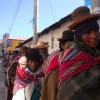
Lessons from the Andes on Budgeting to Close the Gender Gap
Three countries in South America's Andean region, Bolivia, Ecuador and Peru, have a great deal to teach and share with those meeting in Busan, South Korean this week to discuss, among other things, how to make sure that development aid incorporates a gender focus in order to be effective.
‘Nothing at Busan for African Women, Children’
Although there has been considerable progress towards reducing maternal and infant mortality, millions of women and children in Africa are still in need of better health services, food and sanitation.‘Accountability Vital in Improving Aid Effectiveness’
Key actors meeting in Busan on Tuesday, the first day of the Fourth High Level Forum on Aid Effectiveness (HLF4), lay emphasis on inclusive ownership, mutual accountability and the platform of the groundbreaking 2005 Paris Declaration.
Sweden Runs Into South Sudanese Oilgate
Civil society leaders in South Sudan are closely watching a legal battle unfolding in Sweden, as prosecutors investigate an oil company accused of involvement in massive human rights abuses here.
“God Wants Us to Live in a Garden, Not a Desert”
The European Union plan to save the Kyoto Protocol may meet its greatest obstacle in the developing world.
Q&A: “Gender Budgets Help You Think About People”
Gender responsive budgeting (GRB), a U.N. Women tool to curb inequality, "helps you think about people...and to use resources in a more effective manner," says Lorena Barba.
Q&A: Why Africa Must Remain United in Durban
African leaders have urged the international community to move the United Nations climate change negotiations, which started in Durban, South Africa on Monday, to a different level, and to prioritise adaptation for the continent.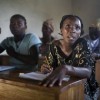
Global Fund for Education Gathers Momentum
If the international community can successfully raise billions of dollars to fight deadly diseases, why not a similar fund to promote education, asks Gordon Brown, former British prime minister.
Q&A: ‘New Donors Can Help Farming Sector’
Rising food prices, natural disasters and an energy crisis that is turning wheat into ethanol instead of bread have raised the spectre of inadequate global food supply that hits the poor. This grim reality has finally turned the spotlight on agricultural aid and its link to development effectiveness.
South-South Ties Reshape Aid Paradigm
When the G-8 countries, comprising the world’s largest industrialised nations, decided that improving Internet access to developing countries should be a priority, scores of leaders from developing world opposed the move.
MALAWI: Changing Climate Compounds Environmental Degradation
As Daniel Chakunkha and Mussa Abu talk on the side of a dirt path in Makunje village, Malawi, a steady stream of bicycles loaded with charcoal passes by. The men stand at the halfway mark between Mwanza, a small city in the country’s southwest, and Blantyre, Malawi’s commercial hub.New Deal for Donors and Recipients at Busan?
The Fourth High Level Forum on Aid Effectiveness (HLF4), starting in this port city on Tuesday, will examine why international donor assistance worth trillions of dollars spent over decades has failed to eradicate poverty.
The Aid From Women No One Counts
Gender responsive budgeting becomes important when seen in the background of unpaid but important care work done by women, say delegates to an international meet on aid effectiveness in this South Korean city.
Mobilising Men to End Violence Against Women
Since it launched in 1997, the United Nations Trust Fund to End Violence Against Women has distributed more than 78 million dollars to 339 projects around the world, but even these resources fall far short, meeting less than five percent of demand.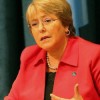
Q&A: Climate Talks Must Ensure That “Words Become Reality”
Involving women in decision-making and resource management is a basic necessity for any effective plan to address the multi- layered and life-threatening consequences of climate change, says the head of UN Women.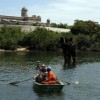
CLIMATE CHANGE: Cuba Joins New South-South Alliances
Cuba will be attending the next round of climate change negotiations after a year that has seen a growing consensus in the developing South to put pressure on rich nations to take on firmer commitments within an international governance regime for climate stability.« Previous Page — Next Page »





The Week with IPS

NEXT STOP - SDGs
Tracking global progress towards a sustainable world
Tracking global progress towards a sustainable world
